

 Al Jazeera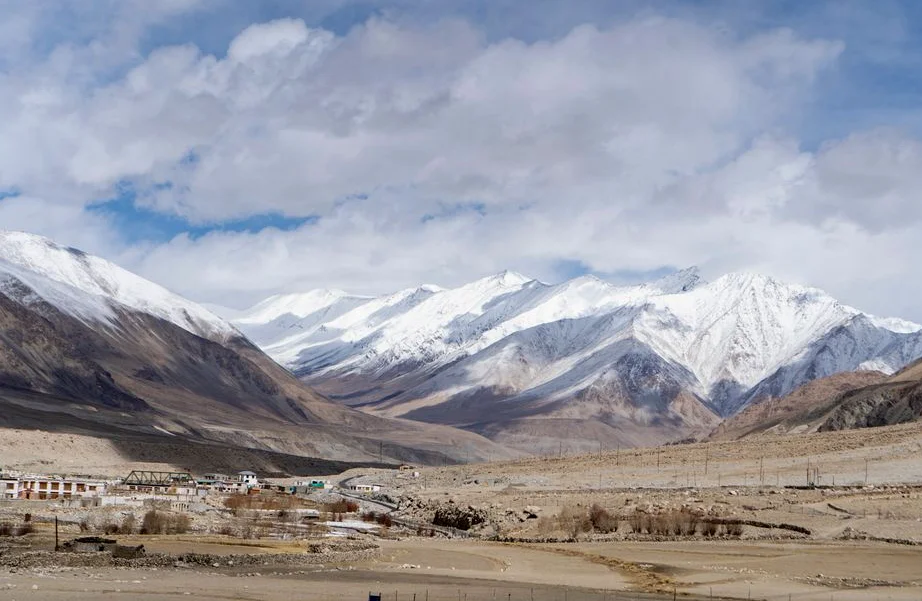
New Delhi, India — China has denied the Indian army access to key patrolling points and encroached on land in the Indian border state of Arunachal Pradesh, according to a fact-finding team of regional politicians allied with Prime Minister Narendra Modi’s government. The report has sparked political outrage in New Delhi, where the opposition has criticized Modi for silence over alleged Chinese encroachment on several border fronts in recent years.
Details of the Alleged Encroachment
The new revelations pertain to Upper Subansiri, a remote and rugged, mountainous district in the northeastern state of Arunachal Pradesh. The fact-finding report threatens to upend a thaw in ties between India and China, bitter rivals that fought a war in 1962, amid US President Donald Trump’s trade wars that have targeted both New Delhi and Beijing. It also comes weeks before Chinese President Xi Jinping is expected to visit India for the BRICS summit, which New Delhi is hosting on September 12-13.
India shares a 3,488-km border with China, which runs along New Delhi’s northern and eastern borders, in regions like Jammu and Kashmir, Ladakh, Sikkim and Arunachal Pradesh. Large parts of the border are disputed. India and China do not even agree on the demarcation line — the so-called Line of Actual Control, that is supposed to notionally distinguish between territory controlled by the two countries.
Findings of the Fact-Finding Team
Following initial reports of alleged encroachment, the People’s Party of Arunachal Pradesh (PPA) sent a four-member fact-finding team to the remote location, the party’s Vice President Kaling Jerang told Al Jazeera. The PPA is part of the North East Democratic Alliance, a Bharatiya Janata Party-led regional bloc. Arunachal Pradesh is also ruled by the BJP.
After the visit, the team noted that Indian armed forces are unable to patrol in the Taksing area of the state from April to October due to inclement weather, devastating flash floods, pre-monsoon and monsoon downpours and resulting landslides. On the other hand, the report said, Chinese forces “continue to remain active throughout” this period in the border region, in effect raising questions about the preparedness of infrastructure on the Indian side for the military to be able to defend against potential aggression.
Jerang’s report also claimed that residents told the team that Indian forces had abandoned Shera 5, a border patrolling point, after a confrontation with China’s People’s Liberation Army (PLA) in 2023. Jerang also told Al Jazeera that locals were furious over losing ancestral hunting grounds. “The ground reports of these intrusions are irrefutable,” he said. “These encroachments are not new or sudden, but expanded over the years gradually,” he said, “while the BJP governments in New Delhi and in the state have turned their back on the people at the border.”
Responses from China and India
Last month, the Nah Welfare Society (NWS), a local tribal body, also wrote to government officials that Chinese encroachment has “increased manifold with an intention to occupy as much land as possible.” The Indian army said that media reports on the alleged encroachment by Chinese forces “are incorrect and without any basis.” But India’s Foreign Ministry has been less categorical in dismissing the reports.
Randhir Jaiswal, the Indian Foreign Ministry spokesperson, told reporters that New Delhi has “always emphasised in discussions with the Chinese side that we consider [border] issues as most serious and that the maintenance of peace and tranquillity in these areas is of the utmost importance.” “We have also stated that the state of border affairs will reflect on the state of our larger bilateral ties,” he added.
Like New Delhi, Beijing also has responded with caution, appearing to neither confirm nor deny fresh border tensions. “The China-India border situation is generally stable at the moment,” said Guo Jiakun, a Foreign Ministry spokesperson in Beijing, adding that both countries held their 36th meeting on China-India Border Affairs last week. “The two sides agreed to maintain communication via diplomatic and military channels and jointly uphold peace and tranquility in the border areas,” Guo added.



Comments
No comments yet
Be the first to share your thoughts