

 Wall Street Journal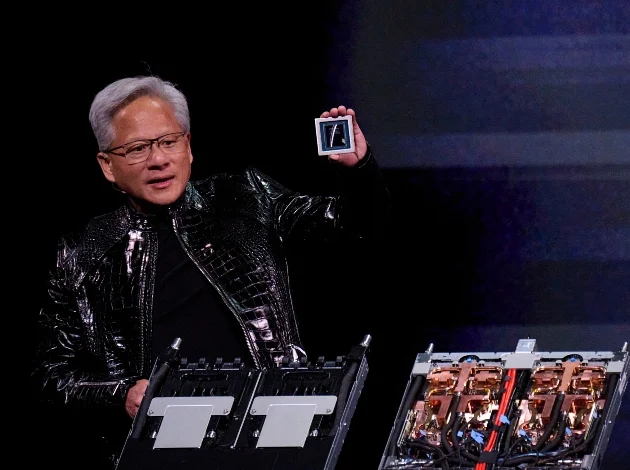
ByteDance, the parent company of TikTok, is constructing a major computing infrastructure in Southeast Asia using top-tier Nvidia processors, as part of its global strategy to compete in artificial intelligence development. According to the Wall Street Journal, the company is collaborating with Aolani Cloud, a Southeast Asian cloud computing provider, to deploy approximately 500 Nvidia Blackwell computing systems in Malaysia. This deployment would include roughly 36,000 B200 AI chips, according to sources familiar with the arrangement. The effort aims to support ByteDance’s AI research and development outside of China while meeting the growing AI demands from its international user base.
Strategic Infrastructure Expansion
The arrangement involves Aolani Cloud purchasing servers from Aivres, a firm that specializes in assembling servers equipped with Nvidia chips. If the project is completed as planned, the total hardware costs would exceed $2.5 billion. An Aolani spokesperson confirmed that the company currently operates with approximately $100 million in hardware, highlighting the massive scale of the investment. The move highlights ByteDance’s growing reliance on external computing resources to support its AI ambitions, particularly in markets outside China where it generates about a quarter of its revenue.
ByteDance has positioned itself as a formidable competitor to major American technology companies such as Google and OpenAI in the development of AI applications for everyday consumers. The company has created over a dozen AI tools for the Chinese market and has also developed international versions of these applications. Among these are Dola, a chatbot; Dreamina, a video creation tool; and Gauth, a homework assistance application. These tools are designed to cater to both Chinese and non-Chinese users, reflecting the company’s global ambitions.
AI Innovation and Market Reach
ByteDance’s AI video-generation technology, Seedance, has drawn significant attention for its ability to convert written script prompts into realistic short film sequences. According to a January 2024 analysis by venture capital firm Andreessen Horowitz, ByteDance operates five of the world’s 50 most widely used consumer AI applications based on monthly active users. This indicates the company’s substantial influence in the global AI landscape.
The company maintains substantial teams of AI researchers and engineers in key global hubs such as Singapore, San Jose, California, and Seattle. These teams collaborate with colleagues in China on fundamental AI research while also contributing to the development of AI models and products tailored for non-Chinese markets. This collaborative effort highlights ByteDance’s commitment to innovation and its ability to use global talent to drive its AI initiatives forward.
Evading U.S. Export Controls
The arrangement with Aolani Cloud and Aivres highlights how Chinese technology companies are circumventing U.S. export restrictions that have prevented Nvidia from directly selling its most advanced AI chips, including the Blackwell series, to China for over three years. Chinese technology executives have stated that limited access to high-performance computing resources has hindered their AI development efforts.
In response to these restrictions, Chinese companies have increasingly sought computing power in other countries where U.S. export control regulations are less established. This has created a new industry of intermediaries who facilitate the construction of data centers equipped with Nvidia chips and lease the computing capacity to Chinese tech firms. This trend highlights the growing complexity of global supply chains and the strategic efforts of Chinese companies to adapt to international trade constraints.
An Aolani spokesperson stated the company fully adheres to all applicable export control regulations and clarified that customers do not own chips in Aolani facilities nor hold claims over them. A Nvidia spokesperson explained that export regulations are designed to allow cloud infrastructure construction and operation outside controlled countries like China. The spokesperson confirmed that Nvidia’s compliance team reviews all cloud partners before selling chips either directly or indirectly.
Geopolitical and Security Concerns
CODE RED author Wynton Hall told the Daily Mail in an interview published Sunday that China has disguised its “data vacuum” AI espionage tools as popular apps like TikTok and DeepSeek. According to Hall, users of these “Trojan Horse” apps are “effectively surrendering their privacy and security to the Chinese regime.”
As documented in CODE RED, Chinese officials have expressed pride in the power of TikTok to not only influence the minds of young Western users using its algorithm, but also to collect vast amounts of data for intelligence purposes. Hall emphasized that this is where the power of AI comes in, but it is being used against America.
Senator Marsha Blackburn (R-TN), who was named one of TIME’s 100 Most Influential People in AI, praised CODE RED as a “must-read.” She added: “Few understand our conservative fight against Big Tech as Hall does,” making him “uniquely qualified to examine how we can best use AI’s enormous potential, while ensuring it does not exploit kids, creators, and conservatives.”
Award-winning investigative journalist and Public founder Michael Shellenberger calls CODE RED “illuminating,” “alarming,” and describes the book as “an essential conversation-starter for those hoping to subvert Big Tech’s autocratic plans before it’s too late.”
The growing use of AI by Chinese companies, particularly through intermediaries in countries with less stringent U.S. export regulations, raises significant geopolitical and security concerns. These developments highlight the need for continued scrutiny of global AI supply chains and the potential risks associated with the proliferation of advanced AI technologies.
As ByteDance continues to expand its global AI infrastructure, the implications for international trade, cybersecurity, and the broader AI industry will become increasingly apparent. The company’s ability to circumvent U.S. export controls and use international resources highlights the evolving dynamics of global technology competition and the challenges faced by policymakers in regulating AI development.






Comments
No comments yet
Be the first to share your thoughts