

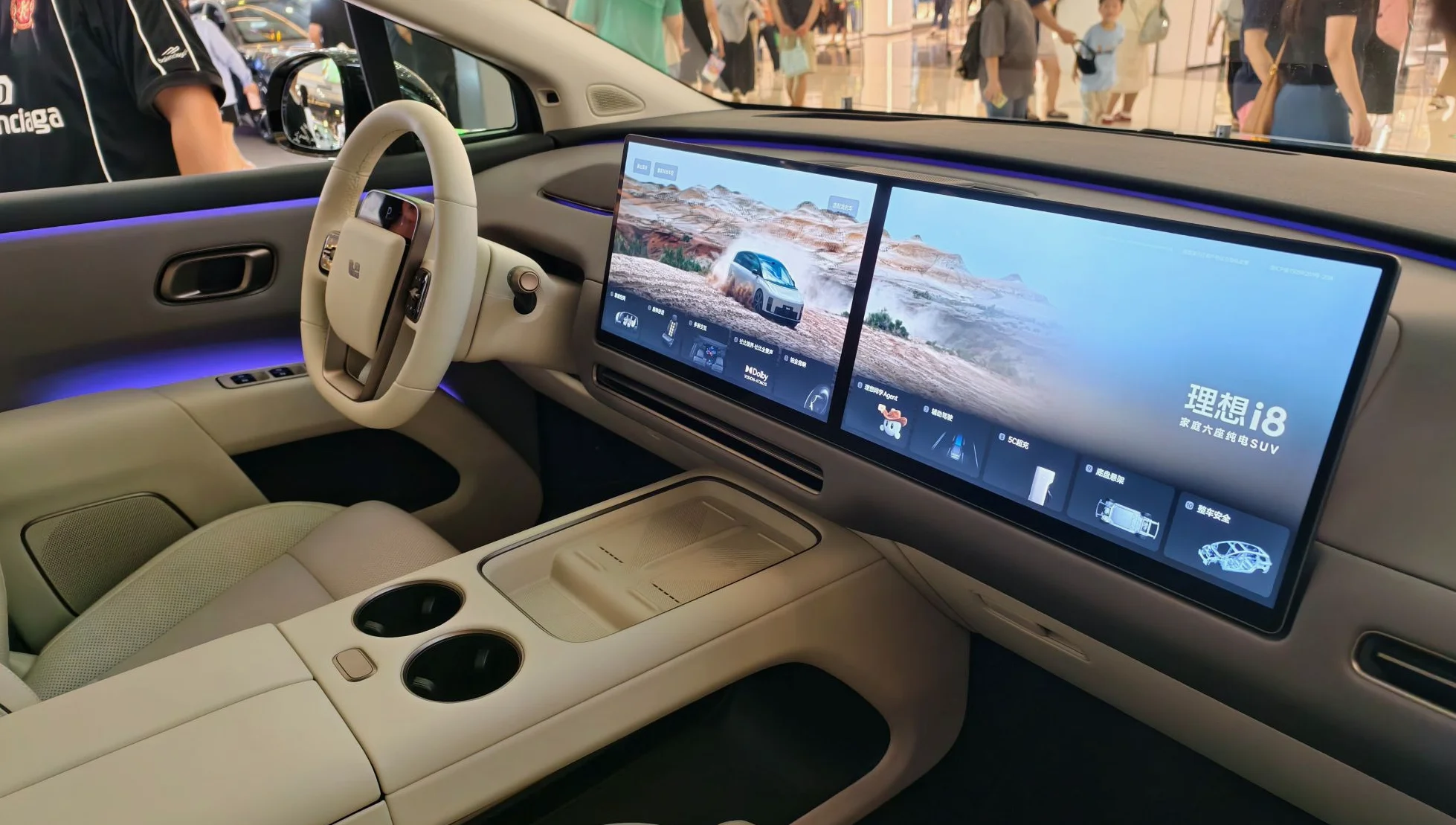
BEIJING — China’s automotive sector faces a push to accelerate digital transformation despite its lead in smart manufacturing, according to a plan from the Ministry of Industry and Information Technology and three other agencies. The December 30, 2025, document targets raising labor productivity 10% over 2025 levels and shortening product R&D and delivery cycles by 20% through 2027.
Officials emphasized advancing artificial intelligence in research and production, especially among small- and medium-sized parts suppliers. These firms often rely on basic equipment unable to handle complex data, creating bottlenecks in supply chains. The plan outlines scenarios like smart collaborative R&D, digital twin factories, intelligent supply chain coordination, and data-driven marketing.
State media highlight factories such as SAIC-GM-Wuling’s Liuzhou plant among China’s 15 flagship smart facilities, which pioneer new models. Key processes in autos already show over 65% computerized numerical control rates, matching national manufacturing averages for 2025. Even leaders like BYD sit at level three in the five-tier smart manufacturing assessment.
Data silos across firms hinder broader synergies, the plan states. Without penalties, support will favor digitalizers joining an integrated, data-sharing ecosystem. This could pressure Western carmakers to deepen integration in China, balancing data risks against efficiency gains from shorter cycles.
In parallel, the National Development and Reform Commission and National Energy Administration released opinions to vault China into the forefront of concentrated solar power. CSP uses mirrors to concentrate sunlight for heat and electricity generation. The agencies call for 15 gigawatts of installed capacity by 2030, with costs per kilowatt-hour rivaling coal and global technological leadership.
Deployment spans standalone CSP stations and roles as base power in source-grid-load-storage systems. Breakthroughs target heat absorption, low-cost storage materials, smart controls, and advanced turbines. To build a competitive industry, officials plan CSP parks and clusters, subjecting projects to market competition.
China trails in CSP compared to photovoltaics or wind. Global capacity stood at 7.2 gigawatts in 2024, with Spain at 2.3 gigawatts, the United States at 1.5 gigawatts, and China at 0.8 gigawatts. The worldwide CSP market hits $90 billion in 2026, projected to reach $191 billion by 2034; China’s slice measures just $5 billion this year. Top firms like Spain’s Abengoa and SENER Energía, and U.S.-based BrightSource Energy, dominate currently.
These initiatives reflect Beijing’s dual focus on industrial upgrades and clean energy dominance. Auto digitalization addresses SME gaps to fortify supply chains amid global competition. CSP ambitions aim to diversify renewables beyond panel-based solar, tapping a high-growth niche.
Issued by MIIT, the Ministry of Education, State Administration for Market Regulation, and National Data Administration, the auto plan signals sustained policy backing. Energy opinions from NDRC and NEA align with broader carbon goals, positioning CSP for scale-up through 2030.






Comments
No comments yet
Be the first to share your thoughts