

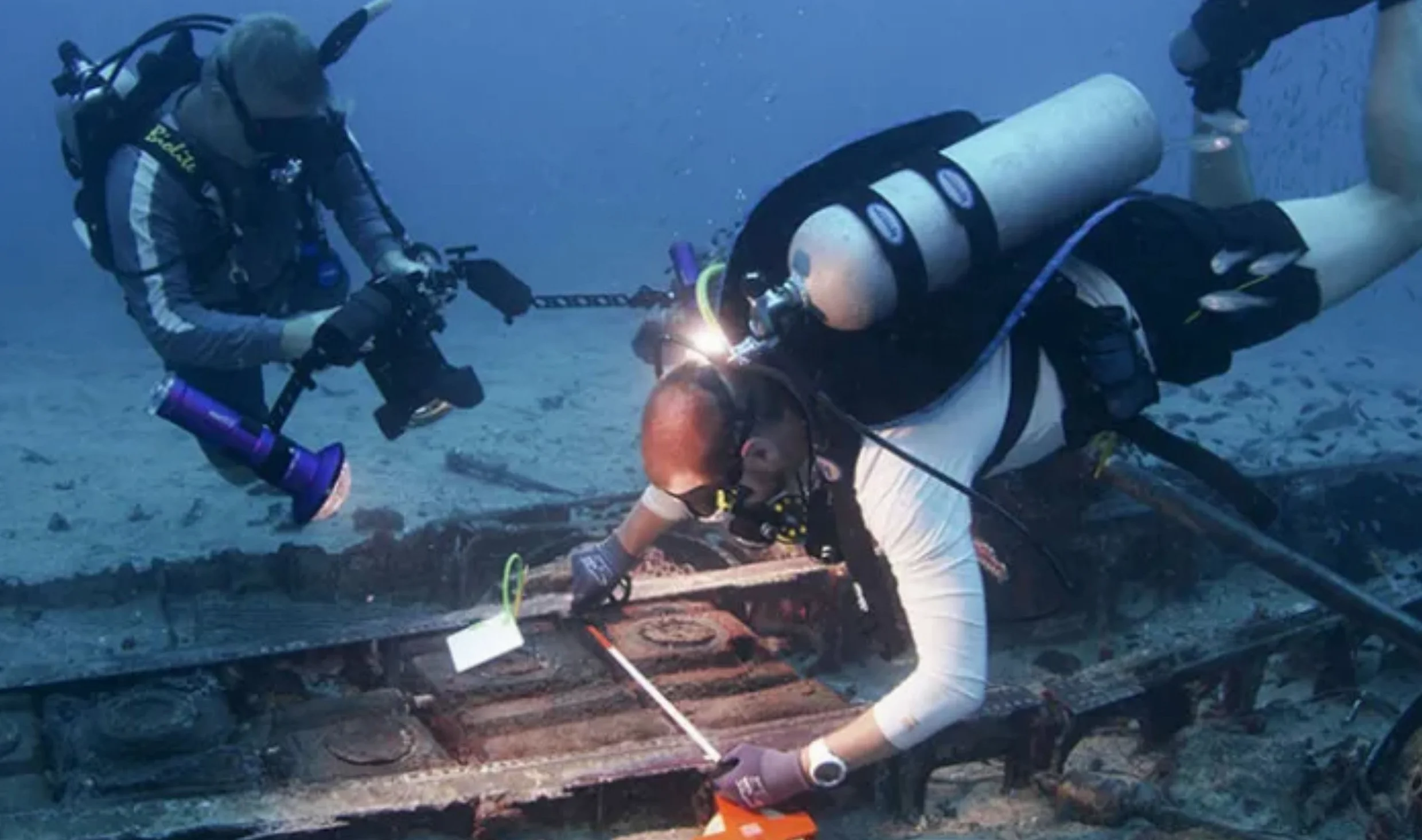
MOBILE, Alabama — A wooden hull, scorched and buried in the muddy waters of the Mobile-Tensaw Delta, has emerged from obscurity. Experts at the Smithsonian’s National Museum of African American History and Culture confirmed its identity as the Clotilda this week. The ship carried 110 captives from Benin in 1860, six decades after Congress banned the trans-Atlantic slave trade.
Captain William Support offloaded the human cargo in secret under cover of night. He then ordered the schooner set ablaze and scuttled to erase evidence of the crime. Matching iron fasteners and burned planks to historical records sealed the identification, according to the museum’s report.
The wreck’s fragile state keeps it submerged. Divers face shifting silt, dim light and swift currents that blur outlines just yards below the surface. Photogrammetry overcame those hurdles. Teams captured thousands of overlapping photographs during short dives in 2019. A control network of measured points anchored the images, preventing drift in the 3D model.
Remotely operated vehicles aided the effort. Tethered robots with lights and cameras navigated tight spaces. Sonar mapped debris fields through murky water. The resulting digital twin lets curators share every fracture and bolt without risking further damage.
Conservation techniques preserved select artifacts. Freshwater rinses leached out salts from wood still dripping with river water. Controlled drying prevented splintering. Lose those steps, and inscriptions or marks tying objects to people vanish forever.
The Clotilda joins broader underwater archaeology displays at the Intrepid Sea, Air & Space Museum in New York. Spanning more than 9,000 square feet, the bilingual exhibit opened recently. Visitors handle replicas at interactive stations. They trace sunken cities like Pavlopetri off Greece’s southern coast and drowned landscapes on the Alpena-Amberley Ridge in Lake Huron, submerged 9,000 years ago.
Deep-sea caves feature too. Hoyo Negro in Mexico’s Quintana Roo holds Ice Age bones sealed in sediment. Low oxygen there slowed decay, allowing precise mapping. Such sites spark debates over handling human remains with respect while unlocking history.
Community voices shaped the Clotilda project from the start. Diving With a Purpose, a group training Black scuba divers, led surveys. Descendants joined searches guided by oral histories. ‘It’s about awareness of submerged cultural resources,’ said Jay V. Haigler, the organization’s lead instructor and a registered archaeologist.
That involvement sets boundaries on storytelling. DWP ensures evidence serves those connected to the past, not just distant scholars. The 3D model now lives online and in the Intrepid exhibit, placing Clotilda’s planks beside real relics.
Challenges persist. Funding and permissions dictate next steps. Community trust remains key. The riverbed still guards secrets no model can fully reveal. Yet this reconstruction turns a deliberate destruction into enduring proof of lives stolen across the ocean.

Comments
No comments yet
Be the first to share your thoughts