

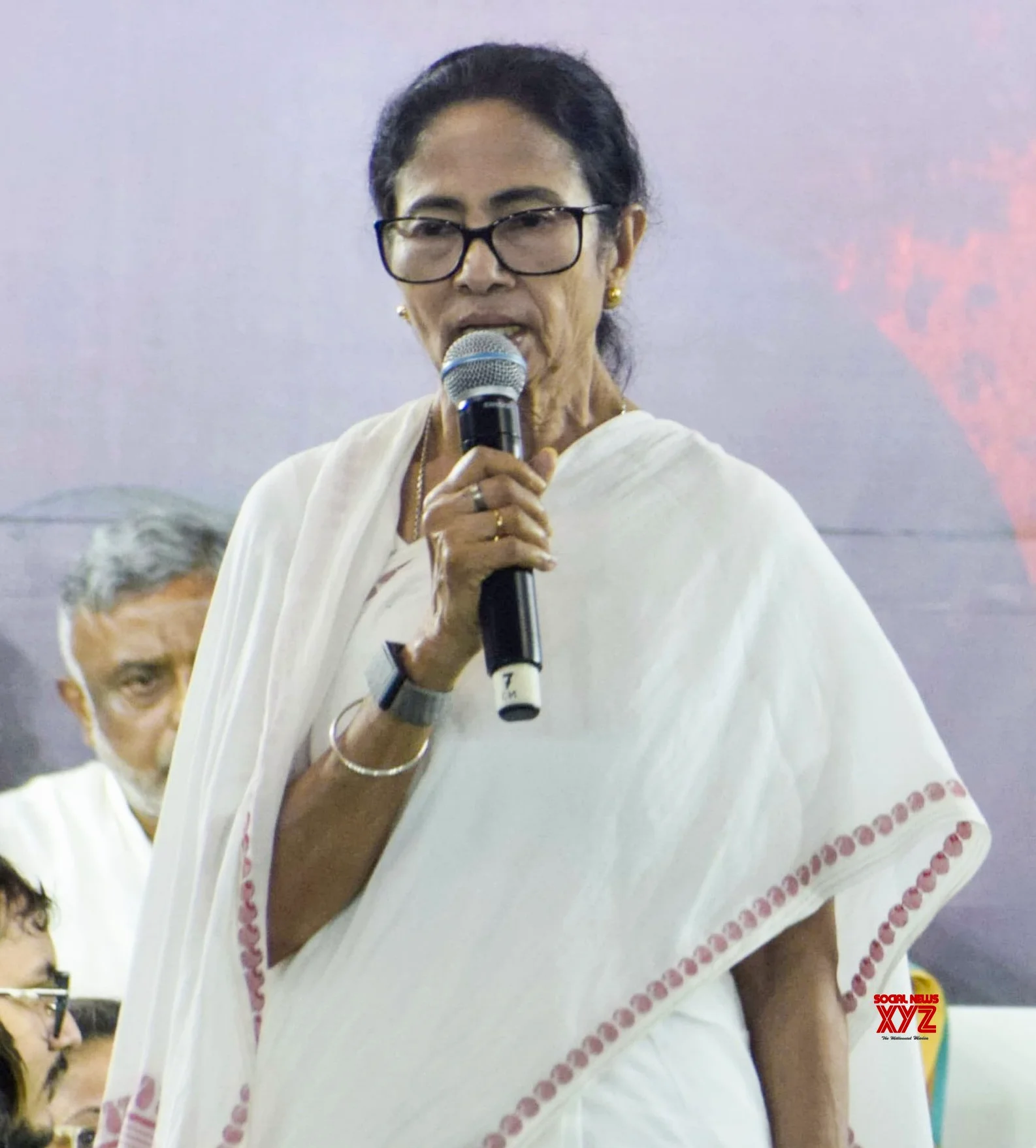
Kolkata, March 16 — West Bengal Chief Minister Mamata Banerjee has written to Chief Election Commissioner (CEC) Gyanesh Kumar, expressing serious concerns over the removal of several senior IAS and IPS officers in the state following the announcement of the upcoming Assembly elections. The letter highlights what the Chief Minister describes as an arbitrary and unexplained administrative reshuffle that occurred shortly after the Election Commission issued the notification for the 2026 West Bengal Legislative Assembly polls.
Allegations of Unilateral Actions
In the letter, Banerjee alleged that the sweeping transfers of senior officials were carried out without any cogent reasons or allegations of misconduct, and without consulting the state government. She emphasized that the removal of administrative heads within hours of the election announcement was not in line with established conventions of cooperation between the Election Commission and state governments during previous electoral cycles.
“A matter of deep concern and surprise is that the heads of the administrative machinery in the state of West Bengal have been removed within hours of the press release announcing the General Election to the West Bengal Legislative Assembly, 2026,” she wrote. “This has been done in an arbitrary manner, without seeking a panel of officers from the state government and without adhering to the established convention that has guided ECI-state institutional functioning during previous elections.”
Banerjee’s letter comes in the wake of a major administrative reshuffle orchestrated by the Election Commission. Overnight, key officials such as Chief Secretary Nandini Chakraborty and Home Secretary J.P. Meena were transferred. In addition, several senior police officials, including the Director General of Police and the Kolkata Police Commissioner, were also removed from their posts. These changes occurred hours after the Election Commission issued the notification for the upcoming Assembly polls, raising concerns about the timing and intent behind the moves.
Concerns Over Federal Structure and Governance
CM Banerjee expressed deep concern over the implications of these actions, stating that they undermine the spirit of cooperative federalism and the principles of democratic governance. She argued that the Election Commission, as a constitutional authority, is expected to uphold not only its powers but also the values inherent in India’s federal structure.
“It also undermines the spirit of cooperative federalism and the principles of our democratic polity, which form a basic feature of our constitutional governance,” she wrote. “The Election Commission of India, as a constitutional authority of the highest standing, is expected not only to exercise its powers but also to uphold the spirit and values inherent in India’s federal structure.”
Banerjee further urged the Election Commission to avoid adopting such unilateral measures in the future, warning that such actions risk diluting the credibility and institutional integrity of the poll panel. She emphasized that the Election Commission’s role is not only to conduct elections but to ensure that the process is carried out in a manner that respects the constitutional framework and democratic norms.
The timing of the administrative reshuffle has sparked speculation about the Election Commission’s motives. Critics argue that the move appears to be an attempt to exert influence over the electoral process, potentially affecting the administration’s ability to conduct the polls effectively. However, the Election Commission has not publicly commented on the allegations, citing its commitment to maintaining neutrality and impartiality in all electoral processes.
Historical Context and Precedents
Such administrative changes by the Election Commission are not unprecedented, but they have been rare in recent years. In the past, the Election Commission has occasionally transferred officials in states where elections were being held, but typically after consultations with state governments. The current reshuffle, however, has occurred without such communication, raising questions about the process.
Experts note that the Election Commission has historically operated under a framework of cooperation with state governments. This includes seeking input from state authorities on administrative matters related to elections, ensuring that the process is smooth and transparent. The current situation, according to some analysts, may signal a shift in the Commission’s approach, potentially impacting the balance of power between the central and state governments.
“The Election Commission has always operated under the principle of mutual cooperation with state governments,” said Dr. Anil Kumar, a political analyst based in Kolkata. “The sudden and unilateral removal of key officials without prior consultation could create friction and raise concerns about the Commission’s neutrality.”
According to reports, the Election Commission has not provided a detailed explanation for the transfers, and state officials have not commented on the matter. However, the controversy has already sparked discussions in political circles about the implications for the upcoming elections and the broader governance framework.
With the Assembly elections scheduled for the coming months, the situation remains under close watch. Analysts suggest that the Election Commission may face pressure to clarify its actions and reaffirm its commitment to maintaining transparency and cooperation with state governments. The outcome of this situation could have lasting implications for the functioning of the Election Commission and the conduct of future elections across the country.




Comments
No comments yet
Be the first to share your thoughts