

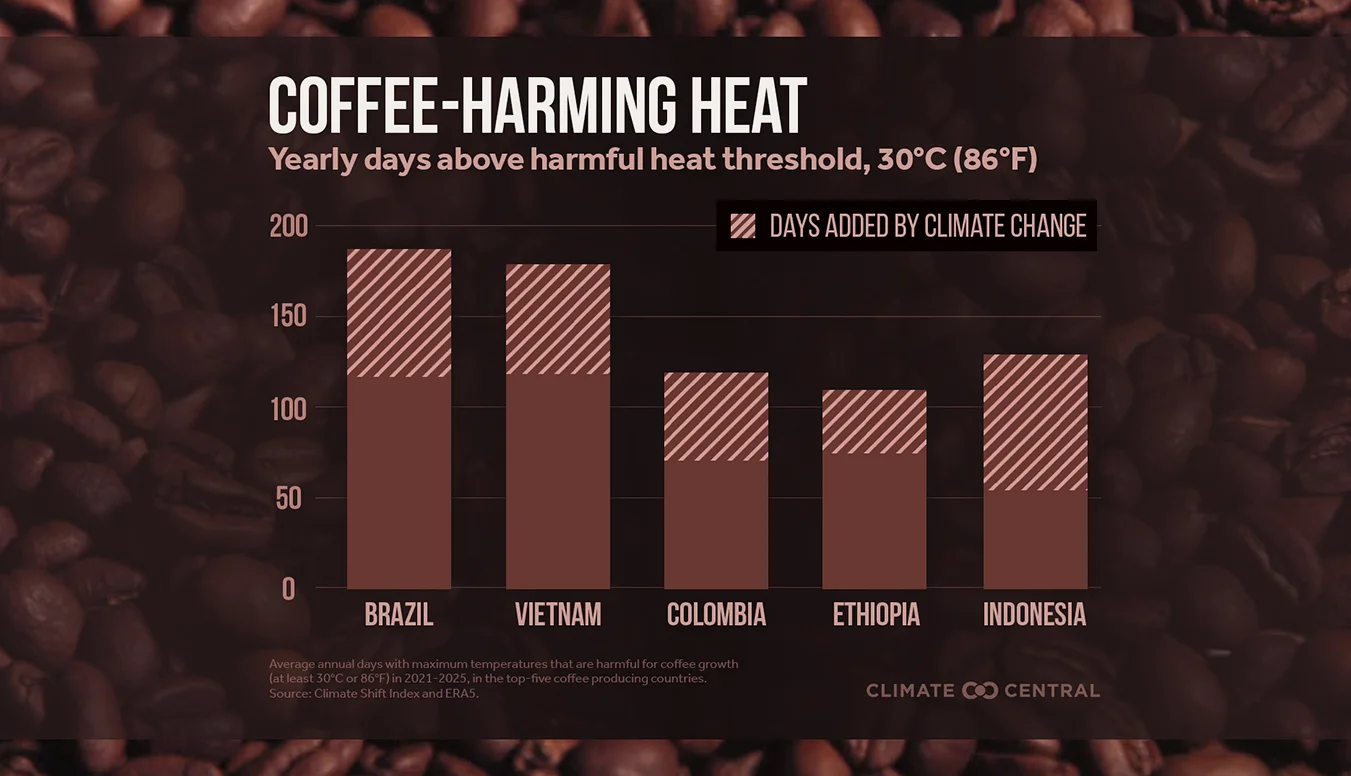
Brazil’s coffee fields baked through 187 days above 30°C last year, up 60% from earlier baselines. Indonesia fared worse with a 130% jump to 129 such days. A new analysis from Climate Central pins these spikes directly on carbon pollution, using ERA5 reanalysis data and the group’s Climate Shift Index for 2021-2025.
Robusta trees handle 30°C at the edge of their comfort zone. Arabica quits much sooner, around 27°C. Excess heat stresses plants, cuts yields and drops bean quality. Smallholder farmers, who grow 60% to 80% of the world’s coffee, bear the brunt with scant adaptation funds—just 0.36% of climate aid reaches them.
Climate Central, a nonprofit of scientists and communicators, tracked temperatures across the Coffee Belt. Their report shows nearly two months of harmful heat added yearly in these nations. Brazil jumped from 117 to 187 hot days. Vietnam, Colombia, Ethiopia and Indonesia followed with steep rises, though exact figures for each varied.
The findings shatter projections of a 2050 crisis. Heat is changing production right now. Farmers in Ethiopia’s highlands already shift plots to cooler elevations. Vietnam’s central regions, key for Robusta, face drying soils alongside the scorch.
Global trade feels the pinch. Coffee prices spiked 50% this year on supply fears. Roasters from Seattle to Sydney scramble for beans. Yet adaptation lags. Experts call for more resilient varieties and shade planting, but funding shortfalls hobble progress.
Climate Central’s index compares actual heat to a world without emissions. Nearly all extra days trace to fossil fuels and deforestation. The group analyzed 75% of production lands. Trends point higher: unchecked warming could slash suitable acres by half in decades.
Farmers report uneven ripening, smaller harvests. In Colombia, some estates lost 20% output to 2024’s heatwaves. Indonesia’s small plots, often under 2 hectares, lack irrigation. Relief efforts focus on cooperatives, but scale falls short.
The report urges swift cuts in emissions alongside farmer aid. Without both, breakfast cups worldwide risk emptying. Coffee’s aroma fades as thermometers climb.





Comments
No comments yet
Be the first to share your thoughts