

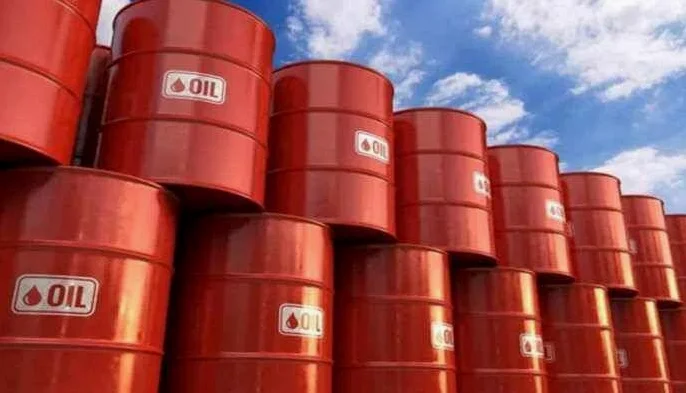
Crude oil prices reached a new high of $118.21 per barrel for West Texas Intermediate (WTI) and $118.22 for Brent Crude on Monday, marking a 30.04 percent and 27.54 percent increase respectively. The jump came amid escalating concerns over prolonged supply disruptions in the Middle East, where the US-Israeli war against Iran enters its second week with no sign of a resolution.
Impact on Global Markets
Asian stock markets plunged in response to the steep rise in oil prices, with indices in Seoul, Tokyo, and Taipei falling sharply. The surge in crude prices comes at a time when investors are already wary of inflated tech valuations and heavy spending on artificial intelligence, exacerbating market jitters.
The sharp increase in oil prices has raised fears of a renewed spike in inflation, which could hinder global economic growth and prevent central banks from cutting interest rates to support expansion. The Strait of Hormuz, through which a fifth of global crude and gas passes, has seen maritime traffic halted since the war began on February 28.
Escalating Regional Tensions
Iran’s retaliatory strikes against oil-producing Gulf nations have intensified concerns over supply chain disruptions. Reports indicate that attacks on oilfields in southern Iraq and northern Kurdistan have forced a US-run oilfield to halt production. The United Arab Emirates and Kuwait have also begun reducing output, compounding the impact on global energy supplies.
Since the start of the conflict, WTI has risen more than 75 percent, while Brent has climbed over 60 percent. The physical disruption of oil production has led to a sharp decline in export flows and the filling of storage hubs, with Qatar halting liquefaction at key gas facilities—a move that could take weeks to reverse even if the conflict de-escalates.
Market Reactions and Analyst Warnings
Stephen Innes of SPI Asset Management warned that the market is not merely reacting to headlines but to a tangible disruption in the physical production of oil. He noted that oil prices above $100 are not just a commodity rally but a tax on the global economy.
President Donald Trump, however, sought to reassure investors that the price spike would be temporary, calling it a ‘small price to pay’ for ensuring global safety and peace. He wrote on social media that only ‘fools’ would think otherwise, reinforcing the administration’s stance that the situation would stabilize once the Iran nuclear threat is eliminated.
Despite these assurances, Michael O’Rourke of JonesTrading warned that the worst may still be ahead for investors, predicting a prolonged ‘risk-off’ mood until tangible positive news emerges. The US economy has also seen unexpected job losses in February, with unemployment rising slightly, adding to the economic uncertainty.
At 0230 GMT, WTI was up 27.6 percent at $116.00 per barrel, signaling that the upward trend in oil prices may continue. As the situation unfolds, the global economy faces the dual challenge of managing energy costs and maintaining economic stability amid ongoing geopolitical tensions.






Comments
No comments yet
Be the first to share your thoughts