

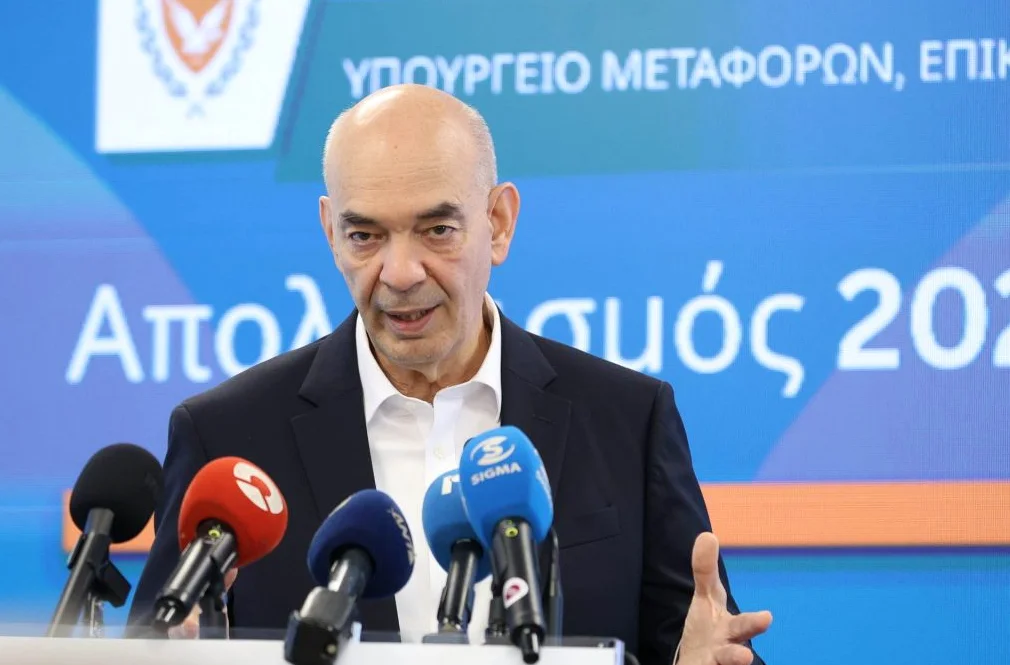
Cyprus’ Transport Minister Alexis Vafeadis presented the ministry’s 2025 performance report, highlighting a surge in air travel, major advancements in road infrastructure, and a growing commitment to electric vehicles and sustainable transport. The report, delivered at the ICT Academy, outlined a series of achievements that have reshaped the country’s transportation landscape and positioned Cyprus as a regional leader in modern infrastructure development.
Record Air Travel and Airport Revenue
Cyprus airports recorded a record 13.7 million passengers in 2025, marking a 12% increase from the previous year. This surge in air travel was driven by the expansion of international routes, with 60 airlines operating 160 routes to 41 countries. Fifteen new destinations were added, significantly broadening connectivity for both tourists and residents. The growth in passenger numbers translated into substantial revenue, with airport fees generating €94 million in 2025.
Vafeadis emphasized the importance of air travel in boosting the economy and tourism, stating that the ministry has worked closely with airport authorities to ensure infrastructure and services meet the growing demand. The Limassol port also contributed significantly to state revenue, with concession agreements bringing in €81 million. Meanwhile, development plans for the Larnaca port and marina are progressing in partnership with Greece’s Hellenic Corporation of Assets and Participations.
Major Road Projects and Public Transport Expansion
The ministry reported significant progress on several key road projects, including the Limassol-Saittas motorway (Phase A1), the Nicosia-Palaichori and Astromeritis-Evrychou motorways, and upgrades to the existing road network. These projects aim to improve connectivity, reduce congestion, and enhance travel efficiency across the island.
Planning is also underway for strategic road developments, such as the Polis Chrysochous-Stroumpi motorway and later phases of the Nicosia ring road. Vafeadis noted that these projects are critical for supporting economic growth and ensuring the road network can handle future demand. The ministry has also expanded public transport services, with passenger trips increasing by 64.5% from 2022 to 28.1 million in 2025.
Public transport improvements include the introduction of new express routes and an on-demand transport program for people with disabilities, which is now being extended. These initiatives aim to make transportation more accessible and efficient for all citizens, particularly in underserved areas.
Green Mobility and Electric Vehicle Push
Cyprus has made significant strides in promoting green mobility, with the 2025 electric vehicle (EV) scheme playing a central role. Under this initiative, 2,429 grants were issued, supporting €21.5 million in investment. A total of 1,820 new electric vehicles were registered, and 609 older vehicles were scrapped, demonstrating a clear shift toward sustainable transportation.
Vafeadis highlighted that the push for EVs aligns with Cyprus’ broader goals of reducing carbon emissions and modernizing its transport infrastructure. The ministry has also invested in accessibility projects for pedestrians, cyclists, and people with disabilities, alongside energy upgrades to public buildings. These efforts are part of a larger strategy to create a more inclusive and environmentally friendly transportation system.
The ministry’s green initiatives extend beyond vehicles. Over €85 million was invested in government buildings and equipment, including a €16.5 million press center and an €8.5 million upgrade to the conference center. These improvements were made ahead of Cyprus assuming the EU Council presidency, ensuring the country is well-prepared to host international events and discussions.
Infrastructure Upgrades and Future Plans
Infrastructure upgrades were a major focus of the 2025 report, with significant investments made in key facilities. The Spyros Kyprianou sports arena was upgraded to host the FIBA EuroBasket, and improvements were made to the national blood center and other state facilities. These upgrades reflect the ministry’s commitment to enhancing public services and ensuring that infrastructure meets the needs of the population.
Vafeadis outlined future plans for continued investment in road and public transport projects, as well as further support for electric vehicles. The ministry is also working on expanding the on-demand transport program and improving accessibility for all citizens. With the country’s growing population and increasing demand for efficient transportation, these projects are crucial for maintaining economic momentum and quality of life.
The presentation was attended by senior ministry officials and the Commissioner for Electronic Communications, highlighting the collaborative approach taken by various sectors to ensure the success of these initiatives. The report serves as a blueprint for the ministry’s priorities in the coming years, with a focus on sustainability, accessibility, and modernization.
Significance for Ordinary Citizens
The improvements in transportation infrastructure have direct implications for ordinary citizens, offering greater mobility, reduced travel times, and more accessible public services. The expansion of public transport and the introduction of on-demand services are particularly beneficial for residents in rural and underserved areas, providing them with more reliable and flexible options.
The push for electric vehicles also offers long-term benefits, including lower fuel costs and reduced environmental impact. As more residents transition to EVs, the demand for charging infrastructure and supporting services is expected to grow, creating new economic opportunities and jobs in the renewable energy sector.
Moreover, the upgrades to government buildings and public facilities ensure that essential services remain functional and up to date, benefiting citizens in their daily lives. The ministry’s focus on sustainability and modernization reflects a broader commitment to improving the quality of life for all Cypriots.
What’s Next for Cyprus Transport
The ministry has outlined several upcoming projects and initiatives that are expected to shape the transportation landscape in the coming years. These include the continuation of major road projects, the expansion of public transport services, and further support for electric vehicle adoption.
With the country preparing for its role as the EU Council presidency, the ministry is also working on ensuring that its infrastructure and facilities meet the highest standards. This includes further investments in the press center, conference center, and other state facilities to support international events and diplomatic engagements.
Vafeadis emphasized that the ministry is committed to maintaining the momentum of the 2025 report and delivering on its goals. As Cyprus continues to grow and develop, the transportation sector will play a crucial role in supporting economic progress, environmental sustainability, and the well-being of its citizens.






Comments
No comments yet
Be the first to share your thoughts