

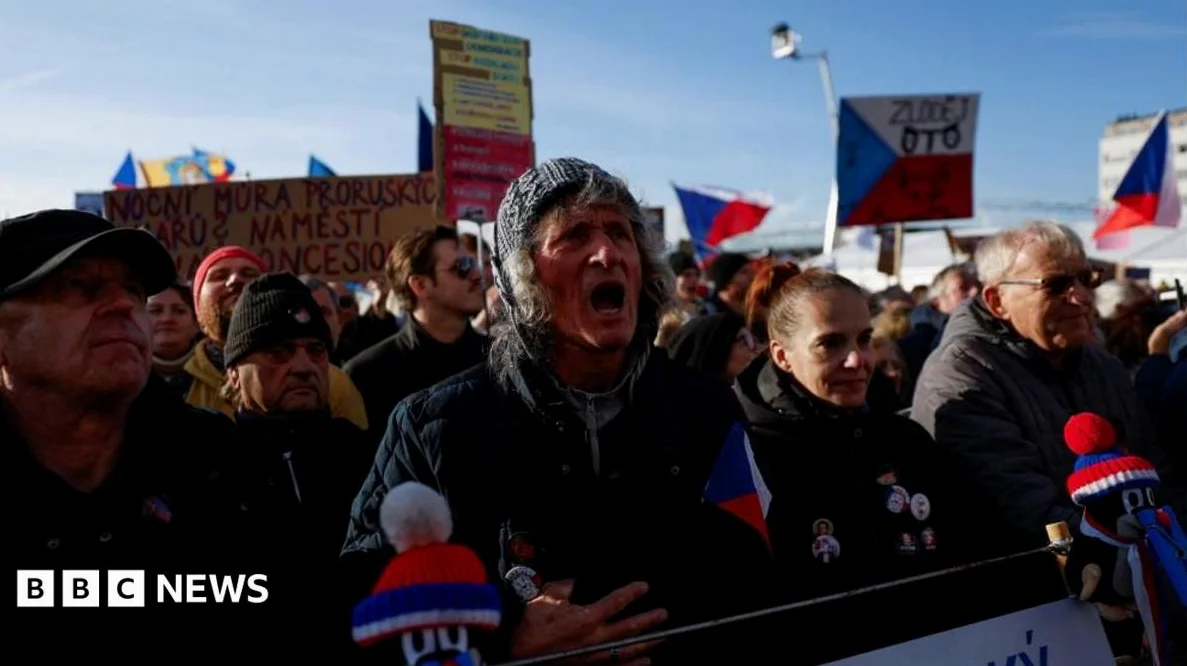
The protest took place in Letná Park, a site symbolic of the 1989 revolution, and drew an estimated 350,000 people, according to Mikuláš Minář, lead organizer of the Million Moments for Democracy group. The event occurred just days before the November 17 holiday commemorating the start of the Velvet Revolution.
Under the proposed changes, public radio and television broadcasters would receive about 15% less money than they currently do, replacing the existing system of monthly household fees. Critics say the shift would make media more vulnerable to political influence, similar to what has happened in Hungary and Slovakia.
“Babiš and his government obviously think they will get away with anything … that they can ignore experts, silence critics and treat democratic institutions like their property,” the Million Moments for Democracy group said.
The government passed the bill’s first reading in the lower house of Parliament on October 24, with a vote held at 4:36 a.m. after limiting opposition speaking time. The move prompted immediate backlash, including a one-day strike by public media employees on November 3.
Prime Minister Andrej Babiš denied that the plan would threaten media freedom, calling it a way to reduce the financial burden on citizens. He returned to power after his ANO party won last year’s election and formed a coalition with two smaller parties. Babiš has also faced criticism for opposing key EU policies and for failing to support Ukraine.
The European Parliament debated the issue, with EU Justice Commissioner Michael McGrath saying legislation must ensure transparent and objective funding for public media. International media organizations, including Reporters Without Borders and the International Press Institute, have criticized the Czech government’s plan.
Protesters also condemned the government’s defense policy and called for the resignation of Defense Minister Jaromír Zůna. Some wore pointed hats made from folded newspapers, a tribute to an animated character who has introduced Czech Television’s nightly children’s bedtime stories for decades.
“I know that our entire Czech Television is a guarantee of truth and objectivity,” said pensioner Milana Rudolfova. “If we do not have public television and radio then unfortunately we will not be able to believe anything anymore.”



Comments
No comments yet
Be the first to share your thoughts