

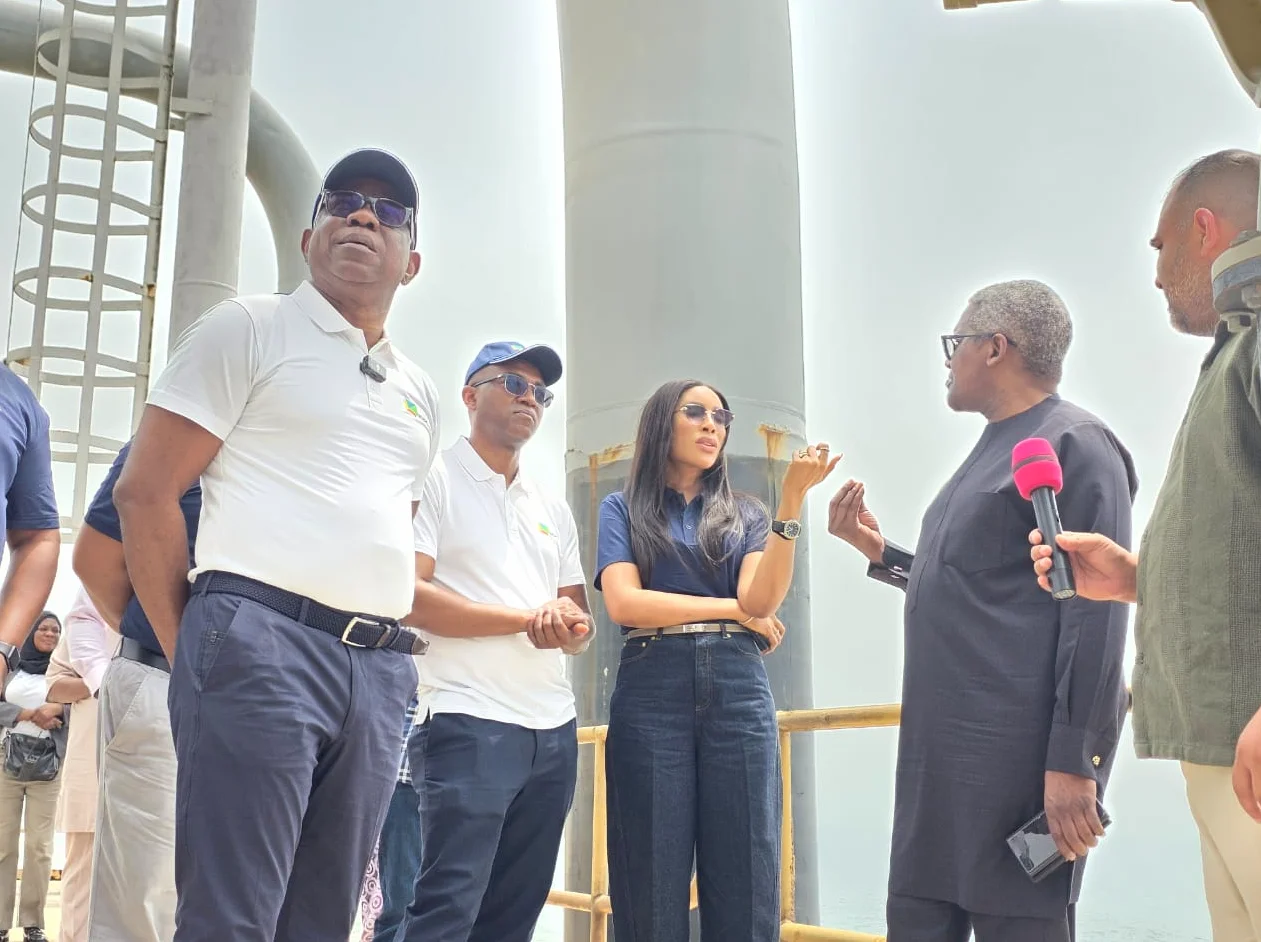
Aliko Dangote, president and chief executive of Dangote Industries Limited, hosted Bayo Ojulari, group chief executive officer of the Nigerian National Petroleum Company Limited, at the Dangote Petroleum Refinery and Petrochemicals in Lekki on February 21, 2026. Pictures from the visit show Ojulari alongside Dangote’s son Aminu and other senior executives as they inspected refinery operations.
The meeting, shared via a photo story on Dangote Group’s official social media, highlights deepening ties between Nigeria’s largest private refinery and the state oil giant. Officials described the discussions as centered on operational synergies to enhance domestic refining and bolster energy security. The refinery, Africa’s biggest with a 650,000-barrels-per-day capacity, began producing diesel and aviation fuel last year and aims for full operations soon.
Ojulari’s tour covered key areas including production units and storage facilities. Dangote Group spokespeople confirmed the visit remains underway, with more details to follow upon conclusion. This comes as Nigeria pushes to cut fuel imports, which have long strained its finances.
Such collaborations hold promise for Nigeria’s energy sector. NNPC has already secured supply deals with Dangote Refinery, channeling crude oil in exchange for refined products. Industry watchers see Ojulari’s presence as a sign of commitment to these partnerships amid global shifts in oil markets.
The refinery’s launch marks a milestone for Dangote, who invested over $20 billion to build it. Production hit 550,000 barrels per day of various fuels by early 2026, according to company updates. Ojulari, appointed NNPC GCEO in late 2025, has prioritized local refining to stabilize supply chains.
Photos capture the group in hard hats amid towering pipes and control rooms. One image shows Ojulari and Aminu Dangote reviewing digital displays, suggesting focus on technical integration. Dangote Industries emphasized the visit’s role in aligning strategies for sustainable output.
Nigeria’s refining push addresses chronic shortages. State-owned plants like Port Harcourt have operated below capacity for years, forcing imports despite vast crude reserves. Dangote’s facility changes that equation, potentially saving billions in foreign exchange.
Further outcomes from the talks could shape feedstock agreements and distribution networks. NNPC officials noted progress on joint ventures, though specifics await official release. The event highlights private-sector leadership in Nigeria’s energy transformation.






Comments
No comments yet
Be the first to share your thoughts