

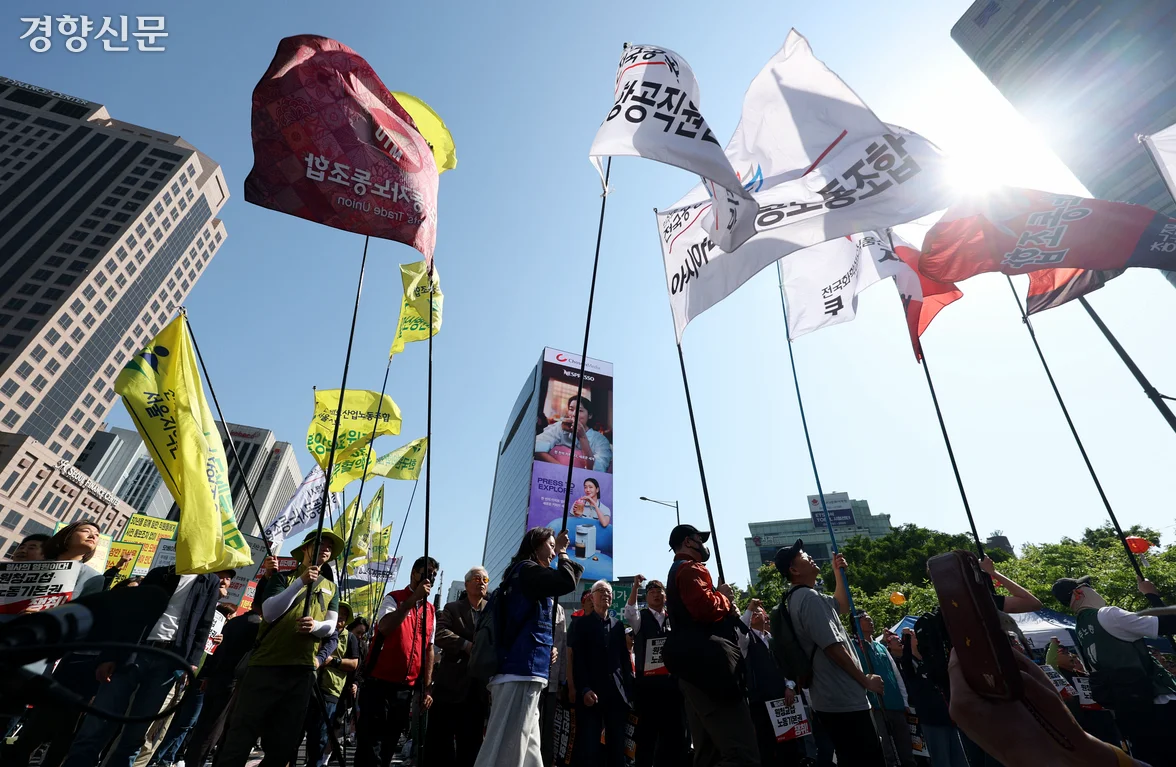
On May 1. 2026, workers and activists around the world took to the streets to mark International Workers’ Day. In the U.S. ., the “May Day Strong” campaign saw walkouts and demonstrations under the slogan “no school, no work, no shopping.” The coalition behind the event called for systemic change, including policies that “tax the rich so our families, not their fortunes, come first,” according to a statement from the organizing group.
U.S. Demonstrations and Historical Context
Over 100,000 students were expected to strike from school, with “over a dozen schools canceling classes due to high absenteeism among students and teachers,” according to the Sunrise Movement. The protests are part of a broader demand to “expand democracy” and reject policies like ICE enforcement and military interventions. May Day in the U.S. has deep historical roots, tracing back to the 19th-century fight for an eight-hour workday. The Haymarket Affair of May 4, 1886, remains a major moment in labor history, marked by violence and lasting political consequences.
Korea Marks First Labor Day Holiday in 63 Years
In South Korea, May 1, 2026, marked the first time in 63 years that Labor Day was designated a national holiday. The Korean Confederation of Trade Unions (KCTU) organized rallies in Seoul and 13 other cities. According to the KCTU, 10,000 people gathered in Seoul (while police estimated 8,000), and about 100,000 participated nationwide. The event also saw the participation of workers from Uchang Connecta, who were on their 100th day of protest, demanding employment continuation from Mobase Electronics, a partner of Hyundai Motor.
Iranians Continue to Challenge Government Narratives
While the U.S. and South Korea focused on labor rights and institutional change, Iranians continued a long-standing struggle against the Islamic Republic. In 2022, the death of Mahsa Amini triggered widespread protests under the slogan “Woman. Life. Freedom.” The demonstrations challenged the state’s compulsory hijab laws and marked one of the most significant rejections of the administration since the 1979 revolution. Despite the government’s efforts to portray Iranians as uniformly anti-Israel, a 2025 GAMAAN survey found that two-thirds of Iranians believed the government should stop its “destroy Israel” rhetoric. Many Iranians view the recent 12-day conflict as one between the administration and Israel, not between Israel and the people, according to reports from the Israeli Ministry of Foreign Affairs.






Comments
No comments yet
Be the first to share your thoughts