

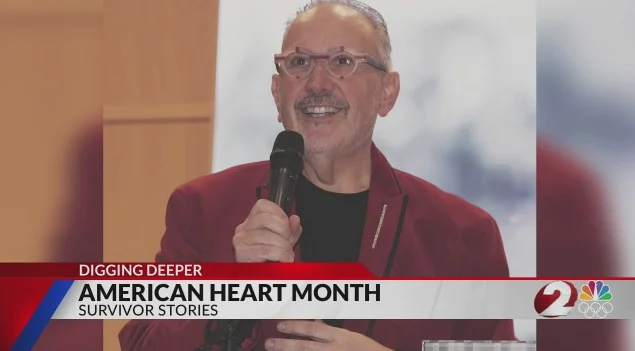
DAYTON, Ohio — Brian Sharp drove himself to the hospital after a heart attack struck at 39. Just a month later, four strokes followed in rapid succession.
Hospital staff initially believed they had pinpointed the cause during his stay. Sharp gives credit to his cardiologist, however, for spotting that he had not fully recovered. That vigilance uncovered a rare blood clotting disease, one of the scarcest known to medicine.
Sharp shared his story recently to highlight the unpredictable nature of heart disease and strokes. He stresses that warning signs demand immediate action: chest pains, shortness of breath, irregular heartbeat or nausea.
“It’s not just a 70-year-old or a 60-year-old, it’s not somebody who is obese, it’s not somebody whose cholesterol is out of control,” Sharp said. “Those are certainly contributing factors, but it can also be the 39-year-old who’s in the midst of their career, thinking they’re doing everything right, because it doesn’t discriminate. Heart issues and stroke don’t discriminate.”
The American Heart Association lists key risk factors: smoking, physical inactivity, obesity, high cholesterol, diabetes and high blood pressure. Sharp embodies how these conditions can strike without obvious predictors. Despite the severity, he emerged without lasting effects.
His experience highlights a broader message. Heart disease kills nearly one in five women and remains the leading cause of death for men in the U.S., according to health officials. Strokes, often linked, claim lives and leave survivors with disabilities.
Sharp’s case stands out for its rarity. The clotting disorder he fights affects a tiny fraction of patients worldwide. Doctors rarely encounter it, which delayed his full diagnosis.
Now recovered, Sharp travels and speaks to groups in the Dayton area. He pushes for routine checkups and lifestyle vigilance. “Listen to your body,” he tells audiences. Early detection saved his life after the initial heart attack.
Local health experts echo his call. Miami Valley Hospital reports a rise in younger patients with cardiac events post-pandemic. Stress, poor diet and delayed care play roles, they say.
The American Heart Association recommends at least 150 minutes of moderate exercise weekly, alongside balanced eating and no smoking. Blood pressure checks every two years for adults under 40, more often with risks, top their list.
Sharp plans to continue advocating. His next talk targets area businesses, aiming to reach mid-career workers like his former self. No one, he insists, can afford to ignore the signs.




Comments
No comments yet
Be the first to share your thoughts