

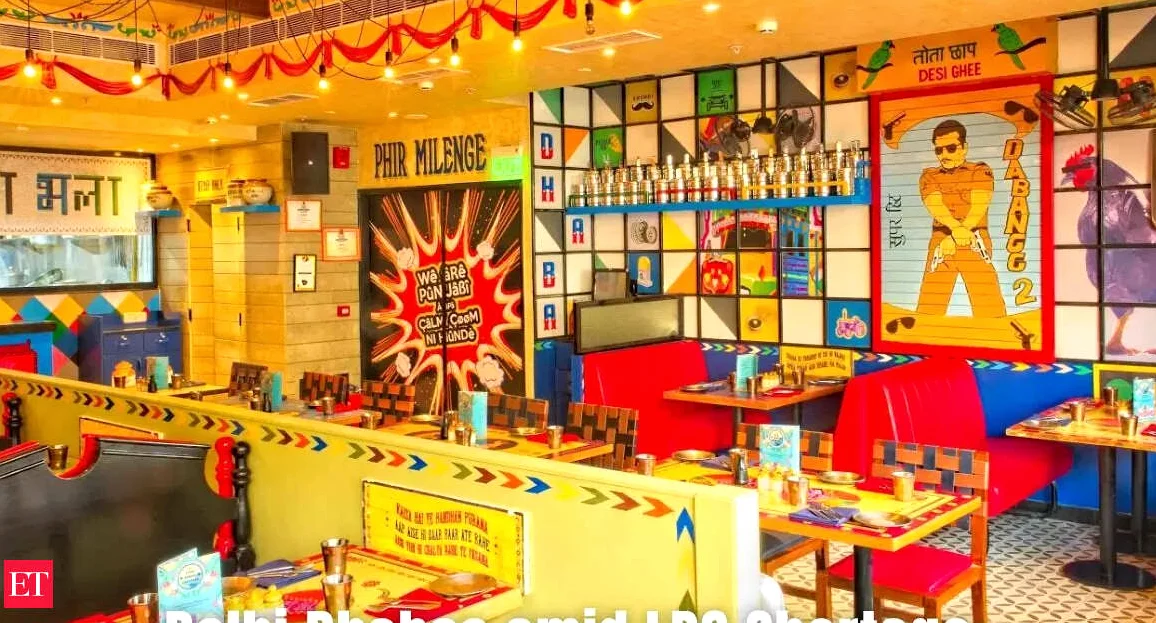
On Friday, business owners in high-traffic areas of Delhi, including Connaught Place, Paharganj, and Sadar Bazar, reported a near-total halt in LPG cylinder deliveries, putting their businesses on the verge of collapse. The central government has prioritized household supply, but the informal food sector is now running on its last reserves. Vendors warn that if the supply chain remains disrupted for a few more days, the city’s ubiquitous dhabas and carts will be forced to shut down, marking a significant shift in Delhi’s street food landscape.
Impact on Delhi’s Iconic Street Food
The diversity of Delhi’s street food, once celebrated for its variety and flavor, is being replaced by a grim uniformity as vendors prioritize fuel conservation. Anil Mehta, a 65-year-old dhaba owner who has been in the business since 1984, told TOI that his once-rich menu, featuring shahi paneer and chhole bhature, has been reduced to just kadhi chawal and rajma chawal. The change in offerings has led to a noticeable drop in foot traffic. In Sadar Bazar, owners reported that seven out of ten potential customers now walk away upon learning that only basic dal is being served.
Similarly, Bal Kishan Gupta, who runs a dhaba in the Kotla market area, told TOI that he has discontinued nearly 40 popular items and is now serving only a single dish of dal to keep his business afloat for his ten dependent employees. The reduction in menu options not only affects the dining experience but also signals a broader economic strain on the informal sector.
The crisis has also highlighted a growing divide within the capital’s hospitality sector. Larger outlets connected to PNG (Piped Natural Gas) pipelines have avoided the worst of the disruption. However, smaller vendors relying on LPG cylinders are in a state of panic. Manoj Sharma, a vendor near Connaught Place who typically sells tea, samosas, and Maggi, told TOI he is now offering only tea due to a dwindling supply of cylinders. In Paharganj, dhaba owner Ajay Shukla said the promised government priority for household LPG supply is not reaching his home kitchen, let alone his business, and he can manage for “barely five more days” before the fuel runs out completely.
Adapting to the Crisis: Technology and Tradition
As the crisis deepens, younger vendors are exploring alternatives to LPG, with some considering the switch to electricity. Daksh Manchanda, a 19-year-old running a snack cart near ITO, told TOI that his family is exploring electric induction to keep the business running. However, older vendors remain skeptical about the scalability of this solution.
“Induction is not feasible during peak hours because cooking large batches for hundreds of customers takes significantly more time,” one vendor told TOI. While some are considering a return to coal or wood, the space constraints and safety regulations in crowded markets make traditional chulhas a dangerous and unlikely solution for most.
Manoj Sharma, who has been a street food vendor for over two decades, expressed doubt about the feasibility of switching to electric cookers. “We need to cook quickly and in large quantities, and electric stoves just don’t have the same capacity,” he said. “Besides, we don’t have the space or the infrastructure for that in our small carts.”
The reliance on LPG has become so deeply ingrained in the daily operations of dhabas that the prospect of a complete switch is daunting. Many vendors fear that without a stable supply of LPG, their businesses may not survive the coming weeks.
What’s Next for Delhi’s Street Food Culture?
The situation has sparked discussions about the future of Delhi’s iconic street food culture. If the LPG shortage persists, the survival of these small businesses could be in jeopardy. Analysts warn that the impact on the informal economy could be significant, with potential ripple effects on employment and local commerce.
According to a recent report by the Delhi government, the LPG shortage is expected to persist for at least another month, with no immediate resolution in sight. The government has urged citizens to use LPG judiciously and has introduced measures to ensure priority supply to households. However, vendors continue to feel the brunt of the crisis, with many expressing frustration over the lack of support for the informal sector.
“We are not asking for special treatment,” said Ajay Shukla, the dhaba owner in Paharganj. “We just need a fair share of the supply so that we can keep our doors open. Without that, we won’t be able to feed our employees or our customers.”
As the crisis continues, the question remains: how long can Delhi’s iconic street food dhabas survive without a stable supply of LPG? For now, the answer is uncertain, but the signs are clear—without intervention, the vibrant street food culture that has defined Delhi for decades may be at risk of disappearing.




Comments
No comments yet
Be the first to share your thoughts