

 BBC
BBC 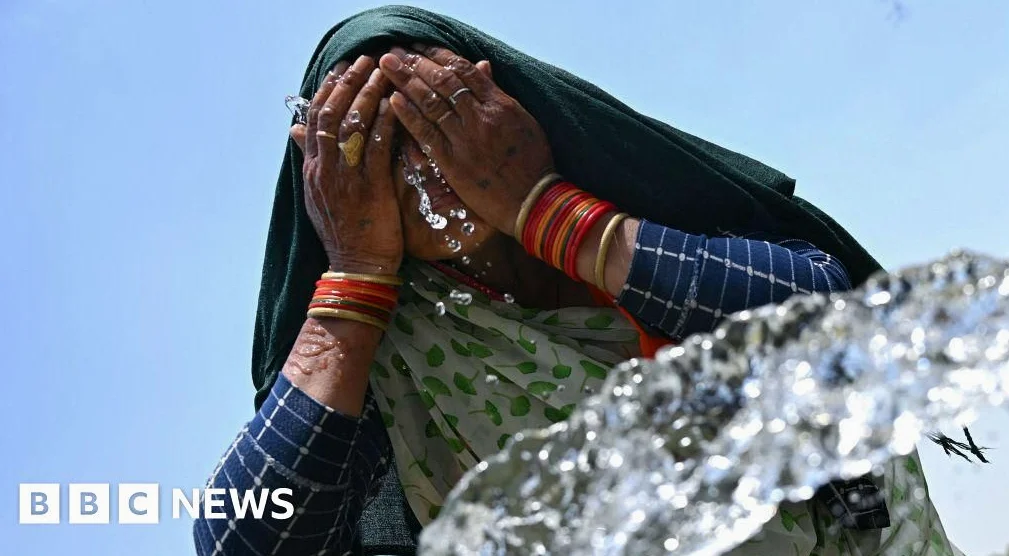
With temperatures soaring to 45C. Informal workers in Delhi are forced to choose between staying out of the heat and earning the wages necessary to feed their families — Nearly 90% of India’s workforce is informal, lacking contracts or job security, and many rely on outdoor labor for daily income, according to BBC reports.
Informal Workers’ Daily Struggle
Harish Chandra, a 52-year-old cycle-rickshaw driver in Delhi, exemplifies this struggle. He pedals through the city’s crowded streets despite the harsh conditions, starting his day at around nine in the morning when the weather is still manageable. By noon, the sun becomes unbearable, yet stopping means no income.
“The body gives up. ” Chandra says, describing how the heat feels like it is draining his strength. Wearing thin, worn cotton clothes, he splashed water over his face at a public tap and rested in a narrow strip of shade near the market. Chandra recently sent his wife and three children back to their village in Bihar state, where temperatures are equally high but open spaces and better ventilation make it easier to cope.
Heatwave Trends and Climate Impact
India’s heat season typically lasts from April until early July, but climate scientists warn that extreme heat is becoming longer, harsher, and more unpredictable as global warming intensifies heatwaves across South Asia. The Met Office’s State of the Climate 2024 report highlights similar trends in the UK, showing that the hottest days are warming around twice as fast as typical days. Compared with the 1961–1990 period, the number of days 5C above average has doubled, while days 10C above average have quadrupled.
Dr. Berthou explains that “extreme temperatures are increasing faster than average temperatures.” Summer daytime highs in the UK are already about 1.5C warmer when comparing the 1991-2020 climate period with 1961-1990. After the UK hit 40.3 C in July 2022, studies showed the likelihood of exceeding 40C is now more than 20 times higher than in the 1960s.
Drier Conditions and Faster Warming
Drier ground and air contribute to faster warming, as dry ground heats up more quickly than moist ground. Strong evidence shows that UK summer soils are becoming drier as the climate warms, with projections indicating earlier seasonal drying and more frequent droughts, especially in southern and eastern England. The same principle applies higher above the ground, where large areas of sinking air,often called blocking highs or heatdomes,dry the air and compress it, increasing temperature.
While blocking highs may not be occurring more frequently, studies suggest that when they do occur, the heat and dryness they bring are more intense than in the past. These trends highlight a growing concern for both Delhi’s informal workers and the UK’s population as climate change intensifies the frequency and severity of extreme heat events.





Comments
No comments yet
Be the first to share your thoughts