

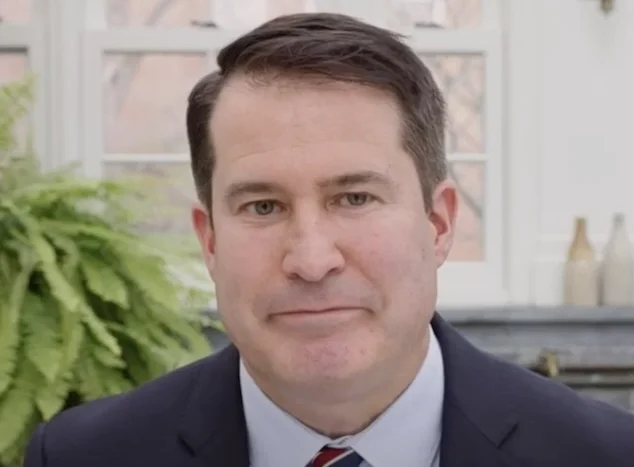
Rep. Seth Moulton (D-MA), a Democratic congressman running for the Senate in Massachusetts, called for the abolition of Immigration and Customs Enforcement (ICE) during a segment on CNN’s ‘New Central’ on Monday. Moulton stated that ICE has not been keeping the country’s borders safe but has instead contributed to making cities unsafe, particularly in areas he described as ‘blue cities’ targeted by former President Donald Trump.
ICE’s Role and Moulton’s Criticism
Moulton’s comments came after host John Berman referenced a warning from Jim Messina, who served as campaign manager for Barack Obama in 2016. Messina cautioned against using the term ‘abolish ICE,’ arguing that people want accountability and enforcement of immigration laws, not the dismantling of a federal agency responsible for border security.
During the interview, Berman played an excerpt from Messina’s interview with Kate Baldwin, in which he said, ‘People do want accountability for ICE. They want people held to action. They want smart enforcement of our immigration laws. What they don’t want is to get rid of the federal agency that they think is responsible for keeping our borders safe.’
Moulton responded by saying that ICE is not keeping the country safe and has instead made cities unsafe. He cited instances of violence linked to ICE operations, particularly in cities that have been targeted by Trump’s policies. Moulton also mentioned that some ICE officers are ‘ashamed by their organization’ and have expressed concerns about its direction.
Historical Context and Reform Proposals
Moulton noted that ICE was created by former President George W. Bush in the aftermath of the 9/11 attacks. He argued that the agency should be moved back to the Department of Justice and removed from the Department of Homeland Security. He described ICE’s current state as a ‘disaster,’ citing his own experience on the ground in Minneapolis, where he observed firsthand the impact of ICE operations.
Moulton’s comments reflect a growing debate over the role and effectiveness of ICE, which has been a focal point of political discourse for years. The agency is responsible for enforcing immigration laws, deporting undocumented immigrants, and investigating cases of fraud and smuggling. Critics argue that ICE’s enforcement policies have led to the detention and deportation of vulnerable individuals, including asylum seekers and children.
According to a 2022 report by the Government Accountability Office (GAO), ICE faced significant challenges in managing its operations, including staffing shortages and difficulties in processing immigration cases efficiently. The report noted that over 70% of ICE detention beds were unoccupied in some facilities, raising concerns about the agency’s efficiency and resource allocation.
Implications for Immigration Policy
Moulton’s call for the abolition of ICE has significant implications for U.S. immigration policy. If implemented, such a move would require a complete overhaul of the immigration enforcement system, including the transfer of ICE’s responsibilities to other federal agencies. The proposal also raises questions about how immigration enforcement would be handled in the absence of a centralized agency like ICE.
Analysts have noted that the idea of abolishing ICE is not new. Similar discussions have occurred during previous presidential administrations, though none have resulted in concrete action. In 2020, then-President Donald Trump sought to increase ICE’s enforcement efforts, while former President Barack Obama focused on reforming the agency’s practices and improving conditions for immigrants.
According to a survey by the Pew Research Center, 52% of Americans believe that ICE is more focused on enforcing immigration laws than on protecting national security. The survey also found that 63% of respondents believe that ICE should be reformed or restructured.
Moulton’s comments come at a time of heightened political polarization over immigration issues. With the 2024 presidential election approaching, the debate over ICE’s role is likely to intensify, with candidates from both major parties expected to take positions on the agency’s future.
As the discussion around ICE continues, the agency remains a central figure in the broader conversation about immigration enforcement, border security, and the treatment of undocumented immigrants in the United States.






Comments
No comments yet
Be the first to share your thoughts