

 BBC
BBC 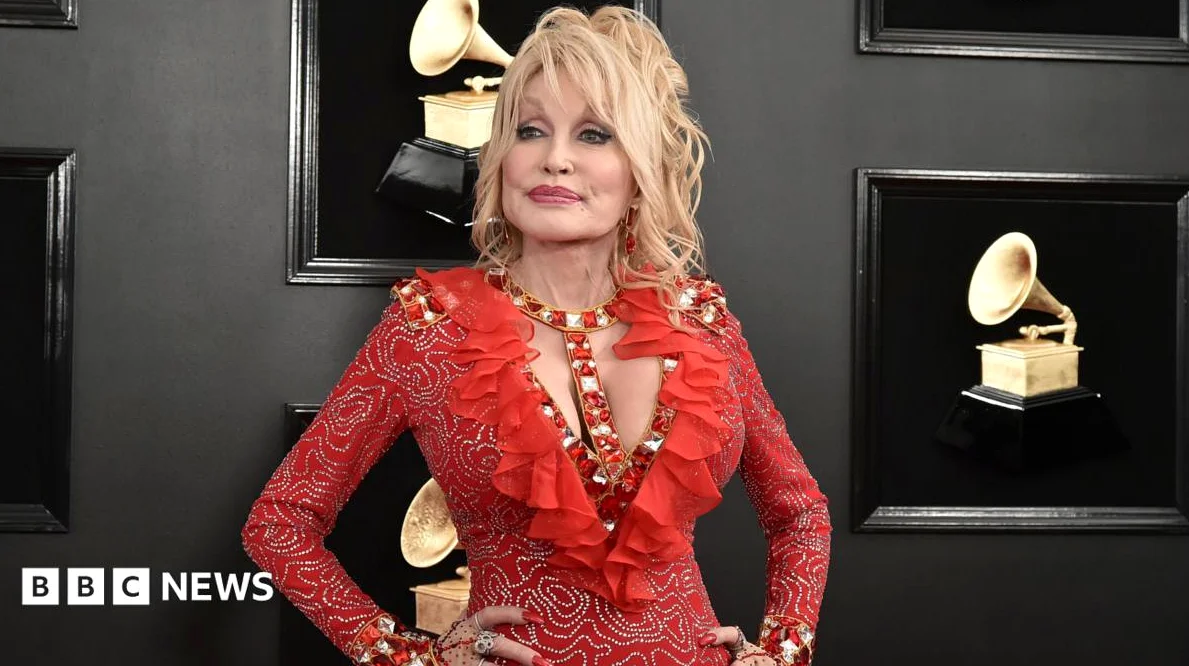
Dolly Parton, the country singer from the Smoky Mountains of Tennessee, will be remembered for her songs that told beautiful stories so honestly, such as “Coat of Many Colors,” “Jolene,” and “I Will Always Love You.”
A Seven-Decade Career and Business Success
In a seven-decade career, Parton won 10 Grammy awards, sold more than 100 million records worldwide, and wrote in excess of 3,000 songs. Parton took her writing seriously, and considered herself a songwriter over everything else. “It’s my way of expressing myself,” she said. “It’s my therapy.”
She was also a savvy businesswoman who wasn’t afraid to make tough decisions. Armed with a quick wit and southern charm, she took control of her showbusiness career that spanned more than 60 years.
Early Life and Musical Roots
Dolly Rebecca Parton was born in 1946, the fourth of 12 children, into a poor farming family who lived in a one-bedroom cabin in Tennessee. Her father, Robert Lee Parton, was a tobacco farmer and paid a missionary a sack of cornmeal for delivering her.
There was already music in the family – her mother, Avie Lee, sang folk songs all the time and her aunt played the guitar and wrote songs. During some of Parton’s earliest performances, her uncle, Bill Owens, accompanied her on the guitar – formative years for the future music legend.
From the age of six, she sang in the local church where her grandfather was the pastor, and was performing on her local TV station by the time she was a teenager. In 1959, when she was 13 years old, Parton performed with Uncle Bill at the Grand Ole Opry in Nashville – a live broadcast that is regarded as country music’s biggest stage. She was introduced by Johnny Cash and received three encores.
Rise to Stardom and Cultural Impact
During her teenage years, Parton began to model herself on a local character who was known as the “town tramp.” The lady wore bright red nail polish, low-cut tops and high heels – young Dolly thought she was beautiful. When people said to her: “She ain’t nothing but trash,” Parton would reply: “Well, that’s what I’m gonna be when I grow up.”
Parton sang “I’m just a backwards Barbie / too much make-up, too much hair,” but her image was both a coat of armour and an astute disguise that helped get her noticed in showbusiness. She would get ahead of the jokes by making them first, and had a quick and simple response for anyone who suggested she should tone it down: “Go to hell.”
After graduating from high school in 1964, she moved to Nashville to launch her singing career and met her future husband, Carl Dean, on her very first day. They married two years later and remained together until his death in 2025.
In Nashville, Parton’s singing caught the eye of country performer Porter Wagoner, who hired her to perform on his television programme. Over the next seven years, the pair became one of country music’s most popular duos, releasing so many duets that many fans assumed they were a couple. But their relationship was a complicated one, and as Parton’s solo career started to rise, so did tensions behind the scene.
Writing in her book “Star of the Show: My Life on Stage,” Parton said Wagoner saw her success away from his show as a “threat.” While travelling with Wagoner on a tour bus in 1969, Parton wrote “Coat of Many Colors,” a beautifully emotive tale of how she grew up poor, but rich with love. Scrawled on the back of one of Wagoner’s dry cleaning receipts, it was rated by Rolling Stone magazine as her second best-ever song. Years later, Parton named her own children’s book “Coat of Many Colors,” and it was the name of a 2015 TV movie based on her life. “It’s a song that’s just stood by me… it’s created a life of many colours for me,” she said.
Despite being unable to read sheet music, Parton played several instruments including the banjo, harp, piano and saxophone. She had her first number one hit – and first Grammy nomination – with the song “Joshua” in 1971 and finally left The Porter Wagoner Show in 1974 to concentrate on her solo career. To say goodbye to him, she wrote “I Will Always Love You,” a song that many think is about two lovers parting ways. “That’s the prettiest song I ever heard,” Wagoner cried when he first heard it, her website says.
The same year, Elvis Presley was set to record a cover of the song, but Parton pulled the deal when his manager demanded half of the songwriting rights. She cried all night at the difficult decision, and Priscilla Presley later told her that Elvis sang the song to her during their divorce. In 1992, Whitney Houston transformed it into a now-iconic power ballad. Parton said she was driving when she first heard the cover and had to pull over: “When I heard her go from the a cappella into the music part, I honestly thought I was going to have a heart attack, it was one of the most overwhelming things.” Houston’s cover of Parton’s “sad little country song” was one of the proudest moments of her life, she said.
Parton re-recorded the song for “The Best Little Whorehouse in Texas,” a 1982 film in which she starred and was nominated for a Golden Globe for best actress.




Comments
No comments yet
Be the first to share your thoughts