

 The Guardian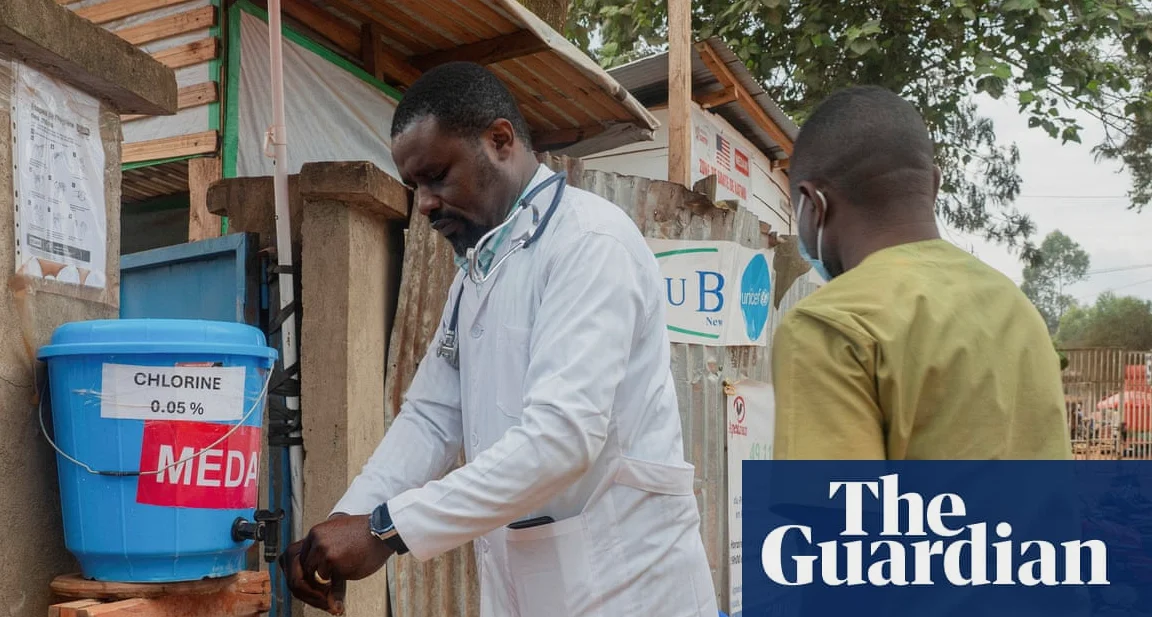
The Democratic Republic of the Congo (DRC) has announced that the ongoing Ebola outbreak has reached its peak, with a noticeable decline in new infections reported since the epidemic was first declared in May. Samuel Roger Kamba, the Congolese health minister, stated that the Bundibugyo variant of the virus is showing reduced transmission, though he emphasized the need for continued preventive measures.
Decline in Daily Cases
According to Kamba, the number of new daily cases has dropped from around 120 to approximately 80; “We are fighting a very dangerous virus that is killing many of our people. Today, we can say that the outbreak is under control,” he said — Kamba also highlighted that more than 22 days have passed since 10 of the 62 health zones reported new cases. Six health zones have now been removed from the list because they have gone more than 42 days without a new case, and four others have gone more than 21 days without a new case.
Regional Impact and Historical Context
Last week, the Sud-Ubangi region, which borders the DRC with Congo-Brazzaville and the Central African Republic, became the sixth province to report cases of the Bundibugyo variant. The outbreak was declared on 15 May and is primarily concentrated in the conflict-affected Ituri province, and this is the 17th outbreak of Ebola in the DRC since the disease was first identified in 1976.
While no effective treatment for the Bundibugyo variant has been found yet, clinical trials are underway in the region. The DRC has also received more than 70,000 doses of the Ervebo vaccine, the only approved treatment for the more common Zaire Ebola virus, in an effort to back containment efforts.
Concerns Over Transparency and Public Confidence
As of 14 September, the Congolese health ministry reported more than 7,200 confirmed cases, including over 3,475 deaths; While the government has acknowledged progress, Iracan Gratien de Saint-Nicolas, an MP for Bunia, urged caution against premature optimism. He warned against what he called “triumphalism” and stressed the need for increased efforts to demonstrate that the disease is under control.
Gratien Iracan also called for lessons to be learned from past failures in epidemiological surveillance, which contributed to the rapid spread of the disease, but he expressed skepticism about the government’s announcement, stating that claims of control must be supported by objective data. “Transparency in the data will strengthen public confidence,” he said.
He pointed out that some key indicators, such as a sustained decline in new cases (over seven to 21 days), a decrease in deaths, and a reduction in areas with active transmission, had not been publicly shared. He also emphasized the importance of high contact tracing rates and dignified burials as essential components of effective containment.
Earlier in the month, Jean Kaseya, director general of the African Centres for Disease Control and Prevention, visited Bunia, the capital of Ituri and a key epicenter of the current outbreak. At that time, he noted that it was difficult to predict when the peak would be reached, and he criticized the lack of effective containment and contact tracing. “A large portion of the mortality, 60 to 70% of deaths, comes from the community,” Kaseya said — he added that epidemiologists consider an outbreak to be at its peak when all new cases come from the list of identified contacts.
Residents in towns like Rwampara, in Ituri province, have expressed mixed emotions, though Léa Munyere, a 36-year-old mother of four, said she was relieved by the government’s announcement. Two of her close friends had died from the disease, and she still struggled with the loss; “We hope the disease will soon be declared over,” she said. “It has robbed us of the people we cherish so much since it was first reported, and we just want to get back to our normal lives.”





Comments
No comments yet
Be the first to share your thoughts