

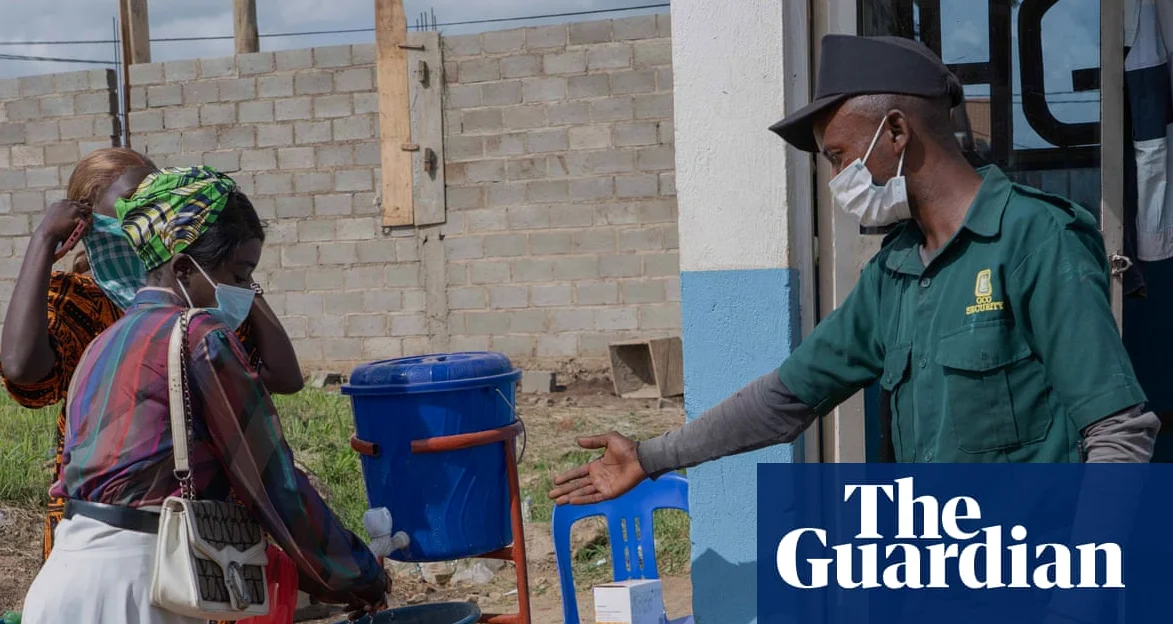
On public transport, in bars and at mass gatherings, everyone is talking about Ebola,” said Gloire Mumbesa, a resident of Mongbwalu, a mining town in the Democratic Republic of the Congo. He said cases of the disease had been reported locally and panic was engulfing the area because of the lack of a vaccine for the Bundibudyo strain. “The fear is that this disease may spread to many other areas,” according to The Guardian.
Residents of Ituri province in eastern DRC, where the WHO announced an outbreak last week, are living in growing fear of the possible continued spread of the disease and its deadly impacts, nearly six years after the last outbreak in the region ended. “We’re stunned by the resurgence of Ebola in our region,” said Dieudonné Lossadekana, a resident of Bunia city, where the first suspected case was reported. “We’ve already recorded several dozen deaths. For us, it’s heartbreaking,” according to The Guardian.
Delays and Miscalculations in Response
Health experts and aid workers have said that the Bundibudyo strain spread undetected for several weeks. Cases have now been verified in Bunia, Goma – the rebel-held capital of North Kivu – Mongbwalu, Butembo, and Nyakunde, according to inkl. Matthew M Kavanagh, director of the Georgetown University Center for Global Health Policy and Politics, highlighted the critical delay. “Because early tests looked for the wrong strain of Ebola, we got false negatives and lost weeks of response time,” he stated. “We are playing catch-up against a very dangerous pathogen.”
Kavanagh also criticized the Trump administration’s earlier decision to withdraw from the WHO and implement significant cuts in foreign aid. “When you pull billions out of the WHO and dismantle front line USAID programs, you gut the exact surveillance system meant to catch these viruses early,” Kavanagh added.
Economic and Health Fears
The economic impacts of the outbreak are a serious worry, and residents are concerned that authorities may impose restrictions that would hinder them from earning a living in a region plagued by armed conflict and where people are already struggling financially. “We live in a region where poverty is rife and people live from hand to mouth,” said Claude Kasuna in Irumu territory. “When a health emergency like this one strikes, it hits us hard economically,” according to The Guardian.
The WHO director general, Tedros Adhanom Ghebreyesus, declared the outbreak a “public health emergency of international concern” after more than 300 suspected cases and 88 deaths were reported in the DRC and two deaths in neighboring Uganda. The majority of the deaths and suspected cases have been reported in Ituri province, a business center and migratory hub that borders Uganda and South Sudan, according to The Guardian.
Response Efforts and Challenges
Congo’s health minister, Samuel Roger Kamba, announced the government is opening three treatment centers. The WHO has also dispatched a team of experts and essential supplies to the region, according to inkl. Congo has said the first person died from the virus on April 24 in Bunia, and the body was repatriated to the Mongbwalu health zone, a mining area with a large population. “That caused the Ebola outbreak to escalate,” Kamba has said.
When another person fell ill on April 26, samples were sent to Kinshasa for testing, according to the Africa Centers for Disease Control. On May 5, the WHO was alerted of about 50 deaths in Mongbwalu, including four health workers. The first case was confirmed on May 14. Samples from Bunia were initially tested for the more common Ebola strain, Zaire, Congolese officials said. They came back negative, according to inkl.






Comments
No comments yet
Be the first to share your thoughts