

 BBC
BBC 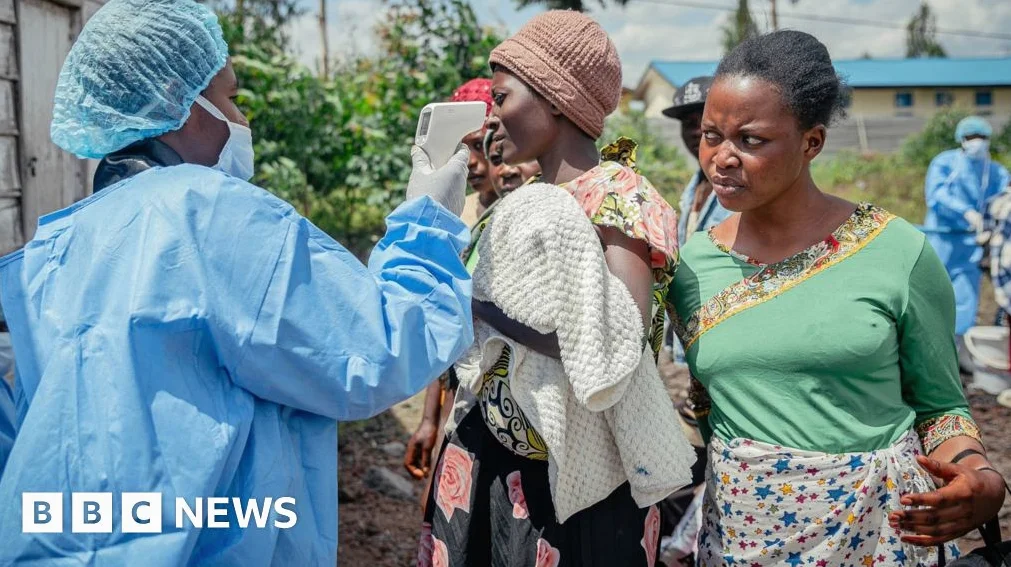
The rapid spread of Ebola in the Democratic Republic of Congo has created a ‘deeply alarming’ situation, according to Médecins Sans Frontières (MSF), as the World Health Organization (WHO) chief visits the worst-hit area. Speaking two weeks after the outbreak was declared, MSF Deputy Director Dr — Alan Gonzales said the number of cases recorded so soon is first-ever.
Outbreak Surpasses Previous Records
Dr. Gonzales said that never before has an Ebola outbreak seen so many cases so soon after its declaration; his comments came as WHO Director-General Dr; Tedros Adhanom Ghebreyesus arrived in Ituri province, the worst-affected region, to assess virus containment efforts. Currently, there are more than 1,000 suspected Ebola cases in DR Congo, with at least 246 deaths reported, while Neighboring Uganda has recorded nine confirmed cases and one death.
“Two weeks after the declaration of the Ebola disease outbreak in Ituri Province, the situation is deeply alarming,” Gonzales said in a statement on Saturday. “Never before has an Ebola outbreak recorded so many cases so soon after its declaration,” he added, noting that containment efforts and aid deliveries are being delayed by major constraints, including border and airport closures.
WHO Chief Urges Community Involvement
Dr. Tedros, upon arriving in Ituri’s capital, Bunia, said he and his team were in the DR Congo to see how the response is running and if there are challenges to help. He urged communities at the center of the outbreak to play a bigger role in fighting the disease, as they understand the problems and potential solutions best.
Tedros also addressed the cultural importance of honoring the dead at funerals, which has become a challenge in containing the virus — “Certain practices including touching the bodies of those who have died from Ebola can spread the virus further,” he said. “While we grieve for those we’ve lost, we must do everything we can so that we don’t lose another, and get into a cycle of grief.”
Challenges in Testing and Response
In Bunia. Daily life appears largely unchanged. With people continuing to move around, trade, and go about their normal activities; However, public health measures are in place, including handwashing stations at the airport and public health advisories broadcast in local languages and French. One of Tedros’s first stops was the National Institute for Biomedical Research laboratory in Bunia, where suspected Ebola samples are now being tested within 24 hours, compared to the previous requirement of sending samples over 1,500 km to Kinshasa.
Until recently, the delay in testing was a major obstacle for health workers. The current outbreak is caused by the Bundibugyo strain of Ebola, a rare and severe form of the virus for which there is no approved vaccine or treatment. The WHO has declared the outbreak a global health emergency, its highest level of alarm. MSF has called it one of the fastest-spreading Ebola outbreaks ever recorded.
According to the WHO, the death rate for this strain of Ebola could reach 30 to 50 percent, based on previous outbreaks. The death rate among confirmed cases so far has been lower, but the lack of a proven vaccine and the rapid spread of the virus remain significant concerns.
Authorities have reported 1,028 suspected cases and more than 220 suspected deaths in DR Congo, with the disease spreading to neighboring Uganda, which has recorded nine confirmed cases and one death. The WHO has emphasized the importance of community ownership in the response, stating that local understanding of the problem is key for an effective solution.
Meanwhile, the European Union has sent medical supplies to Ituri, and the United States has pledged more than $112 million to support the response. However, the Africa Centres for Disease Control and Prevention (Africa CDC) reported that global funding for the response has dropped significantly, from $498 million to $219 million.






Comments
No comments yet
Be the first to share your thoughts