

 The Guardian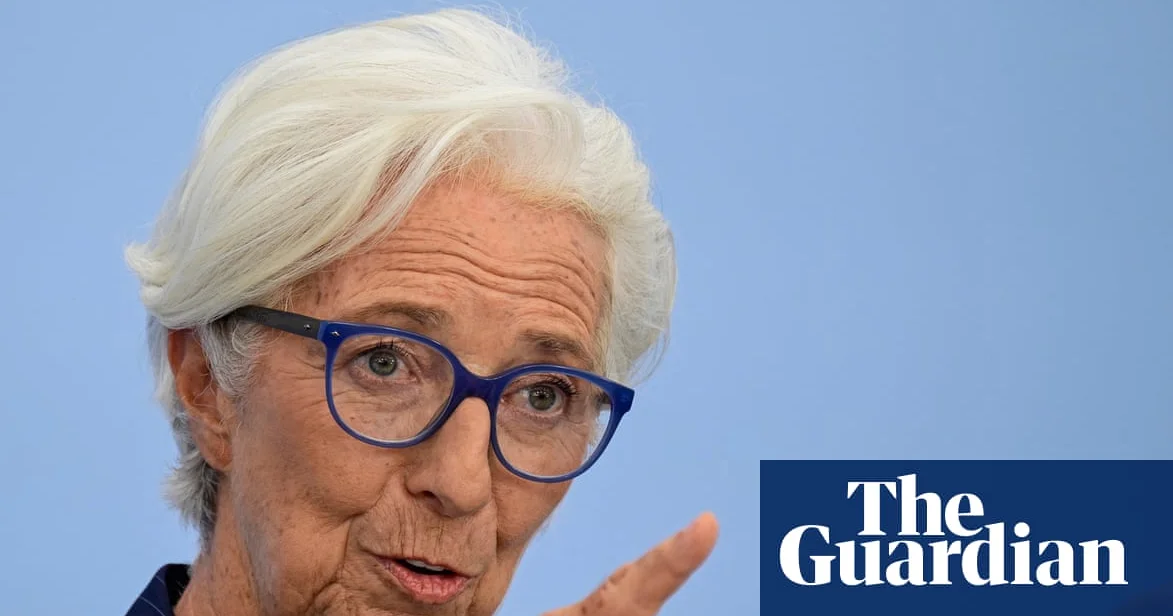
ECB Hikes Rates Amid Rising Energy Prices
The European Central Bank has raised interest rates to 2.5%, marking the highest level since March 2025, as it warned that renewed fighting in the Middle East is increasing the risk of higher inflation. The rate hike comes as government borrowing costs soared due to a jump in oil and gas prices after the latest US and Iran attacks on ships in the strait of Hormuz.
The interest rate on UK government debt rose to a 19-year high on Thursday, while US and European bonds also climbed in line with oil prices, which touched $105 a barrel. Investors had expected the ECB to raise rates but were spooked by the central bank’s hawkish tone, which highlighted inflationary pressures across many sectors of the economy.
Energy Costs and Borrowing Costs Rise
It now expects inflation to average 3% this year, while the biggest driver of rising prices is energy costs, which jumped again on Thursday following increased US and Iranian attacks on ships in the Gulf. The ECB increased its main rate from 2.25% to 2.5% and lifted its forecast for eurozone economic growth in 2026 to 0.9%, up from 0.8% in June.
Brent crude passed $105 a barrel before slipping back to about $104.5, a 3.3% rise on the day — British gas prices rose to above 203p per therm, the highest since December 2022. Continental European gas prices also increased, with the Dutch wholesale gas price passing €80 per megawatt hour for the first time since January 2023.
Central Bank Concerns and Market Reactions
Central banks are concerned that high fuel and energy prices will feed into higher transport costs and more expensive heating for commercial and residential properties, leading to a broad-based rise in inflation. ECB president Christine Lagarde stated, “We believe inflation will be longer lasting than we had anticipated,” noting that food inflation, which had remained low at 1.2%, was likely to increase in response to higher oil and gas prices.
Lagarde also acknowledged that gas prices could rise due to further supply disruptions or an unusually cold winter combined with low storage levels across much of the region. Investors are worried that UK and EU governments have underplayed the risk of running out of gas and the negative effect a subsequent dash for supplies will have on inflation.
Recent data shows EU gas stores are only 67% full, well below the five-year average of 84%. UK and continental European gas buyers have delayed filling gas stores in the expectation that the Middle East conflict will be resolved and prices will be lower before winter in the northern hemisphere. As the war drags on, there is the prospect of gas prices rising due to a scramble of buyers looking to replenish stocks before cold weather arrives.
Bond markets were also put on alert by US Treasury secretary Scott Bessent, who said the US would buy back $6bn worth of government debt to alleviate a sell-off in the US bond market. However, the size of the package was considered inadequate by bond buyers, and the yield on 10-year treasuries rose to a three-year high.
“Headline inflation is expected to return to around target towards the end of 2027, supported by the effects of higher interest rates,” Lagarde said. When asked about the ECB’s next move, she said, “We have not debated at all any kind of future path. Markets do what they have to do and we do what we have to do – which is to provide price stability.”






Comments
No comments yet
Be the first to share your thoughts