

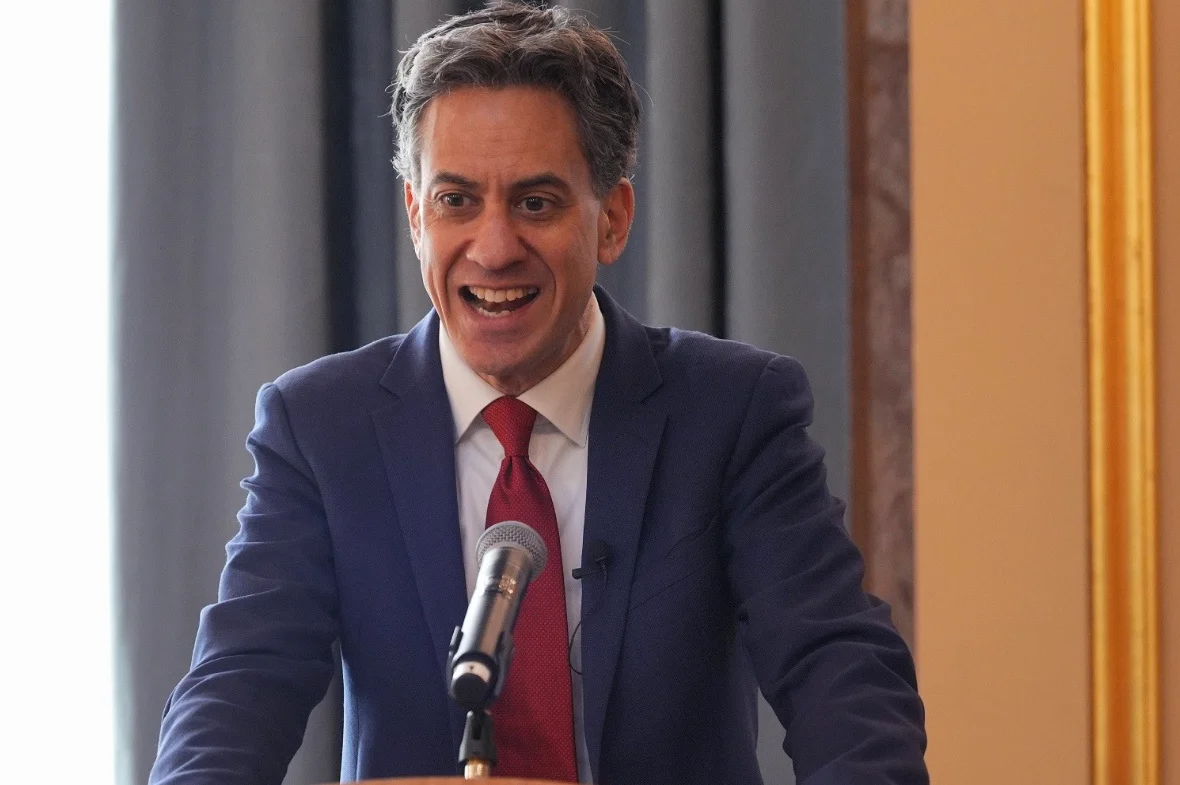
Ed Miliband has firmly dismissed calls for the UK to exploit the North Sea’s oil supply, despite growing pressure from industry groups and political figures as energy prices climb amid tensions in the Middle East. The energy secretary criticized the notion that increasing North Sea drilling would reduce energy costs, stating it is ‘totally false.’
Industry and Political Push for North Sea Drilling
Miliband’s comments come after Make UK, the trade association representing thousands of manufacturers, urged the government to approve North Sea drilling to avoid a potential spike in energy costs. The group warned that without new domestic oil and gas production, the UK could face a significant energy shock.
Greg Jackson, CEO of energy company Octopus and a member of the government’s industrial strategy advisory council, has also raised concerns about the economic impact of the crisis in the Gulf. In an article in the Telegraph, Jackson urged the government to abandon ‘wishful thinking’ and ‘ideology’ to stabilize energy prices and protect the economy.
The recent spike in oil prices, which reached above $103 per barrel, has been driven by Iran’s blocking of the Strait of Hormuz, a critical waterway through which a fifth of the world’s oil supply flows. The UK’s energy secretary told Sky News that the government is working with allies to reopen the strait and has explored the use of autonomous mine-hunting equipment to achieve this goal.
International Criticism and Domestic Energy Strategy
Ed Miliband’s stance on North Sea drilling has drawn criticism from US President Donald Trump, who criticized the UK’s energy production levels during his speech at the World Economic Forum in Davos. Trump noted that the UK produces only a third of the total energy it did in 1999 and accused the country of sitting on top of one of the world’s greatest oil reserves.
Despite this international pressure, Miliband has emphasized that the UK is committed to protecting consumers from what he calls ‘price gouging’ at petrol stations. This stance has led to tensions with some retailers, who have reportedly threatened to withdraw from a meeting at 10 Downing Street after claiming government warnings against ‘price rip-offs’ led to staff being abused.
Chancellor Rachel Reeves has announced plans to introduce a targeted support package for households affected by rising energy costs. The package is expected to include subsidies for rural communities reliant on heating oil, which are not covered by the existing energy price cap. Reeves stated that securing the funding for this support took over a year and a half due to high borrowing costs and interest rates.
Renewable Energy and Public Sentiment in Scotland
While the UK government has resisted calls to boost North Sea oil production, public opinion in Scotland highlights a clear preference for renewable energy sources. A recent survey found that fewer than one in three Scots believe oil and gas should be the main focus of energy security, with 29 per cent of respondents supporting this approach and 21 per cent undecided.
Laura Anderson, a senior associate at the Energy and Climate Intelligence Unit, noted that these findings reflect strong public backing for renewables in Scotland. She stated that increasing North Sea production would be challenging given the long-term decline in the region’s oil and gas reserves.
Greg Balmer, executive director of the Petrol Retailers Association, defended the industry’s efforts to provide fuel at competitive prices despite thin margins. He emphasized that retailers are working under difficult conditions and called for greater understanding from politicians and commentators about how the fuel market operates.
Reeves has also instructed the UK’s competition watchdog to investigate companies suspected of exploiting the current energy crisis to make excessive profits. This move highlights the government’s focus on ensuring fair pricing for consumers amid rising energy costs.
The UK’s energy policy is at a crossroads as it balances the need to secure energy supplies with the long-term goal of transitioning to renewable sources. Miliband’s rejection of North Sea drilling reflects a broader commitment to reducing reliance on fossil fuels, even as the immediate economic pressures of the current crisis remain significant.
With the situation in the Middle East continuing to evolve and the global energy market remaining volatile, the UK government faces the challenge of maintaining energy security while handling the complexities of domestic and international energy policy.






Comments
No comments yet
Be the first to share your thoughts