

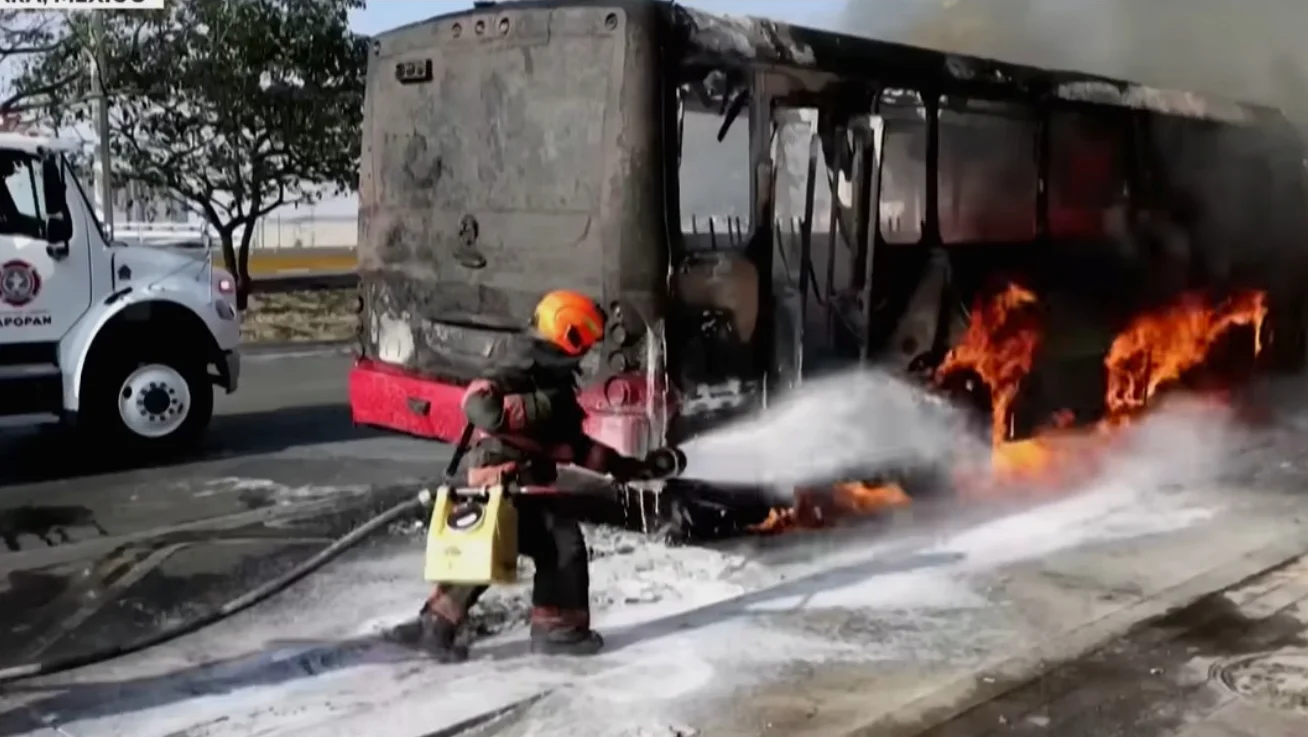
The death of Nemesio Oseguera Cervantes, the leader of the Jalisco New Generation Cartel (CJNG), has unleashed a wave of retaliatory violence across Mexico, with at least 25 members of the National Guard killed in the ensuing chaos. The violence erupted after El Mencho was captured and killed in Jalisco state, prompting coordinated attacks by the cartel across multiple regions.
How El Mencho Was Captured and Killed
El Mencho, one of Mexico’s most wanted individuals, was tracked down on Sunday after military forces identified a romantic partner he had arranged to meet. Mexican special forces moved in, triggering a firefight with the cartel leader’s bodyguards. The operation left six of El Mencho’s security guards dead and three military personnel injured. He was transported from Tapalpa, Jalisco, toward Mexico City but never arrived alive.
Defence Secretary Ricardo Trevilla confirmed that the operation was aided by U.S. intelligence but emphasized that no U.S. forces were directly involved in the capture or death of El Mencho. The U.S. State Department had previously offered a $15 million reward for information leading to his capture, highlighting the cartel leader’s status as a global threat.
A Country Erupts in Violence
Within hours of news of El Mencho’s death spreading, the CJNG launched coordinated attacks across 20 Mexican states. Cartel members scattered spikes and nails on roads to block vehicles, commandeered buses and set them ablaze, and attacked banks and local businesses. In some areas, streets were emptied as authorities urged residents to shelter in place.
The scale and speed of the response demonstrated the CJNG’s operational capability and reach, even in the absence of its leader. Security Secretary Omar Garcia Harfuch confirmed that the unrest had claimed the lives of a prison guard, a state prosecutor, and 30 members of El Mencho’s organization since his death, in addition to the National Guard fatalities.
Government Response and a Call for Calm
Mexico’s President Claudia Sheinbaum praised the military’s operation and emphasized that restoring peace and security is her top priority. By Monday morning, road blockades had been cleared, and 2,500 additional soldiers were deployed to the western regions most affected by the violence.
The CJNG, known for its brutal tactics and extensive reach, has long been a major player in Mexico’s drug trafficking landscape. El Mencho had led the cartel for years, surviving numerous attempts to capture him and expanding the organization’s influence across Mexico and beyond.
The immediate question for the Mexican government is whether the violence of the past 48 hours is a temporary reaction or the beginning of a prolonged power struggle within the CJNG. Analysts say the situation could have significant implications for national security, law enforcement, and the stability of regions already plagued by cartel activity.
El Mencho’s death has also raised concerns about the future leadership of the CJNG. With no clear successor yet identified, the organization’s structure and territorial control could be in flux. This uncertainty may lead to further violence as factions within the cartel vie for power.
For ordinary citizens, the impact is immediate and tangible. Communities across 20 states have been disrupted by roadblocks, fires, and attacks. The government has urged people to remain indoors and avoid areas of unrest, but the long-term consequences of this violence remain uncertain.
As the situation unfolds, the Mexican government faces the challenge of maintaining order while dealing with the potential fragmentation of one of the country’s most powerful criminal organizations. The coming days will be critical in determining whether the chaos will subside or escalate into a broader conflict.

Comments
No comments yet
Be the first to share your thoughts