

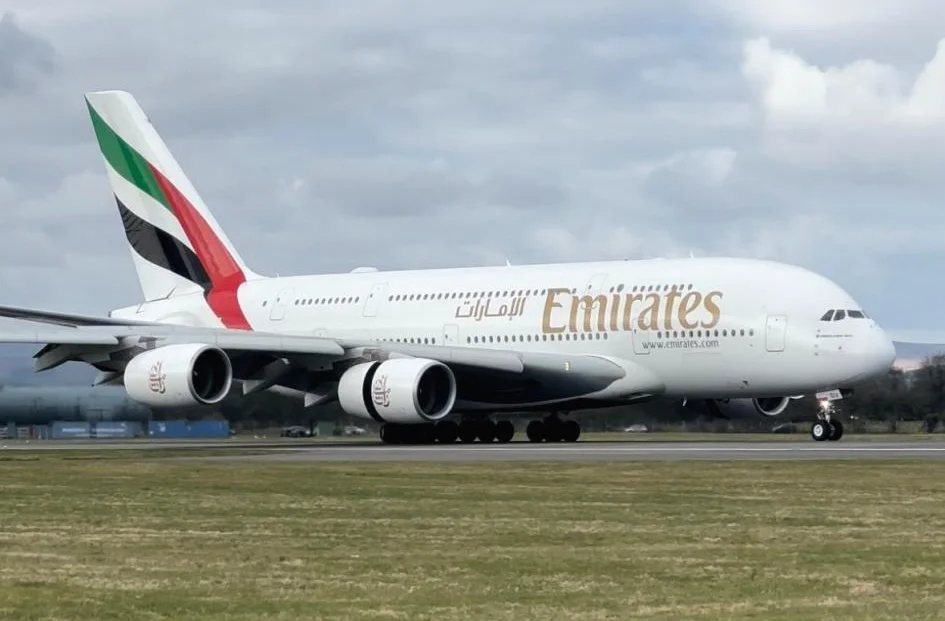
A flight from Glasgow Airport to Dubai has been cancelled following military strikes by the United States and Israel on Iran, prompting widespread flight disruptions across the Middle East. Emirates flight EK028, scheduled to depart at 1:35 p.m., was cancelled after the General Civil Aviation Authority announced the temporary partial closure of United Arab Emirates airspace. The flight had already begun check-in procedures at the airport, leaving passengers with little notice of the change.
Impact on Air Travel
The cancellation of Emirates flight EK028 follows similar disruptions elsewhere. A flight from Dubai International to Glasgow had landed shortly after 11 a.m. this morning, but the same airline also announced the cancellation of a flight from Edinburgh Airport, originally scheduled to depart at 8:55 p.m. tonight. Emirates operates a daily service between Glasgow and Dubai, but no timeframe has been given for the duration of the airspace closure.
Qatar Airways flight QTR59F departed Edinburgh Airport for Doha earlier this morning, but turned back over Germany less than three hours after take-off. Meanwhile, British Airways announced the cancellation of all flights to Bahrain and Tel Aviv until March 3. WizzAir director Rachel Wray confirmed that all flights to Israel, Dubai, Abu Dhabi, and Amman would be suspended.
Regional Airspace Closure
As a result of the military actions, airspace over several countries in the Middle East has been closed. These include Iran, Israel, Iraq, Kuwait, Bahrain, the UAE, and Qatar. The closure has been implemented as a precautionary measure to ensure the safety of air traffic and prevent potential conflicts in the skies.
The UK Foreign Office has updated its travel advice, warning against all travel to Israel and Palestine. In a statement on its website, the Foreign Office said: ‘Due to the threat posed by escalation in the region, we recommend against all travel to Israel and Palestine. On 28 February 2026, the US and Israel commenced joint military action in Iran, Israeli airspace has now closed.’
British nationals in the region are urged to take ‘sensible precautions,’ including following advice from regional authorities, avoiding military facilities, and ensuring their travel documents are up to date. The Foreign Office has also evacuated all staff from Iran, while the American embassy in Israel stated that non-essential staff could leave the country.
Escalation of Tensions
The current situation is part of a broader escalation in tensions in the Middle East. The U.S. has been massing its military in the region since January, and on Saturday morning, major combat operations began. This follows a series of diplomatic and military moves by both the U.S. and Israel, which have raised concerns about the potential for wider conflict.
Analysts suggest that the closure of airspace and the cancellation of flights are indicative of the growing instability in the region. ‘This is not just a temporary disruption,’ said one aviation analyst. ‘It reflects a more permanent shift in the geopolitical landscape, with significant implications for air travel and regional security.’
The situation remains fluid, with no immediate indication of when the airspace closures will be lifted. Airlines and governments are closely monitoring the developments, and further updates are expected in the coming days. For now, passengers are advised to contact their respective airlines for the latest information on flight statuses and travel advisories.





Comments
No comments yet
Be the first to share your thoughts