

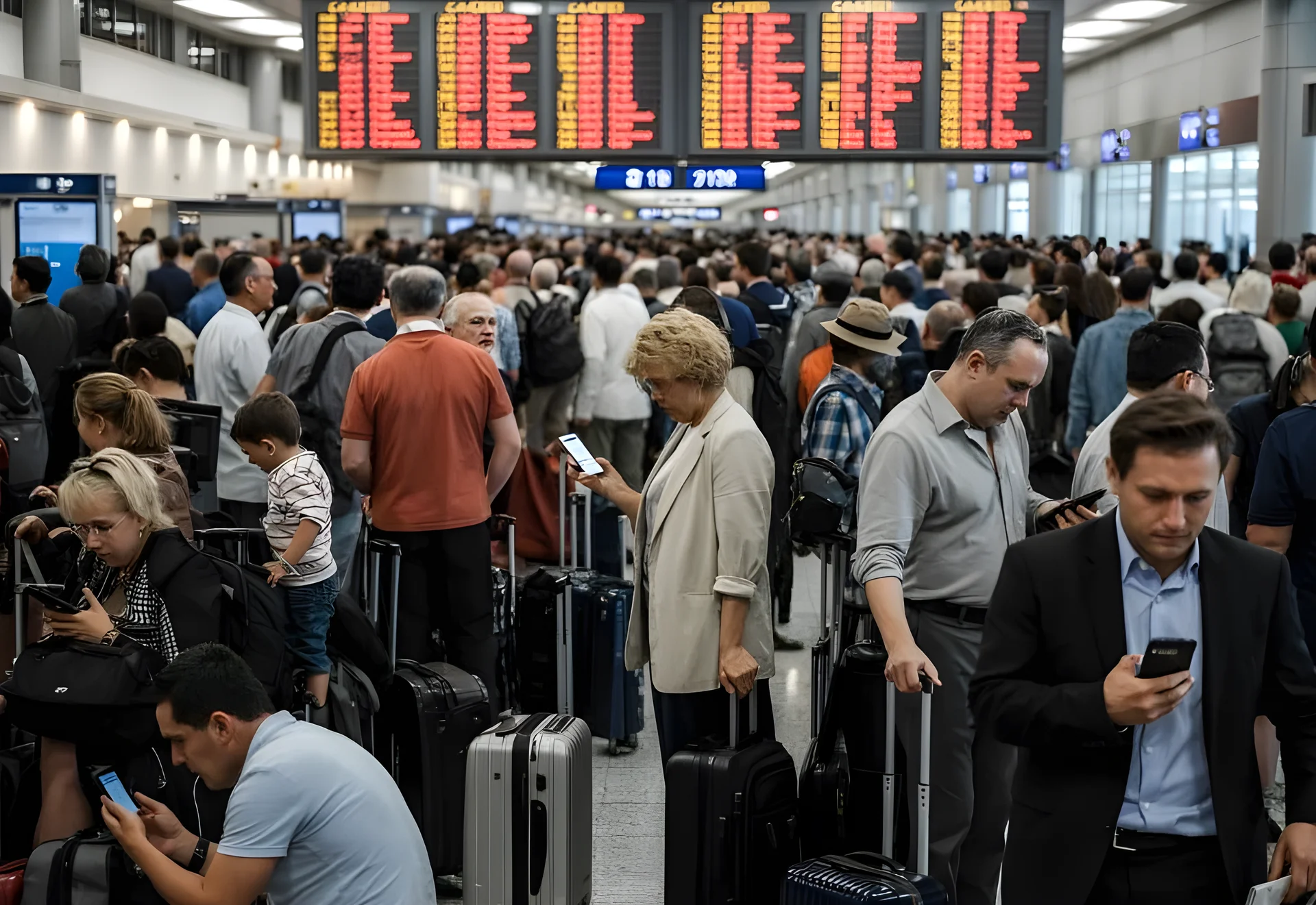
On February 28, 2026, a coordinated military strike by the United States and Israel on Iran sent shockwaves through the Middle East, triggering a chain reaction that disrupted global air travel. Airlines such as Emirates, Qatar Airways, Etihad Airways, and Turkish Airlines were forced to ground flights to and from critical regional hubs, including Dubai, Doha, and Abu Dhabi, due to closed airspace and heightened security risks.
Immediate Disruptions and Flight Cancellations
The attacks, which targeted Iranian military infrastructure, led to immediate airspace closures across multiple countries, including the United Arab Emirates, Qatar, and Israel. According to the International Air Transport Association (IATA), over 1,800 flights were cancelled in the first 24 hours, with the majority of disruptions centered around the Middle East. This included cancellations of both regional and international routes, stranding thousands of passengers at airports worldwide.
Emirates, the largest airline in the UAE, suspended all flights to and from Dubai International Airport (DXB) following the closure of UAE airspace. The airline announced that the suspension would remain in effect until at least March 1, according to a statement released on February 29. Dubai, a key global aviation hub, serves as a critical connection point for long-haul flights between Europe, Asia, Africa, and Australia, making the closure particularly impactful.
Qatar Airways, another major Gulf carrier, also faced significant disruptions after Qatari airspace was closed in response to the escalating conflict. The airline stated it would await the reopening of airspace before resuming normal operations, emphasizing its commitment to passenger safety. ‘We are closely monitoring the situation and will follow guidance from aviation authorities,’ a spokesperson said.
Security Concerns and Operational Challenges
Etihad Airways, based in Abu Dhabi, suspended all outbound flights from Abu Dhabi International Airport after reports of drone activity near the airport. This added another layer of complexity to the airline’s operations, as the airport is a major transit point for international flights. The Indian Directorate General of Civil Aviation (DGCA) also issued advisories for Indian airlines to avoid the affected airspace until it is deemed safe for operations.
flydubai, a budget carrier operating primarily within the Middle East and Asia, was heavily impacted by the closure of airspace over Iraq, Iran, and Israel. The airline has advised passengers to check with their respective airlines for rebooking options and alternative travel arrangements.
The situation has forced major international carriers that rely on Middle Eastern airspaces to adjust their flight schedules. Airlines such as Turkish Airlines and Air India have also suspended certain routes, citing the need to ensure the safety of passengers and crew.
Uncertain Outlook and Passenger Advice
As the geopolitical crisis continues, aviation authorities have issued multiple safety advisories to help passengers handle the disruptions. The US-Israel strikes on Iran have created an environment of uncertainty, with no clear timeline for the resumption of normal flight operations across the region.
Passengers are strongly advised to stay updated through official airline channels and government aviation advisories. Given the volatile situation, airspace disruptions may persist for several days or even weeks. ‘It is crucial to remain flexible and monitor the latest updates to avoid further inconvenience,’ said an aviation analyst with IATA.
With the Middle East serving as a critical link in the global aviation network, the closure of key airspaces has had a ripple effect on international travel. The disruption of flights between Europe, Asia, and the Middle East has caused significant logistical challenges for airlines and passengers alike.
As the conflict between the US, Israel, and Iran continues to unfold, the aviation sector faces an uncertain future. Airlines are preparing for the possibility of prolonged airspace closures, while passengers brace for potential delays, cancellations, or alternate routing options. The situation highlights the vulnerability of the global aviation system to geopolitical events and highlights the need for strong contingency planning in times of crisis.




Comments
No comments yet
Be the first to share your thoughts