

 BBC
BBC 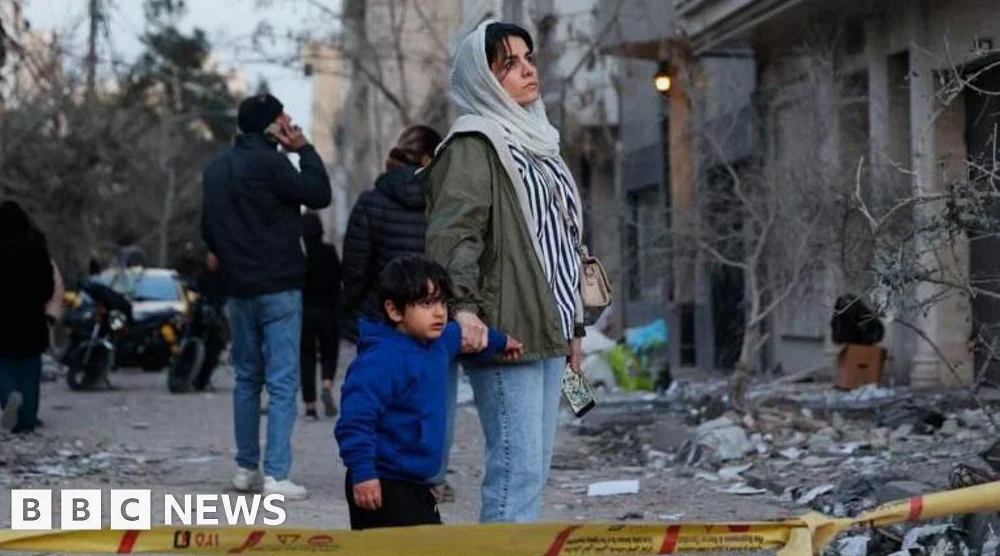
Ali, a 15-year-old boy from Iran, now experiences constant fear from the sounds of war. ‘Before the war, I had no stress at all,’ he says. ‘But now even the smallest sound causes my brain to react very badly.’ According to the BBC, this is a common experience among children in Iran, where more than 20% of the population is under the age of 14.
Hyperarousal and PTSD in Iranian Children
Ali’s condition is what psychologists call ‘hyperarousal,’ an early warning of post-traumatic stress disorder (PTSD). He describes how the sounds of US and Israeli airstrikes have left a lasting impact on his mind. ‘The sound of explosions, the shock waves, and the sound of fighter jets flying over the city can have a very serious effect,’ he says.
Ali watches his parents’ reactions to the ongoing conflict. His father is out of work because of the war, and his mother is constantly apprehensive. ‘My mother stays at home, and whenever fighter jets fly overhead, she becomes frightened and stressed and shows clear signs of anxiety and fear. As for myself, I am very afraid,’ he says.
Ali’s world has shrunk. With schools closed and the constant threat of attack by US and Israeli aircraft, Iranian families are cooped up in their homes. ‘I should be able to study, to work and become an independent person in the future,’ he says. ‘I should not be constantly worrying about politics, living in stress, thinking about bombs falling… with endless fears.’
War Trauma Across the Region
The war is bringing fear to the lives of the young across the region, from Iran to Israel, the Gulf, and Lebanon. According to the BBC, with the help of trusted sources on the ground, they have been able to obtain testimony from parents and those trying to help children deal with war trauma. Some names have been changed for their safety.
At a human rights centre in Tehran, a counsellor named Aysha is helping a distressed mother on the telephone. ‘Try to do the things I mentioned to you to create a calmer environment for him,’ she says. ‘If possible, play with him and keep him engaged. And if even then things don’t improve, bring him back to the centre.’
Aysha says the centre is receiving numerous calls and in-person visits from worried parents. ‘We are seeing a lot of sleep disturbances, nightmares, reduced concentration, and even aggressive behaviour,’ she says. ‘When you struggle so much to raise a child, only for that child to be killed – whether in protests or in war like this – I believe no parent would be willing to bring a child into the world.’
Children in the Crosshairs of War
According to the US-based Human Rights Activists News Agency (HRANA), which collates data from across Iran, 3,636 people have been killed in the war. Among them are at least 254 children. There have been tens of thousands of injuries.
There has also been a concerted drive by the Iranian regime to bring children into the firing line. The government has appealed to parents to allow their children to join the Basij volunteer militia – a key arm of state enforcement – to help guard checkpoints. In a televised address, one regime figure called on parents to ‘take your children by the hand and come out to the street.’
He likened the war to a test of manhood for boys. ‘Do you want your son to become a man? Let him feel he’s a hero in the battlefield, commanding the battle. Mothers, Fathers, send your children at night to the roadblocks. These children will turn into men.’
For 11-year-old Alireza Jafari, the call to arms meant death. He was with his father on checkpoint duty in Tehran when he was killed by a drone strike on 29 March. A local newspaper quoted his mother, Sadaf Monfared, as saying the boy told her he ‘would like to become a martyr.’
Amnesty International accuses Iranian authorities of ‘trampling upon children’s rights and committing a grave violation of international humanitarian law amounting to a war crime’ by recruiting children for military service. The recruitment of children under 15 is allowed under Iran’s security legislation in direct violation of international law.
A Tehran resident, who we are calling Noor, has a son in his early teens. He vows to keep him away from the military. ‘A 12-year-old child never can make proper decisions. They do not truly understand what is happening. For example, they may think it is some kind of game.’
‘When they are given weapons and told to go to war, they imagine they are playing a video game… When a child goes down that road there is no way back,’ Noor says. He took his son away from Tehran when the war began five weeks ago. ‘I would never, ever allow my son to become involved in war. Why are children being exploited?
‘When the fighting started about a month ago, the very first thing I did was leave the city, because I was stressed and worried that my son might go out into the streets and something might happen to him, let alone allowing him to go to war.’
For now, the hope is that the talks in Pakistan between the United States and Iran will lead to a permanent ceasefire. But even if they do, the damage inflicted on young minds and bodies by the violence of bombing, the militarisation of childhood, and the loss of safety will endure long into the future.
Comments
No comments yet
Be the first to share your thoughts