

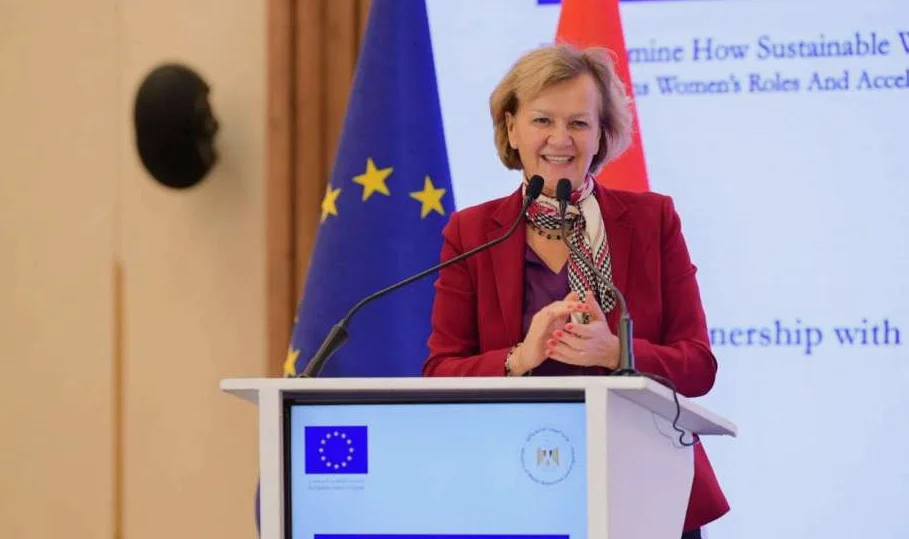
In a high-level event co-hosted by the European Union Delegation and Egypt’s Ministry of Water Resources and Irrigation, EU Ambassador Angelina Eichhorst highlighted the importance of women’s leadership in the water sector during World Water Day 2026. The event, themed ‘Water and Gender – Where Water Flows, Equality Grows,’ underscored the strategic necessity of integrating women into water management roles to ensure economic stability and climate resilience in Egypt.
EU-Egypt Partnership Yields Tangible Results
Since 2007, the European Union has provided EUR 600 million in grants to Egypt, which has used a total of EUR 3.5 billion in investments. These funds have contributed to the expansion of nearly 11,000 kilometers of water networks and the support of 200 water and wastewater treatment plants across the country. The joint efforts have benefited approximately 25 million citizens, improving access to clean water and sanitation services.
Eichhorst noted that Egypt remains one of the most water-stressed nations in the world. This scarcity places a disproportionate burden on women and girls, who often bear the hidden costs of water stress, such as collecting water and managing household needs. The ambassador emphasized that the integration of women into leadership roles in the water sector is not only a social imperative but a strategic necessity for effective governance and resource management.
Women as Key to Water Governance
Eichhorst stressed that when women are excluded from decision-making roles, priorities remain incomplete and investments become less effective. She argued that integrating women as engineers, researchers, and community leaders is the most effective way to improve water governance and ensure sustainable development.
The event also featured the launch of the ‘Ward El Kheir’ initiative, which the ambassador praised as a practical model for the green transition. This initiative aims to turn environmental challenges into economic opportunities for local women while preserving waterways and promoting sustainable practices. The program is seen as a key component of Egypt’s broader strategy to address water scarcity and climate change.
Eichhorst pledged that the next phase of the EU-Egypt Strategic Partnership would be ‘gender-responsive by design.’ This approach ensures that the needs of all community members are integrated into infrastructure and financing projects from the very start. The ambassador highlighted the importance of proactive policy-making, urging that World Water Day should not only be a moment for reflection but also an opportunity to take decisive action.
In the spirit of the holy month of Ramadan, Eichhorst expressed a commitment to continued collaboration with Egypt to build a future where equality grows alongside the flow of the Nile. The ambassador called for a stronger voice for women not only as beneficiaries but as leaders and decision-makers in the water sector.
What Analysts Say About the Shift in Leadership
According to Dr. Layla Hassan, an environmental policy analyst at Cairo University, the EU’s emphasis on women’s leadership in the water sector is a significant step forward. ‘This shift not only addresses gender inequality but also enhances the effectiveness of water management strategies,’ she said. ‘Including women in decision-making roles leads to more inclusive and sustainable policies.’
Hassan noted that Egypt has historically had limited representation of women in technical and leadership roles, particularly in infrastructure and environmental sectors. The EU’s initiative is seen as a catalyst for change, encouraging more women to pursue careers in engineering and water management.
According to a 2025 report by the United Nations Development Programme (UNDP), Egypt ranks among the lowest in the Arab world for women’s participation in the labor force, with only 23% of women actively working. The report also highlights that women are often concentrated in low-skilled and informal jobs, with limited access to high-skilled and technical professions.
Eichhorst’s call for women’s leadership is part of a broader movement to promote gender equality in the Middle East and North Africa (MENA) region. The EU has been a strong advocate for gender-responsive policies in its development programs, emphasizing that inclusive growth is essential for long-term stability and prosperity.
Future Implications and Next Steps
The EU-Egypt Strategic Partnership is expected to focus on several key areas in the coming years, including water resource management, climate resilience, and gender equality. According to the partnership roadmap, the EU will provide additional funding for water infrastructure projects that prioritize gender inclusion and community participation.
One of the upcoming projects is the expansion of the ‘Ward El Kheir’ initiative, which aims to create employment opportunities for women in rural areas through sustainable water management practices. The program is also expected to include training and capacity-building initiatives to support women in leadership roles within the sector.
Officials from the Egyptian Ministry of Water Resources and Irrigation have expressed support for the EU’s vision and have committed to integrating gender-responsive policies into their national water management strategies. The ministry plans to launch a series of workshops and training programs to promote women’s participation in technical and leadership roles.
Eichhorst emphasized that the success of the EU-Egypt partnership will depend on sustained collaboration and commitment from both sides. ‘The future of water governance in Egypt will be shaped by the inclusion of all voices, especially those of women,’ she said. ‘This is not just a moral imperative but a practical necessity for sustainable development.’
As Egypt faces increasing water scarcity and climate challenges, the integration of women into leadership roles in the water sector is seen as a crucial step toward building a more resilient and inclusive future. The EU’s strategic vision, supported by the Egyptian government and civil society, represents a significant shift in the approach to water governance and development in the region.






Comments
No comments yet
Be the first to share your thoughts