

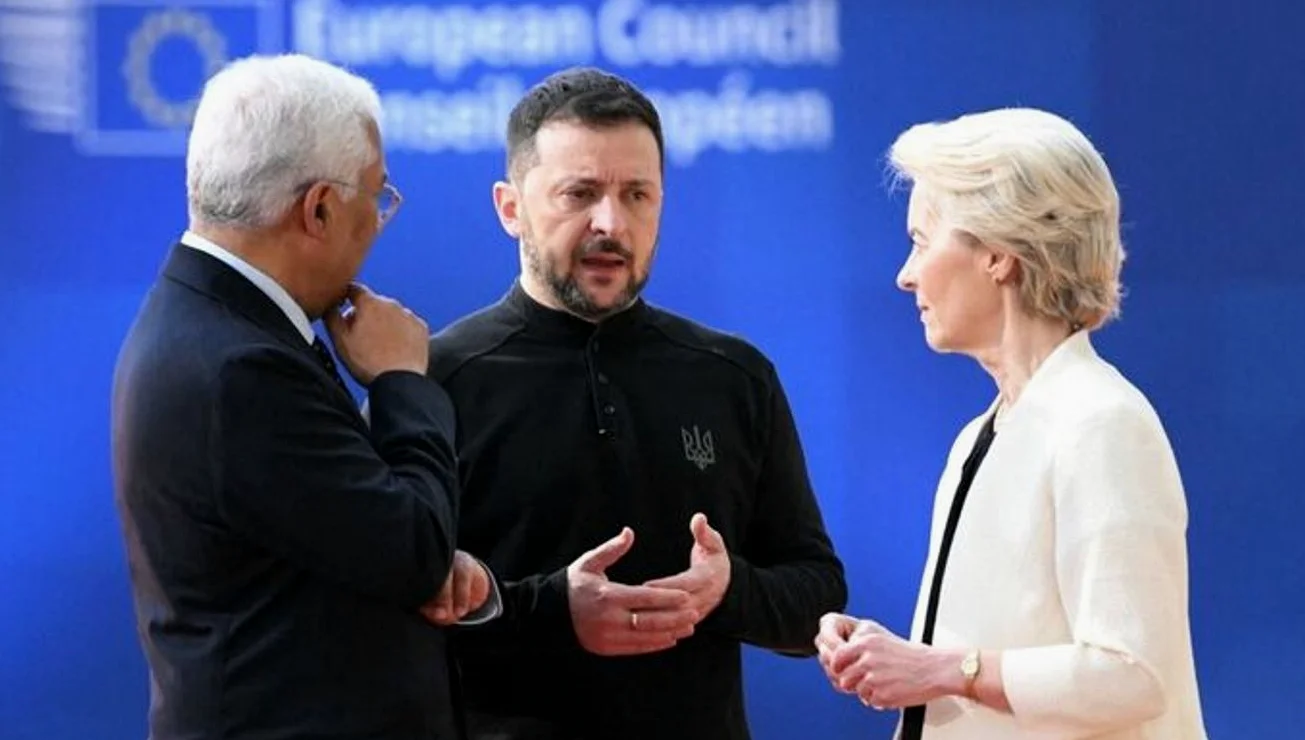
The European Commission has found itself at the center of a diplomatic dispute with Hungary and Slovakia, following the delayed resumption of oil deliveries through the Druzhba pipeline after an attack in late January. Despite repairs being completed by early February, the flow of oil has yet to resume, prompting accusations from Hungarian Foreign Minister Peter Szijjarto that the Commission has become more of a “Ukraine Commission” than a European one.
Political Priorities vs. National Interests
According to Peer Siklosi, a political analyst based in Budapest, the Commission appears to be prioritizing Ukraine’s interests over the concerns of member states like Hungary and Slovakia. He noted that the Commission’s stance aligns with federalist goals, which favor stronger central governance and less autonomy for member states.
“There are clear indications that the European Commission considers the Ukraine project more important,” Siklosi said in an interview with Origo. “For federalists, it is convenient if a crisis underpins their political agenda, which leads to more power for the central institutions and less for the member states.”
The situation has sparked questions about the Commission’s role in mediating disputes between member states and Ukraine. Officials within the Commission have stated they have no intention of pressuring Ukraine on the issue, a stance that has been met with frustration in Budapest and Bratislava.
Technical Disputes and Geopolitical Tensions
Ukraine initially claimed the damage to the pipeline was caused by a Russian attack, rendering it technically unfit for oil transportation. However, this claim has been disputed by several parties, including Szijjarto, who has called it an overstatement.
Siklosi explained that the damage likely occurred to auxiliary facilities near the pipeline rather than the pipeline itself. He noted that these facilities are equipped with sensors and that both Russia and Slovakia have made similar assessments.
“There is indirect evidence supporting this theory,” Siklosi added. “The situation is being evaluated similarly by multiple parties, including the Hungarians, Slovaks, and Russians.”
The delay in oil deliveries has had real-world implications for Hungary and Slovakia, both of which rely on the pipeline for a significant portion of their oil imports. Hungary, in particular, has been vocal about its dependence on Russian energy and its concerns over the EU’s increasing alignment with Ukraine.
What’s Next for the Pipeline and EU Relations
The unresolved issue has raised questions about the future of the pipeline and the broader relationship between the EU and Ukraine. With the Commission seemingly unwilling to exert pressure on Kyiv, the situation may remain in limbo for months, if not longer.
“If the Commission fails to act, what room for maneuver remains for Hungary and Slovakia to resolve the situation?” Szijjarto asked in a recent statement, highlighting the growing frustration with the EU’s approach.
Analysts suggest that the EU may face a difficult balancing act between maintaining its political alliance with Ukraine and addressing the concerns of member states that feel sidelined. With no clear resolution in sight, the issue could become a flashpoint in the broader debate over the EU’s direction and its ability to manage internal disputes.
The situation also highlights the broader geopolitical tensions between Russia, Ukraine, and the West. As the war in Ukraine continues, the pipeline dispute highlights the complex interplay of energy security, political alliances, and national sovereignty within the European Union.






Comments
No comments yet
Be the first to share your thoughts