

 BBC News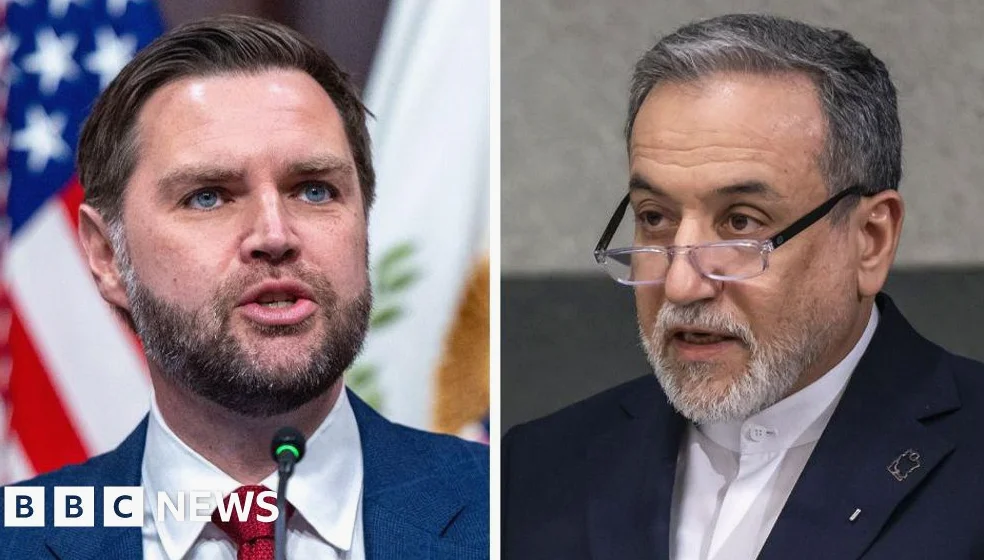
The five big sticking points in US-Iran talks have been identified as the key challenges facing the negotiations, according to BBC News. The talks are taking place in Islamabad, where the Pakistani government has expressed optimism about its ability to host the discussions and mediate between the two sides. Vice President JD Vance. Leading the US delegation, emphasized the US’s willingness to negotiate in good faith, but warned that the team would not be receptive to Iranian attempts to play them.
Lebanon and Regional Tensions
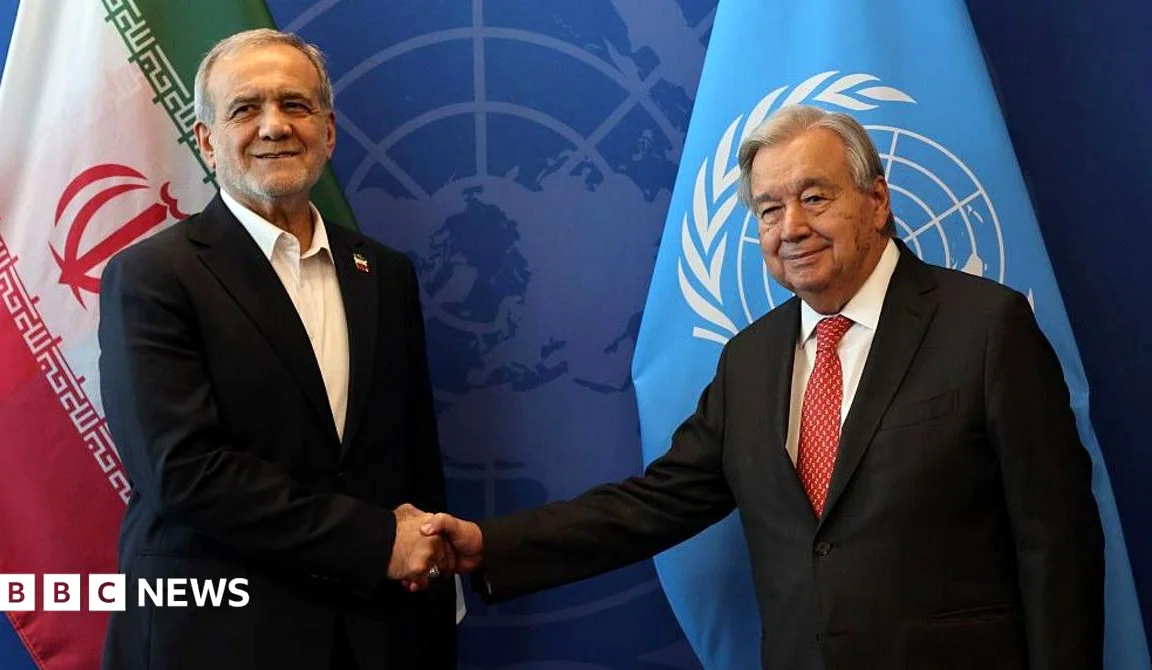
One of the five sticking points is the ongoing conflict in Lebanon, where Iran’s president, Masoud Pezeshkian, has warned that continued actions by Israel could render negotiations meaningless. He stated, ‘Our fingers remain on the trigger. Iran will never abandon its Lebanese sisters and brothers.’ Israel’s prime minister, Benjamin Netanyahu, has said there is ‘no ceasefire’ when it comes to Hezbollah, but Israel’s repeated warnings to residents of Beirut’s southern suburbs to evacuate have not led to further action. Meanwhile, Donald Trump has suggested that Israel’s actions in Lebanon will be ‘a little more low key,’ and the US State Department has announced direct talks between Israel and Lebanon in Washington next week.
The Strait of Hormuz and Maritime Disputes
Another key issue is the Strait of Hormuz, a key oil shipping passage. Iran has claimed the strait as sovereign Iranian water and announced new transit routes north of the existing traffic separation channels. In a statement, Iran said the new routes are necessary ‘to avoid the presence of various types of anti-ship mines in the main traffic zone.’ Reports suggest that some ships have paid a $2m toll to pass through the area, prompting Trump to warn Iran ‘better not be charging fees to tankers.’
Nuclear Programs and Security Concerns
The nuclear issue is arguably the most contentious and long-standing sticking point. Trump has launched Operation Epic Fury in part to ensure Iran ‘can never have a nuclear weapon.’ Iran denies seeking to build a bomb but insists on its right to enrich uranium under the Nuclear Non-Proliferation Treaty. Iran’s 10-point proposal includes a demand for international recognition of its enrichment rights. Trump’s 15-point plan reportedly demands that Iran ‘end all uranium enrichment on Iranian soil.’ Secretary of Defence Pete Hegseth stated that Iran would ‘never have a nuclear weapon or the capability to get a path to one.’
Iran’s Regional Allies and Proxy Networks
Iran’s network of regional allies and proxies, including Hezbollah in Lebanon, the Houthis in Yemen, and Hamas in Gaza, has given Tehran significant regional influence. However, these groups have been under constant attack since the start of the Gaza war in October 2023. Israel views this network as an ‘existential threat’ and seeks to eradicate it. While many Iranians would prefer their government to focus on domestic issues rather than foreign adventurism, there is little indication that Iran is ready to abandon its allies.
Sanctions Relief and Economic Pressures
The Islamic regime has faced crippling international sanctions for decades and is demanding the lifting of all US and international sanctions as part of any deal. The speaker of parliament, Mohammad Bagher Qalibaf, said an estimated $120bn of frozen Iranian assets must be released before negotiations begin. This is one of two previously agreed measures, the other being a ceasefire in Lebanon. However, the 7 April statement from Pakistan’s Prime Minister Shehbaz Sharif announcing the two-week ceasefire said nothing about the release of frozen assets. It is unclear what agreement Qalibaf was referring to. The Trump administration is unlikely to make such a substantial concession just to get the talks started.
The talks in Islamabad are expected to address these five major sticking points, with both sides seeking to find common ground on issues ranging from regional conflicts to nuclear programs and economic sanctions. The outcome of these discussions will have significant implications for international relations and regional stability.
As the talks begin, the focus will be on whether the US and Iran can find a way to address these five sticking points and move toward a potential agreement that could ease tensions and bring about a more stable Middle East.
The five sticking points in US-Iran talks are expected to be the focal point of the negotiations, with both sides working to find solutions that could lead to a breakthrough in their long-standing disputes. The outcome of these discussions will be closely watched by the international community.
The five sticking points in US-Iran talks are likely to be the most challenging aspects of the negotiations, requiring careful diplomacy and a willingness to compromise from both sides. The success of these talks will depend on the ability of both nations to address these issues in a manner that satisfies their respective interests.


Comments
No comments yet
Be the first to share your thoughts