

 The Guardian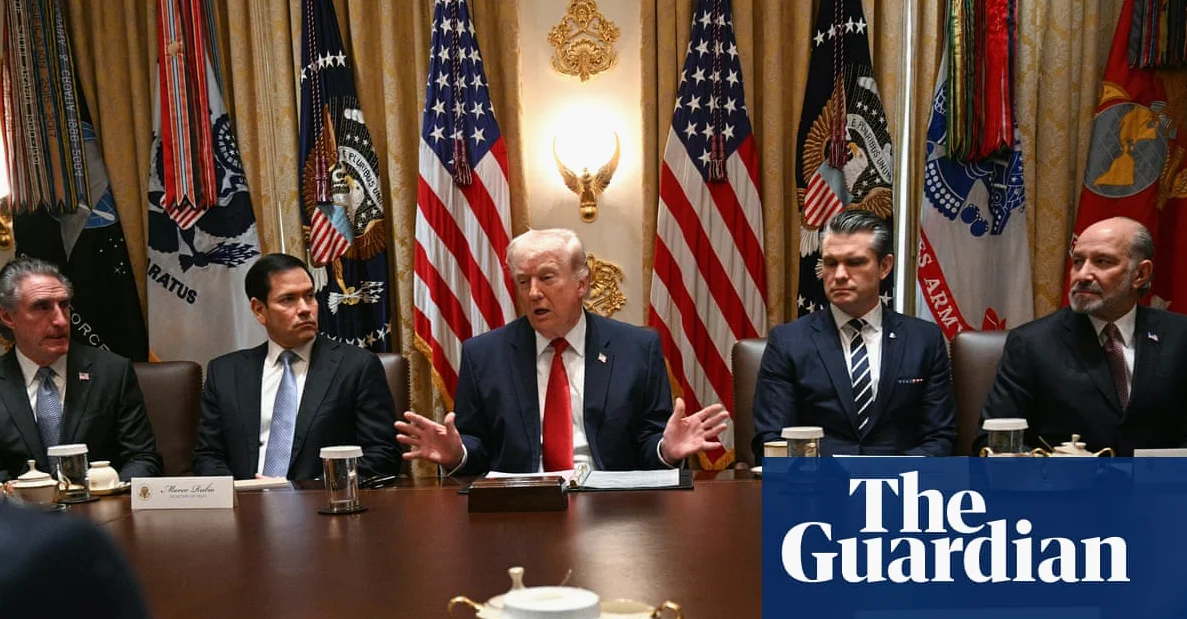
Flatterers have long been a fixture in the White House, but the latest display of sycophancy took an unexpected turn when Interior Secretary Doug Burgum hinted at a potential Venezuelan statue in honor of President Donald Trump. The suggestion came during a cabinet meeting at the White House, where Trump’s attention was drawn to the idea of a statue commemorating his recent actions in Venezuela.
Venezuelan Statues and Presidential Ambitions
Burgum, who recently visited Venezuela with oil and mining executives, said he believes the country may erect a statue to Trump. He claimed that the nation views the president similarly to Simón Bolívar, the independence hero of South America. “They love American baseball. And you look on the street, they’re wearing NBA jerseys,” Burgum added.
Trump, who has often spoken about his desire to run for president in other countries, seized on the idea, though “That would be a great honour!” he exclaimed. The comment was met with laughter from those in the room, but Trump remained focused on the potential statue.
“When are they going to do the statue?” Trump asked, prompting more laughter. The exchange was one of several surreal moments in the cabinet meeting, which took place amid the ongoing war in Iran and Trump’s ongoing criticisms of international leaders.
Statues, Sharpies, and Sycophancy
Trump has long had a fascination with statues, from his opposition to the removal of Confederate monuments to his proposal for a National Garden of American Heroes. This week. He installed a Christopher Columbus statue on the White House grounds, further demonstrating his interest in the topic.
During the meeting, Trump also spoke at length about the merits of Sharpies over the $1,000 pens typically used by presidents to sign bills; he claimed that Sharpies are more practical and less expensive, a point that seemed to resonate with the group.
The meeting also featured a series of controversial remarks about California Governor Gavin Newsom, a potential 2028 presidential candidate who has spoken publicly about his dyslexia. Trump suggested that Newsom should not be considered for the presidency due to his condition.
“He’s actually a very stupid person,” Trump said. “I don’t want a person with mental disability being my president.” The remarks were met with mixed reactions, but they exposed the president’s tendency to make controversial comments about political figures.
Cognitive Claims and Controversies
Trump also boasted about his own cognitive abilities, claiming he had taken a cognitive test three times and had aced it each time. He said the test was difficult for many people but that he had found it manageable.
“I took it three times,” Trump said. “I aced it all three times in front of numerous doctors that I have no idea who they are… I got ‘em all right and one doctor said I’ve never seen anybody get ‘em all right; I’ve been doing the test for 20 years.”
The comments were part of a broader discussion about the president’s mental acuity, which has been a topic of debate among political analysts and the public. Despite the controversy. Trump remains confident in his own abilities and continues to push his agenda, often with the support of flatterers who fill his head with grandiose ideas.
The cabinet meeting was just one of many that have taken place under Trump’s leadership, each marked by a mix of policy discussions and personal musings. As the political landscape continues to evolve, the role of flatterers in shaping the president’s decisions remains a subject of interest for observers and analysts alike.
With the war in Iran ongoing and international tensions rising, the focus on Trump’s personal ambitions and the influence of his advisors will likely remain a key point of discussion in the coming months. The potential for a Venezuelan statue, while seemingly outlandish, reflects the broader trend of flatterers filling Trump’s head with grandiose dreams and aspirations.






Comments
No comments yet
Be the first to share your thoughts