

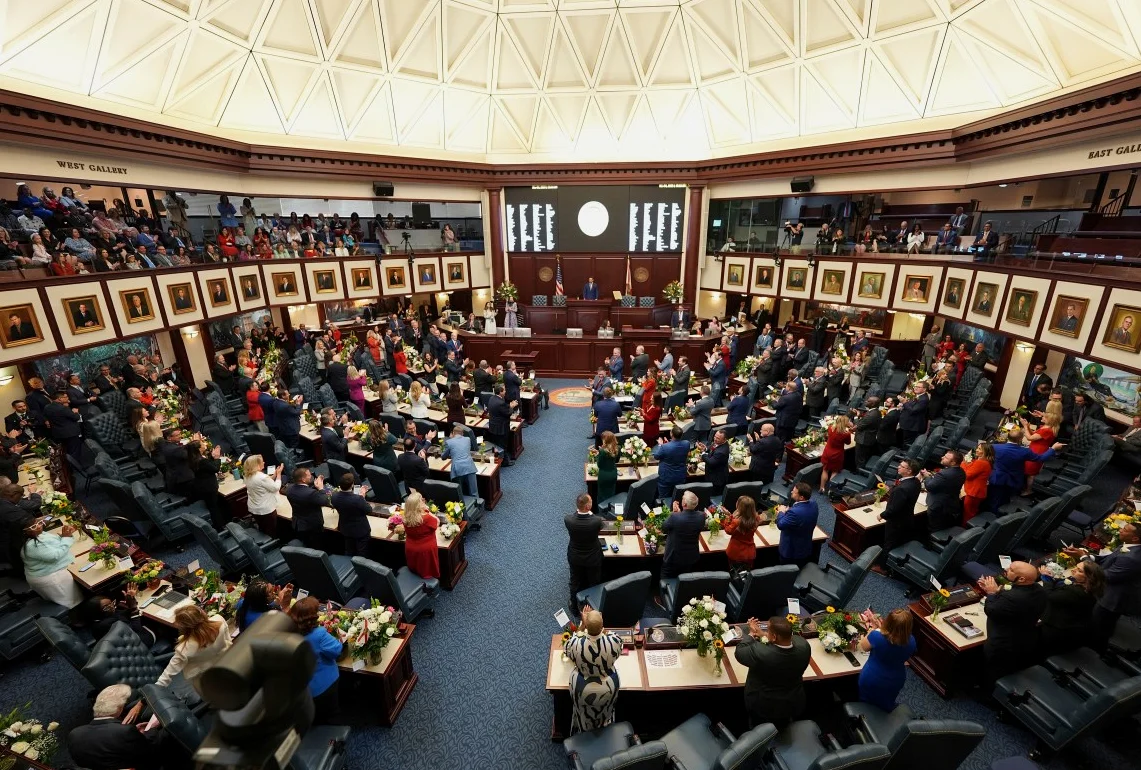
The Florida House recently passed a bill to eliminate most homestead property taxes, a proposal that could reduce homeowners’ costs by thousands of dollars annually. However, the fate of the proposed constitutional amendment, House Joint Resolution 203 (HJR 203), now rests with the Florida Senate, which may choose to present its own version instead of endorsing the House’s plan.
Legislative Stalemate and Uncertain Path Forward
On February 19, the Republican-controlled House voted 80-30 along party lines to place HJR 203 on the 2026 general ballot. The bill, which would amend Article VII, Section 6 of the Florida Constitution, aims to eliminate all non-school taxes for properties with a homestead exemption. It would also prohibit local governments from reducing funding for public safety services like law enforcement and firefighting.
Senate President Ben Albritton, in an interview with CBS Miami on February 22, described the proposal as a ‘fascinating’ initiative, stating he would ‘certainly intend being interjected’ into the Senate’s own efforts. However, the Senate received the bill the same day it was passed by the House, and the timeline is pressing. The Florida regular legislative session is set to end on March 13, leaving little time for debate and decision-making.
Estimated Costs and Community Impact
Experts have raised concerns about the financial impact of the bill on local governments. State economists estimate the measure could cost Florida’s local governments more than $13.3 billion annually, according to the Tampa Bay Times. Democrats have criticized the proposal, warning it would harm public safety services and negatively affect local communities.
Supporters, however, argue the reform could save homeowners thousands of dollars in property taxes. Hillsborough County’s property appraiser recently launched an online calculator to help residents estimate potential savings. According to the tool, a home with a taxable value of $281,268 could see its property tax bill drop from an estimated $5,750 to about $1,950 under HJR 203.
Senate’s Intended Counterproposal
Republican State Senator Ed Hooper, chair of the Senate Appropriations Committee, has indicated that the Senate plans to introduce its own proposal. Hooper stated that the Senate’s version would be ‘less generous’ than HJR 203, suggesting a more moderate approach to property tax reform.
Governor Ron DeSantis, who has long advocated for the complete elimination of property taxes, has said he does not expect the proposal to pass before the March 13 deadline. ‘I didn’t see this necessarily happening in this regular session,’ DeSantis said in St. Augustine last month. ‘I think the Senate agrees with that. We’re going to be coming back. There’s going to be opportunities to be doing it. I think you have to do it right.’
The proposal would only reach voters in November 2026 if at least three-fifths of the Senate votes in favor of the bill. If approved, the joint resolution would then need to be filed with the secretary of state and receive approval from at least 60 percent of voters to become law.
With the legislative session nearing its end, the upcoming weeks will be critical for both the House and Senate as they determine the future of property tax reform in Florida. The outcome could have lasting implications for both homeowners and local governments across the state.






Comments
No comments yet
Be the first to share your thoughts