

 BBC
BBC 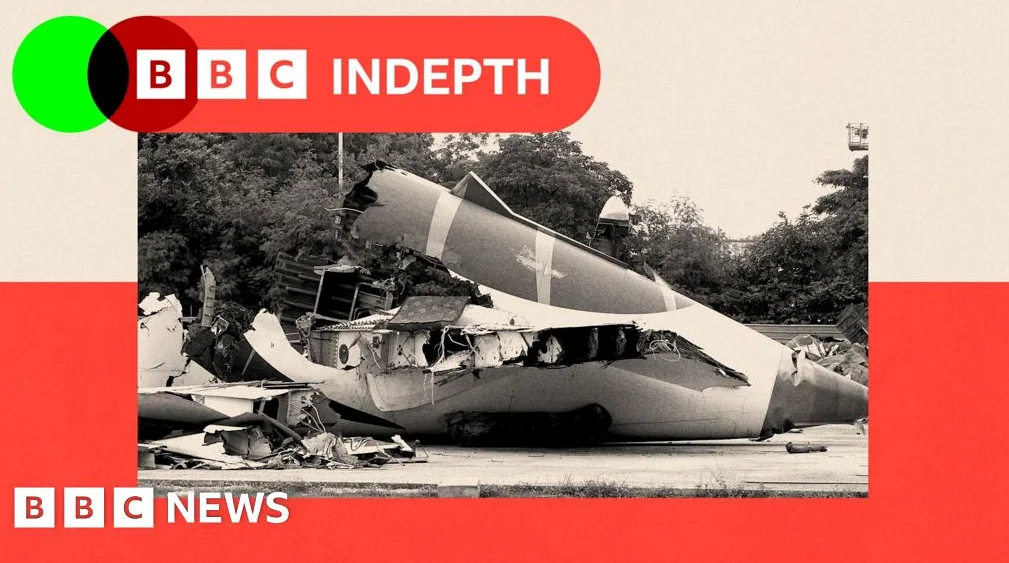
A year ago. Air India flight 171 crashed less than a minute after taking off from Ahmedabad airport in the western Indian state of Gujarat, en route for London. 260 people lost their lives. The official investigation that followed has sparked intense controversy, in India and beyond, with some questioning its integrity amid claims of conflicts of interest.
Crash Details and Casualties
On 12 June last year. Flight 171 left the terminal at Sardar Vallabhbhai Patel Airport in Ahmedabad. 230 passengers, 53 of them British citizens, were on board, along with 10 cabin crew. On the flight deck were Captain Sumeet Sabharwal and first officer Clive Kunder — Just 32 seconds after take-off, the plane crashed, killing all but one of those on board. Another 19 people on the ground were also killed.
Investigation and Controversy
India’s Aircraft Accident Investigation Bureau (AAIB), part of the Ministry of Civil Aviation, is responsible for the official investigation, but According to international law, the country where an accident occurs is directly responsible for the investigation. In the case of AI171, the US National Transportation Safety Board (NTSB) has also been involved, along with technical experts from Boeing and GE Aerospace.
According to Annex 13 of the Convention on International Civil Aviation, the sole objective of an investigation is the prevention of accidents, not to apportion blame or liability. However, there is a great deal at stake for Boeing, which has faced years of safety scandals, and Air India, a loss-making airline belonging to the Tata Group.
Preliminary Report and Backlash
The AAIB released a preliminary report a month after the accident, which did not draw any conclusions about the cause of the crash or make any recommendations. However, the report noted that the aircraft’s flight data recorder showed the fuel cutoff switches transitioning from the run to the cutoff position seconds after take-off. This would have deprived the engines of fuel, causing them to lose thrust rapidly.
The report also mentioned a brief exchange in the cockpit voice recording, where one pilot asked the other why he cutoff the fuel. The other pilot responded that he did not do so. This statement, provided without a transcript or any indication of who was speaking, sparked intense speculation about the actions of the pilots.
Newsweek reported on the “troubling possibility” that a seasoned captain may have deliberately doomed the jet. Former NTSB chairman Robert Sumwalt told CBS News that the report showed “this was not a problem with the airplane or the engines. Instead…somebody in the cockpit shut the fuel off to those engines.”
The Wall Street Journal also weighed in, citing people familiar with the matter who claimed that the Captain, Sumeet Sabharwal, had flipped the fuel switches. Within days, the AAIB issued a statement condemning “selective and unverified reporting” in the international press as “irresponsible” and urged the public and the media to refrain from spreading premature narratives.
By then, the damage had already been done. Capt. CS Randhawa, president of the Federation of Indian Pilots (FIP), which represents around 6,000 pilots, condemned the preliminary report as “irrevocably compromised.” He and Sumeet Sabharwal’s 91-year-old father took their concerns to India’s Supreme Court, demanding a judicial investigation into the crash.
Former UK air accident investigator Tim Atkinson agrees that there is always a temptation to blame a dead pilot for a serious accident. He says it is “incredibly, incredibly convenient” for all concerned to do so. However, he personally believes that in this case, there is no other credible explanation. He is in “absolutely no doubt” that this is a homicide-suicide and that the crash is not an aviation accident.
Still, safety campaigners in India and the US, along with the FIP, have pushed back against the pilot suicide theory. They point to reports alleging prior faults with the aircraft, as well as apparent anomalies in the timelines set out in the preliminary report, as evidence that the crash could realistically have been caused by a serious electrical failure.
The plane – registered as VT-ANB – was delivered to Air India in 2014. According to the Foundation for Aviation Safety, a US body led by former senior Boeing manager turned whistleblower Ed Pierson, it suffered from a series of serious electrical problems throughout its lifetime. Air India denies this. Documents seen by the BBC show an incident of “burning” in one of the plane’s main power panels in 2022. Air India says repairs were “carried out in accordance with Boeing-approved maintenance procedures” and that the aircraft was operating safely at the time of the crash.






Comments
No comments yet
Be the first to share your thoughts