

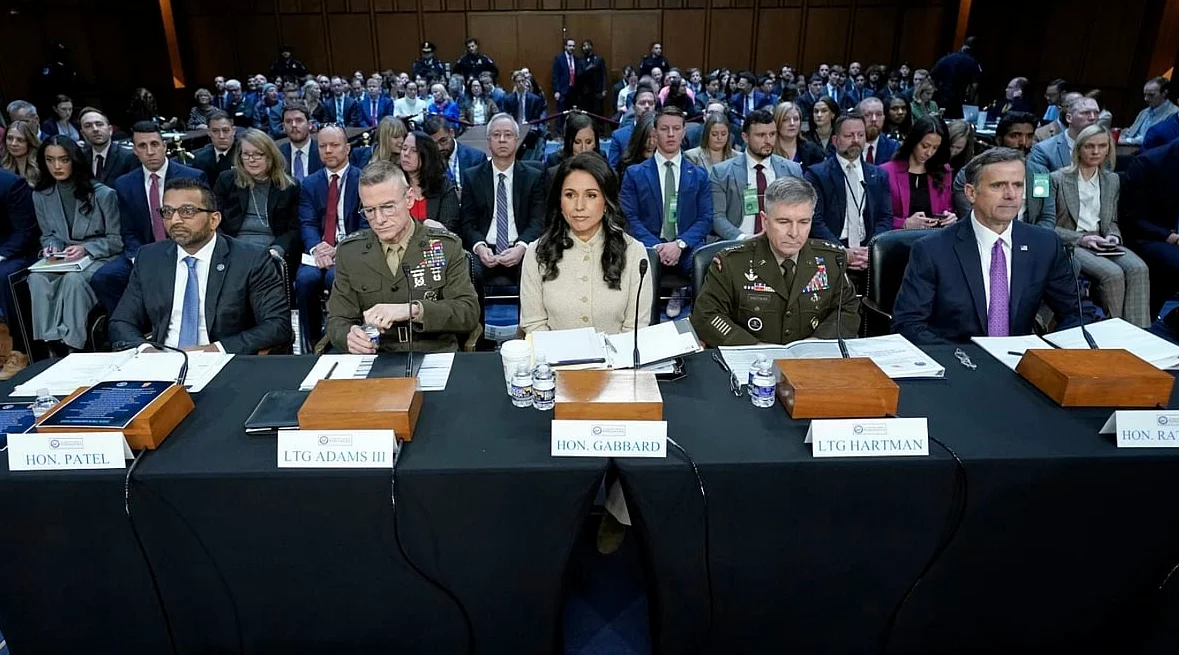
Washington — During a Senate hearing on global threats, Democratic senators pressed Tulsi Gabbard, the director of national intelligence, on whether she had provided former President Donald Trump with intelligence about Iran’s potential actions during the 2018 conflict. Gabbard repeatedly avoided answering, prompting frustration from lawmakers who sought clarity on the intelligence community’s role in the escalating crisis.
Senate Frustrated by Gabbard’s Evasiveness
Sen. Mark Warner, the top Democrat on the Senate Intelligence Committee, directly questioned Gabbard about whether she had advised Trump that Iran would likely block the Strait of Hormuz if the U.S. launched attacks on the country. The strait is a critical oil and gas transit route for the Persian Gulf, and its potential closure was a major concern during the 2018 tensions.
Gabbard responded with a statement that avoided giving a direct answer: ‘I have not and won’t divulge internal conversations. I will say that those of us within the intelligence community continue to provide the president with all of the best objective intelligence available to inform his decisions.’ Her response left many senators unsatisfied, as they sought to understand the full extent of the intelligence shared with Trump, who was then in office.
Warner, a longtime critic of Trump’s foreign policy, said the lack of transparency was problematic. ‘We need to know what the intelligence community told the president,’ he said. ‘This is not just about accountability—it’s about understanding how decisions were made that led to a dangerous escalation in the Middle East.’
Trump’s Calls for Ally Support in the Region
Trump has long emphasized the importance of the Strait of Hormuz and has urged NATO and other allies to help protect the waterway. In a recent statement, he criticized the lack of support from these nations, saying most had rejected his appeals to safeguard the region’s critical energy arteries.
According to reports, Trump had raised the issue in a meeting with European leaders, but his calls for a unified front were largely dismissed. This has led to growing concerns within the U.S. military and intelligence community about the potential for further instability in the region.
During the hearing, Gabbard did not address whether the intelligence community had warned Trump about the risks of a potential Iranian response to U.S. strikes. This omission left open questions about the full picture of the decision-making process that led to the 2018 crisis.
Broader Context of Global Threats
The hearing took place amid heightened concerns about terrorism and global instability. Recent attacks at a synagogue in Michigan and a university in Virginia have raised alarm about domestic security, while the ongoing conflict in the Middle East continues to pose a challenge for U.S. foreign policy.
Gabbard’s refusal to provide specific details about the intelligence shared with Trump has drawn criticism from both sides of the aisle. Some lawmakers said it was essential to have a full accounting of the information that shaped Trump’s decisions, while others argued that the intelligence community has a responsibility to protect national security by not disclosing sensitive details.
‘The intelligence community must be transparent when it comes to major decisions that impact national security,’ said Sen. Sheldon Whitehouse, a Democrat from Rhode Island. ‘The public has a right to know what was communicated to the president and how it influenced the course of action taken.’
Gabbard, however, maintained that the intelligence community’s role is to provide objective analysis, not to engage in political debates. ‘Our job is to inform the president and the nation with the best intelligence available, not to second-guess the decisions that are made based on that information,’ she said.
What’s Next in the Intelligence Community?
The hearing comes at a time of increased scrutiny over the U.S. military campaign in the Middle East and the role of the intelligence community in shaping policy. With the recent attacks in the U.S., there is growing pressure on the intelligence agencies to provide more detailed assessments of both foreign and domestic threats.
Analysts say that the lack of clarity around the intelligence shared with Trump could lead to further investigations or calls for reforms within the intelligence community. ‘This is not just about one administration—it’s about the need for greater transparency and accountability in how intelligence is used to shape national policy,’ said David Kramer, a former U.S. ambassador and foreign policy expert.
With the upcoming congressional elections and the ongoing debate over U.S. foreign policy, the intelligence community’s role in shaping decisions will likely remain a focal point. Gabbard’s refusal to answer questions about her interactions with Trump has only added to the sense of uncertainty surrounding the intelligence community’s role in recent events.
As the hearing concluded, many lawmakers expressed frustration with the lack of clarity. ‘It’s time for the intelligence community to step up and provide the full picture,’ said Sen. Richard Blumenthal, a Democrat from Connecticut. ‘The American people deserve to know what led to the decisions that have shaped our national security policy in recent years.’






Comments
No comments yet
Be the first to share your thoughts