

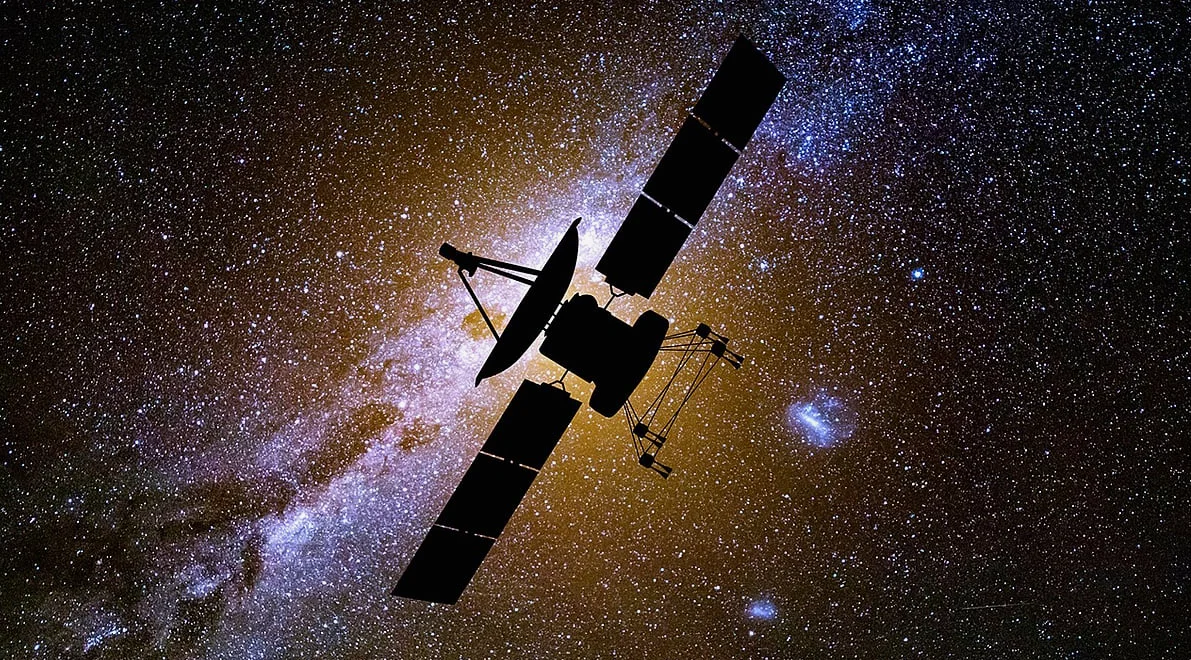
BENGALURU — GalaxEye Space Solutions announced Mission Drishti on Thursday, marking the firm’s first orbital satellite deployment. The mission will carry the company’s proprietary GxDRM radar payload to validate all-electric propulsion systems and demonstrate high-resolution imaging capabilities, according to a company statement.
Engineers designed the 120-kilogram satellite to capture images through clouds, smoke and darkness, a key advantage for disaster monitoring and defense applications. GalaxEye plans to deploy it aboard an Indian launch vehicle from the Satish Dhawan Space Centre. Successful tests could pave the way for a full constellation of 30 satellites by 2028.
The startup raised $25 million in Series A funding last year from investors including Tech Mahindra’s Satya Nadella-backed Peak XV Partners. That capital fueled development of the radar tech, which GalaxEye claims outperforms competitors in resolution and revisit frequency. Mission Drishti also serves as a proving ground for Orbital Data Centres, an innovative concept where satellites link up as distributed computing nodes in space.
Officials said the ODC experiment will assess data processing at orbital altitudes, potentially slashing latency for real-time analytics. Insights gathered during the 12-month mission will shape future satellite designs, boosting scalability, reliability and cost efficiency, the company stated. GalaxEye intends to integrate NVIDIA’s Nemotron open models and Cosmos world foundation models into its software stack for enhanced AI-driven image analysis.
India’s private space sector has exploded in recent years, with over 200 startups now competing in launches, satellites and data services. GalaxEye joins players like Skyroot Aerospace and Agnikul Cosmos in challenging government giant ISRO. The firm already operates ground stations across India and delivers radar data to clients in agriculture, mining and urban planning.
“Mission Drishti represents a giant leap for India’s sovereign space capabilities,” said Suyash Singh, GalaxEye’s co-founder and CEO. He highlighted the mission’s role in building resilient infrastructure amid rising demand for earth observation data. Analysts project the global SAR market to hit $5 billion by 2030, driven by climate tracking and security needs.
Challenges remain. Satellite propulsion must endure vacuum conditions, and radiation shielding protects electronics from cosmic rays. GalaxEye conducted over 1,000 hours of ground simulations to mitigate risks. The mission includes a deorbiting sail for responsible end-of-life disposal, complying with international space debris guidelines.
Partners like NVIDIA provide computing muscle, while collaborations with ISRO ensure regulatory clearance. If Drishti succeeds, GalaxEye eyes commercial contracts with governments and insurers. The startup projects revenue from data sales exceeding $10 million annually post-constellation rollout.
India’s 2024 space policy reforms opened doors for private players, spurring investments totaling $1.5 billion since 2020. GalaxEye’s progress highlights the shift, positioning the country as a low-cost hub for space tech amid U.S.-China rivalries.






Comments
No comments yet
Be the first to share your thoughts