

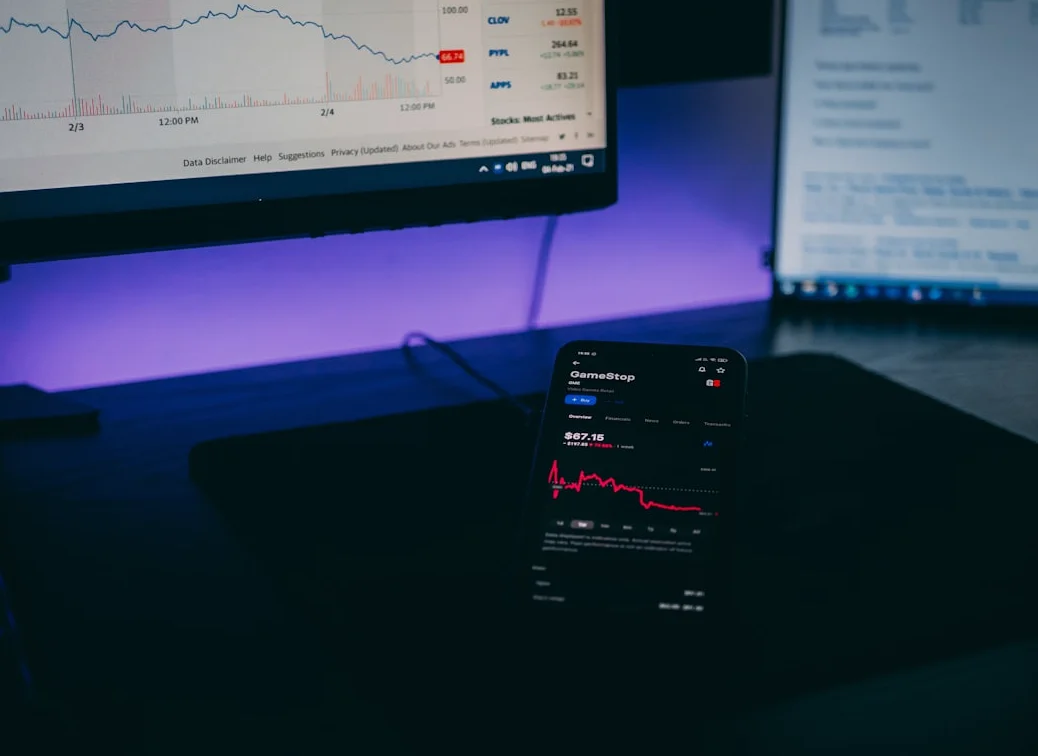
GameStop (GME) finds itself at the center of a volatile stock market environment, with conflicting signals from its financial strategy, insider buying, and ambitious corporate moves. As of June 3, GME stock was trading at $22.56, having recently broken above a downward trendline on the hourly chart, accompanied by bullish engulfing patterns and increased volume. The Relative Strength Index (RSI) showed momentum building between 46 and 70, according to TradingKey.
Financial Strategy and Debt Exchange
The company reported Q1 2026 revenue of $880 million, down 8% year-over-year, though it managed to improve gross margins and reduce its net loss; GameStop ended the quarter with $1.1 billion in cash and minimal long-term debt, a unique position among retailers. However, the company recently announced a $1.4 billion debt exchange, in which convertible senior notes will be swapped for shares of Class A common stock, according to Stocktwits. This move will reduce long-term debt without using cash but will increase the company’s share count.
Once completed, the exchange will reduce outstanding long-term debt by $1.1 billion in 2030 notes and $1 billion in 2032 notes, and After the transaction, $1.1 billion in 2030 and $1.7 billion in 2032 notes will remain outstanding. The company warned that this activity could significantly affect the market price of its stock.
Insider and Retail Investor Confidence
CEO Ryan Cohen has continued to signal confidence in the company’s future. He recently forwent a $35 million pay package to focus on his eBay acquisition bid and personally purchased 1 million shares of GME at an average price of $21.36, increasing his ownership to nearly 9.3% of the company, according to TIKR.com. Cohen also stated in a SEC filing that CEOs who don’t buy their own company’s stock with personal funds should be fired.
Retail investor sentiment was further boosted when investor Michael Burry, known for his 2008 housing market bet, revealed in a Substack post that he had purchased GME shares. Burry explained he was buying the stock at a price close to its book value, essentially paying $1 for every $1 in real assets the company holds. He also emphasized this was not a speculative short-term trade but a long-term bet on Cohen’s ability to transform GameStop over the next 50 years.
Ambitious Bid for eBay and Market Skepticism
Amid these developments, GameStop has proposed a $56 billion acquisition of eBay, a move that has drawn significant skepticism from analysts and investors. According to XTB.com, GameStop’s market capitalization before the announcement was around $12 billion and has since fallen to just under $11 billion following a 10% stock decline. In contrast, eBay is valued at $46 billion and has outperformed the S&P 500 under CEO Jamie Iannone.
GameStop has positioned itself as a stronger financial entity, with $9 billion in cash and a near 5% stake in eBay, as the company argues that the key to the success of the acquisition lies in a significant cost reduction. Despite these claims, the deal is seen by many as a David-and-Goliath scenario where a smaller player is attempting to absorb a much larger one.




Comments
No comments yet
Be the first to share your thoughts