

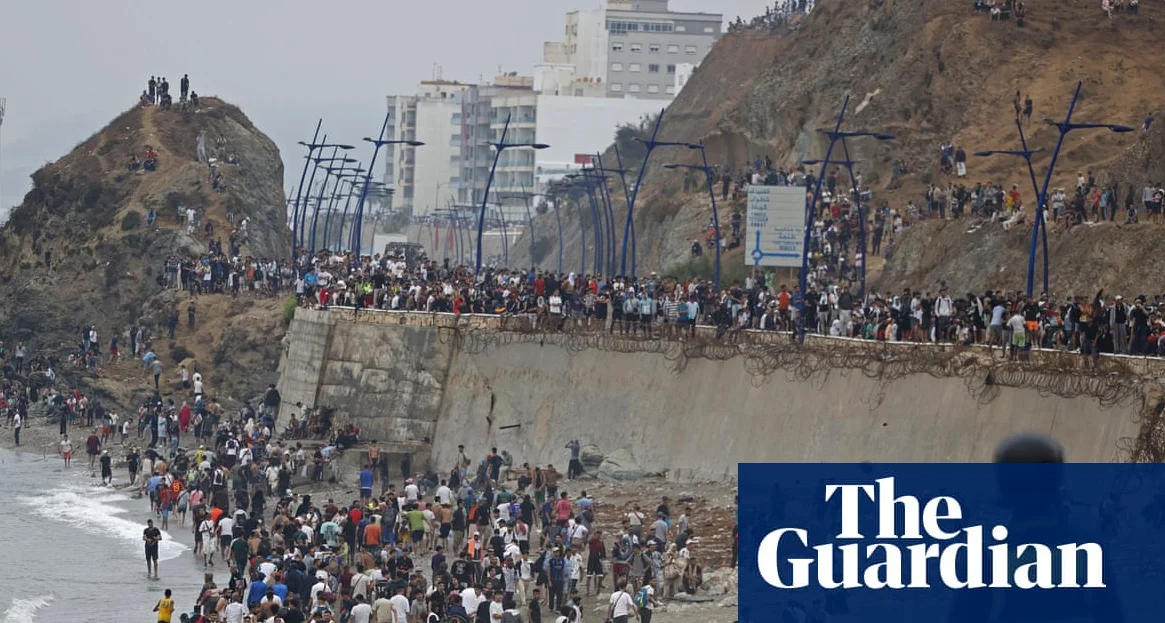
Spanish Prime Minister Pedro Sánchez has denied Moroccan government involvement in the recent border surge into the Spanish enclave of Ceuta, according to The Guardian, though As many as 141 people are thought to have died trying to enter the enclave at the end of July, according to The Guardian.
Social Media and Misinformation Fuel the Surge
According to CBS News, Morocco attributed the sudden influx of migrants into Ceuta to factors such as the “malicious exploitation of digital platforms” and the spread of misleading information. Moroccan Interior Ministry spokesman Rachid El Khalfi stated that the surge was not the result of circumstantial or spontaneous factors, but rather the “interaction of several overlapping factors.”
Among these, El Khalfi cited the role of human trafficking networks and the misinterpretation of legal and administrative information. Some Moroccan migrants told CBS News they saw social media posts stating, “Spain is an open door,” along with videos of people swimming from Morocco to Ceuta. It was unclear who was behind the social media claims.
Spain Blames Human Trafficking and Foreign Influences
Spain’s Prime Minister Pedro Sánchez blamed the sharp increase in crossings on “human trafficking mafias” trying to exploit a recent Spanish Supreme Court ruling that makes it harder to turn away migrants arriving from Morocco by sea, according to CBS News. Sánchez denied Moroccan government involvement and emphasized the need for cooperation in resolving the crisis.
“There’s no information from any intelligence agency that raises doubts over the involvement of Moroccan authorities,” Sánchez told Cadena Ser radio, according to The Guardian. He also pointed to social media disinformation spread by accounts “associated with Russia, Israel and the international far right that always use migration to attack not just Spain but also Europe.”
One young man said he saw posts referencing the court ruling. The people who spoke to CBS News said they did not have premeditated plans to come to Spain, but made the spontaneous decision to swim when they saw others doing it.
Humanitarian and Political Fallout
The influx of about 70,000 men, women, and children unleashed a political crisis, a humanitarian emergency, and reignited tensions over immigration within the EU, according to The Guardian. Although the overwhelming majority of the migrants crossed back into Morocco weeks ago, hundreds of people, including minors, are still on the streets of Ceuta, leading to tensions with residents.
Sánchez said that about 1,500 migrants remained in Ceuta, of whom 1,200 are minors, and there would soon be “sufficient capacity” to accommodate all those still in the enclave. He reiterated that cooperation with Morocco was “frankly positive” and that distrust toward the Moroccan government would only worsen the situation.




Comments
No comments yet
Be the first to share your thoughts