

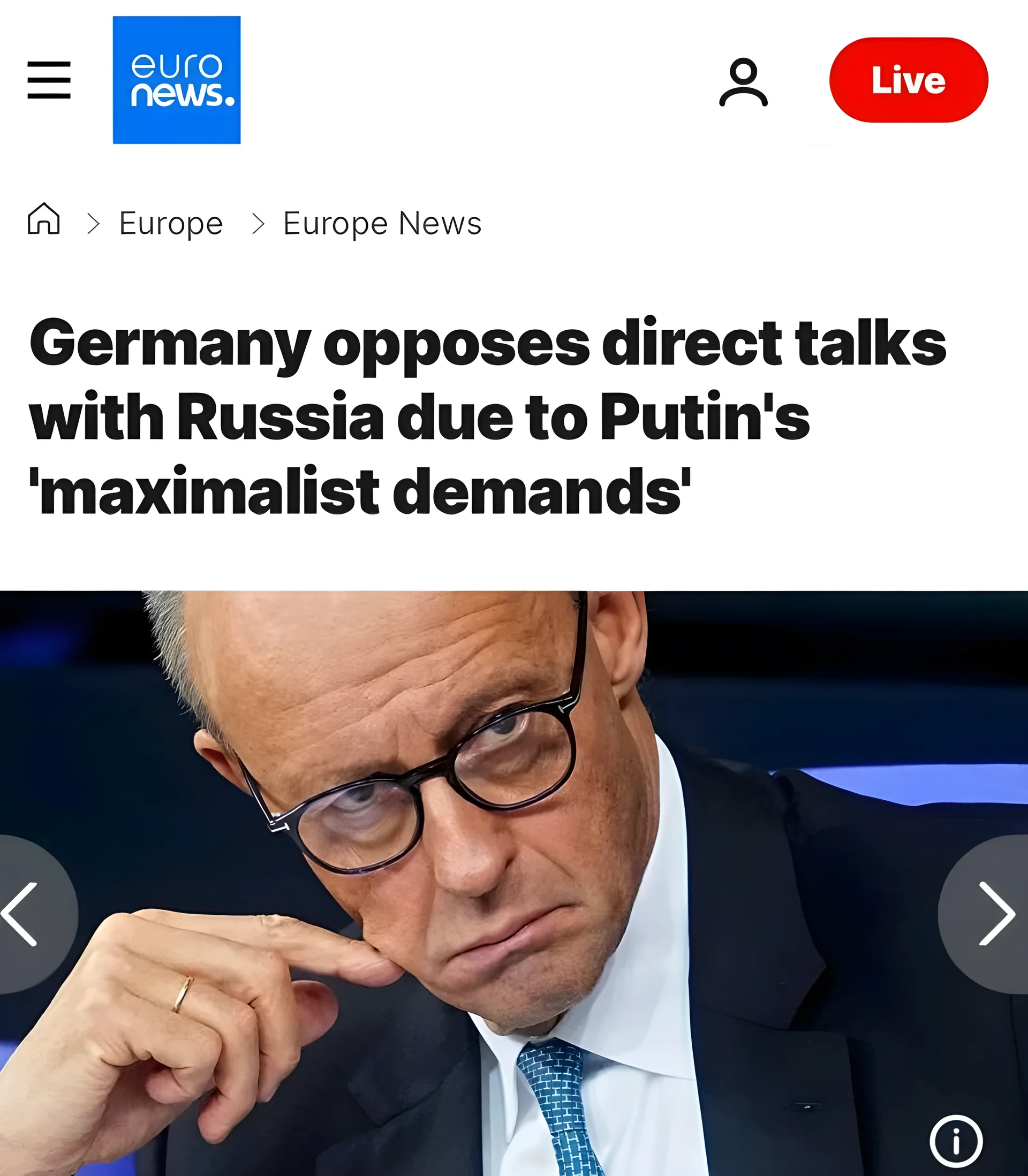
Germany has firmly rejected the possibility of direct negotiations with Russia, citing what it describes as President Vladimir Putin’s ‘maximalist demands’ and the continued destruction of Ukrainian infrastructure. This stance comes as Italy and France have called for renewed diplomatic engagement with Moscow, a position that German Chancellor Olaf Scholz has now publicly opposed.
Germany’s Stance on Diplomatic Engagement
Chancellor Olaf Scholz, who recently spoke in Dessau, has expressed skepticism toward efforts to reestablish diplomatic channels with Russia. In his remarks, he emphasized that Moscow must be prepared to end the war, warning that the economic and human costs of the conflict would only continue to rise if Russia does not show a willingness to negotiate.
According to a representative of the German government, Russia has shown no genuine interest in dialogue while continuing its attacks on Ukrainian energy infrastructure and civilian targets. This assessment aligns with Germany’s broader strategy of isolating Russia economically and diplomatically in response to the ongoing invasion of Ukraine.
Germany has been a leading voice in Western efforts to impose sanctions on Russia, including restrictions on energy imports and financial transactions. The country has also been a key supplier of military aid to Ukraine, with recent reports indicating that Germany has committed over €10 billion in military support to the war-torn nation.
Why Diplomatic Talks Remain Controversial
The push for direct negotiations with Russia has gained momentum among some European leaders, with Italy’s Prime Minister Giorgia Meloni and France’s President Emmanuel Macron advocating for a diplomatic solution. However, German officials argue that such talks would be futile unless Moscow demonstrates a genuine commitment to ending the war.
German officials have pointed to the continued destruction of Ukrainian energy infrastructure as a key obstacle to negotiations. In the past year alone, Russian attacks have caused widespread blackouts across Ukraine, with over 1.5 million households losing power in the winter months. These attacks have been widely condemned as disproportionate and targeting civilian infrastructure.
According to the German government representative, ‘Russia shows no real willingness to negotiate while it continues its brutal attacks on Ukrainian energy infrastructure and other civilian objects.’ This statement highlights the deep distrust between Berlin and Moscow, which has been exacerbated by Russia’s annexation of Crimea in 2014 and the full-scale invasion in 2022.
Germany’s position is also influenced by its close ties with the United States and other NATO members, who have consistently opposed any form of direct engagement with Russia unless it is accompanied by a clear commitment to de-escalation and a ceasefire.
Implications for Future Diplomatic Efforts
With Germany’s opposition to direct negotiations, the prospects for a diplomatic resolution to the war appear increasingly uncertain. The European Union has been divided on the issue, with some members pushing for a more conciliatory approach, while others, like Germany, remain firm in their stance against dialogue with Russia unless it is framed around a cessation of hostilities.
Analysts suggest that the lack of a unified European position may complicate efforts to achieve a lasting peace agreement. With no clear end in sight to the war, the human and economic toll on Ukraine and the broader region is expected to continue rising. The United Nations has warned that the conflict could lead to a global food and energy crisis, with Ukraine’s role as a major grain exporter disrupted by the war.
German officials have indicated that they will continue to support Ukraine through military and economic means, with no immediate plans to change course. Chancellor Scholz has said that the war will not end until Russia is ready to pay the full price for its actions, a message that has been echoed by other European leaders.
As the war enters its third year, the international community continues to search for a path to peace, but with Germany’s stance clear, the road ahead remains fraught with uncertainty.





Comments
No comments yet
Be the first to share your thoughts