

 BBC
BBC 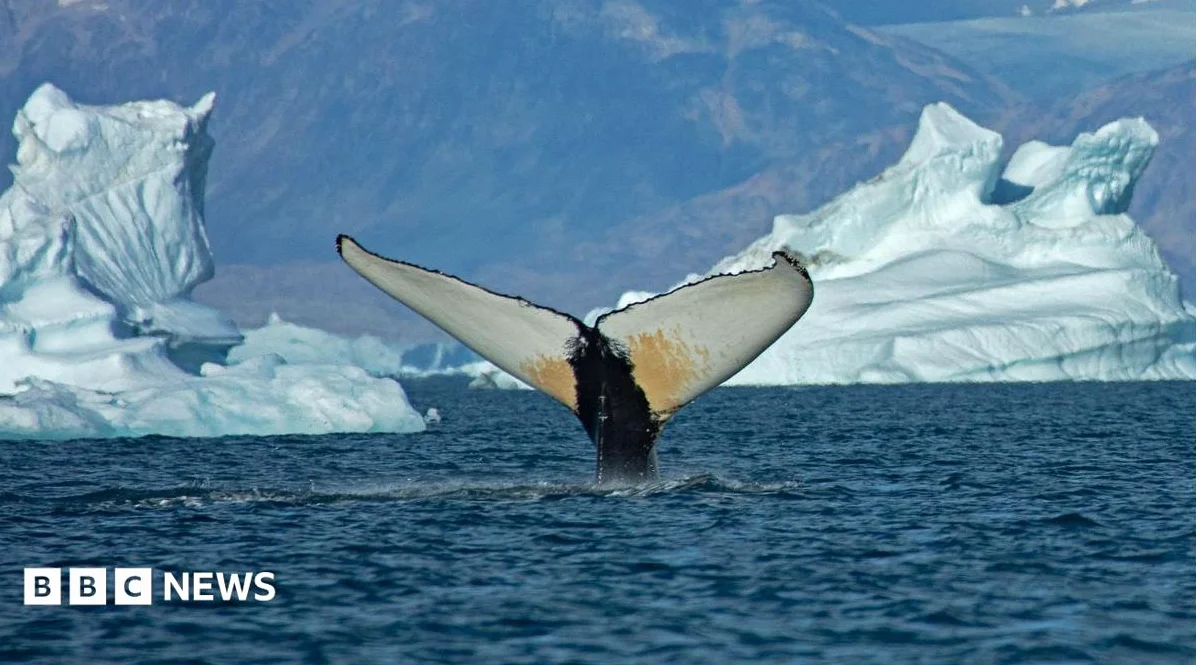
Ship-based surveys in East Greenland did not record any humpback whale sightings until 2006, while By 2007, seven humpbacks were seen, and by 2024, there were 150 sightings of these giant whales in the same region. The changes in the area are described by scientists as a major ecological administration shift, driven by rising sea temperatures and increased food availability.
Warming Waters and Changing Migratory Patterns
The movement of these marine mammals into Greenland waters is linked to the retreat of sea ice caused by climate change; Historically, these whales were not found in the coastal waters of East Greenland, as the ice locked them out. Now, with the ice melting, they have adapted to the new conditions and are feeding in the region; Researchers from the Greenland Institute of Natural Resources have combined data from aerial surveys, satellite tagging, and Inuit hunter testimony to track this shift.
Prof. Mads Peter Heide-Jørgensen, the lead researcher, called the changes “probably the most radical we can see anywhere in the subarctic.” He noted that the whales are feeding on fish that have moved into the warming waters of East Greenland. The three whale species are estimated to consume at least 800,000 tonnes of fish and krill during a single summer feeding season.
Ecological Implications of the Shift
The study does not clarify whether the increased whale activity reflects a population boom or a redistribution from other areas; the shift is part of a broader pattern of system transformation in the Arctic. As the climate warms, species are adapting by altering their migratory routes and feeding habits — the Greenland Sea has become a new hotspot for feeding frenzies, particularly in the summer months.
Researchers conducted their first systematic aerial surveys of baleen whales off the East Greenland coast in the summers of 2015 and 2024, while the data collected from these surveys, along with 15 satellite-tagged whales, provided a detailed picture of the whales’ movements and feeding behaviors. The Inuit community also contributed valuable observations, highlighting the role of indigenous knowledge in scientific research.
Broader Trends in Marine Life Adaptation
While the focus of this study is on whales, similar patterns are being observed in other marine species — For example, bluefin tuna, a top predator, has also been spotted in waters where it was previously absent. In the UK, a bluefin tuna weighing 386 kg was caught in Whitby in 1933, as Since 2018, researchers from the University of Exeter have tagged 165 bluefin tuna from the Atlantic coast of England, Wales, and Jersey. The fish found near Whitby are reported to be “considerably larger and may be genetically distinct from those already tagged.”
Dr. Lucy Hawkes, leading the bluefin tuna research, attributed the return of the species to British waters to “some careful and judicious management of fisheries.” She added that the UK’s current quota for bluefin tuna is “really small” compared to the overall stock levels. Bluefin tuna are also top predators who can only thrive in healthy ecosystems, suggesting that the return of the species may indicate broader environmental improvements in certain regions.






Comments
No comments yet
Be the first to share your thoughts