

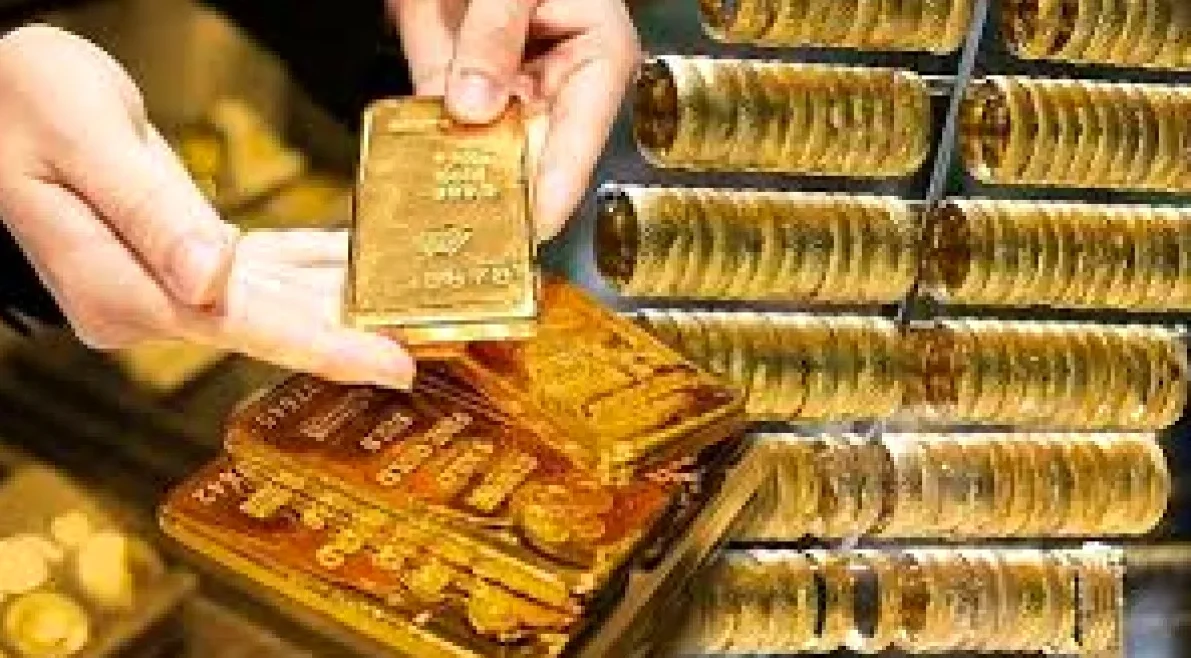
Gold prices have reached a historic high of $5,292.66 per troy ounce as of Sunday morning ET, driven by a combination of geopolitical tensions and safe-haven demand. The surge follows Iran’s attacks on Dubai, Bahrain, Qatar, and Saudi Arabia, which entered their second day, and the temporary closure of the Strait of Hormuz, a vital global oil shipping route. With concerns over a potential US-Iran conflict and a softer dollar, investors are flocking to gold as a hedge against uncertainty.
Gold Surges to $5,292 Per Ounce Amid Geopolitical Turmoil
As of March 1, 2026, at 8:46 a.m. ET, the live gold spot price was $5,292.66 per troy ounce. This represents a significant jump from the previous day’s closing price of $5,194.20, marking a nearly 2% increase in overnight and early Sunday trading. One gram of gold is currently trading at $170.16, while one kilogram is priced at $170,162.97. The intraday range for gold on Sunday spans $5,182.90 to $5,299.00, reflecting the intensity of the market’s response to geopolitical developments.
Analysts have noted that the overnight surge in gold prices is the largest single-session move since the invasion of Ukraine in February 2022. The combination of Iran’s retaliatory strikes against Gulf infrastructure, the temporary closure of the Strait of Hormuz, and the uncertainty surrounding the potential escalation of the conflict has created a perfect storm for safe-haven demand.
Gold’s Strong Performance in 2026 and Investment Trends
Gold has gained 22% so far in 2026, marking its best performance since 2010. The metal has seen a seventh consecutive monthly gain, a streak that has not been seen in over a decade. This performance is fueled by a combination of factors, including falling real yields, persistent geopolitical tensions, and strong central bank and institutional interest in gold.
Central banks purchased 863 tonnes of gold in 2025, and this trend is expected to continue into 2026, with purchases projected to remain near 850 tonnes. The World Gold Council anticipates that investment demand will remain strong, driven by geopolitical tensions, expectations of interest rate cuts, and pressure on the US dollar.
Consumer jewelry demand, however, has slowed significantly. Global jewelry sales fell 18% in 2025 due to exceptionally high prices, but this decline has been more than offset by the surge in investment demand. Analysts believe that the structural floor provided by central bank purchases will continue to support gold prices in the near term.
Gold’s Impact on Other Precious Metals and Currencies
The surge in gold prices has also had a ripple effect on other precious metals and currencies. Silver is currently trading above $93 per ounce, and analysts believe a clear breakout could push it toward $100 in the near term. Gold futures technical targets for the upside run as high as $5,608 per ounce if bullish momentum holds through next week’s trading session opening on March 2.
Oil prices are also surging, with Brent crude expected to spike $5 to $10 per barrel when COMEX opens Monday. This increase is amplifying the inflationary fear that continues to drive investors into hard assets like gold and silver. The Swiss franc has also strengthened sharply as capital flows into classic safe-haven currencies alongside precious metals.
The Federal Reserve is expected to hold interest rates unchanged at 3.50-3.75%, a near-certainty priced at 98% probability by CME Group. This decision removes one potential headwind for gold, while geopolitical risk remains the dominant driver of every trade made in the metal right now.
Gold price forecast models project the metal will reach $5,496 per ounce by March 7, an additional 4.14% gain from current levels if the geopolitical situation does not de-escalate. More aggressive longer-term forecasts target $7,720 per ounce by December 2026 based on current trend models, though those projections carry wide uncertainty bands.
Key resistance levels for gold futures on the March 2 open sit at $5,320.89 and $5,426.67, with major support at $5,052.87. The ongoing geopolitical tensions and the potential for further escalation will likely continue to influence gold prices in the coming weeks and months.






Comments
No comments yet
Be the first to share your thoughts