

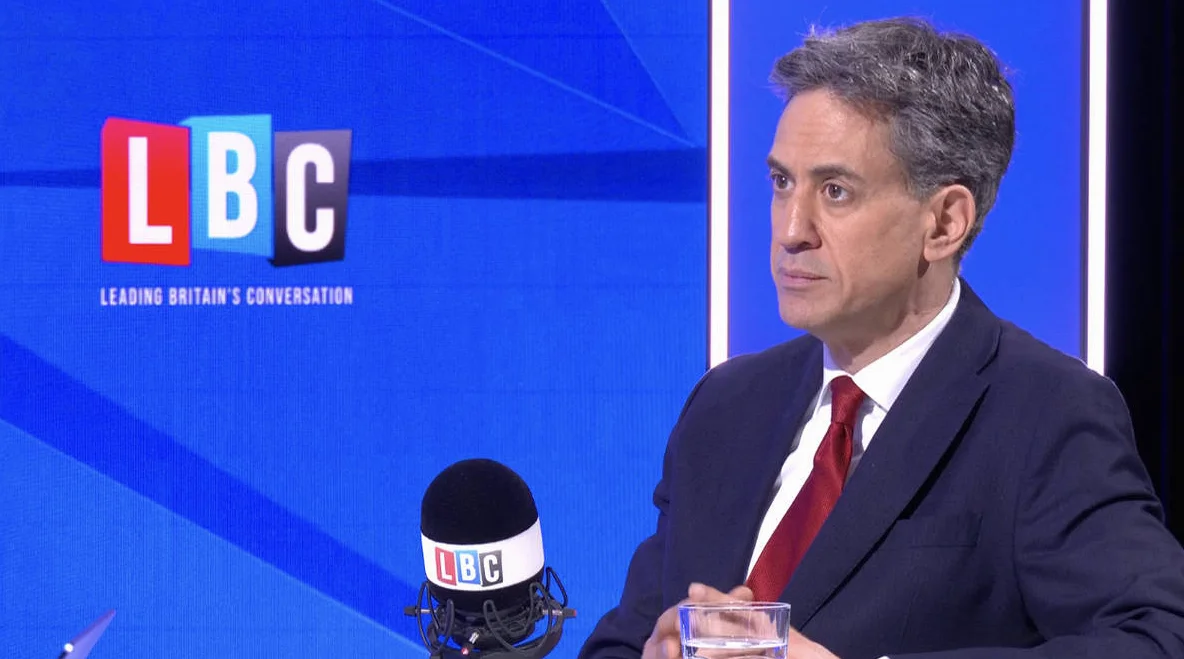
Energy Secretary David Miliband has confirmed that the UK government is preparing for all eventualities in the event of a prolonged energy crisis, including the possibility of revisiting fuel duty, as tensions in the Middle East continue to disrupt global oil supplies.
Strategic Stance on Oil and Gas
Miliband told LBC’s Lewis Goodall on Sunday that the government remains committed to its manifesto pledges regarding the energy sector. He emphasized that existing oil and gas fields will remain open for their full lifetimes, and no new exploration licenses will be issued on existing fields.
“That was our commitment and we’re sticking to that commitment,” Miliband said. “We said in our manifesto we’d keep existing oil and gas fields open for their lifetimes, and we wouldn’t issue new exploration licenses on existing oil and gas fields.”
The minister added that the government has already taken steps to support existing energy infrastructure. “We’ve not only done that, but we’ve introduced so-called tiebacks to existing fields. So that’s some new production in adjacent areas. And that was welcomed by the industry,” he said.
Miliband also addressed the impact of new exploration licenses on energy prices, stating that such measures would not necessarily lower fuel costs. “New exploration licenses won’t cut the price,” he said.
Regional Tensions and Energy Supply
The current energy crisis has been exacerbated by regional tensions, particularly in the Middle East, where Iran has been blocking the Strait of Hormuz, a vital shipping route for oil tankers. This has led to significant spikes in global oil prices, affecting fuel costs in the UK and elsewhere.
The Strait of Hormuz accounts for approximately 20% of the world’s oil supply, and any disruption to this route has immediate and far-reaching consequences on global energy markets. Analysts warn that the situation could worsen if the conflict persists into the latter half of the year.
Miliband hinted at the government’s flexibility in its energy policy, stating that the government is open to reviewing its plans to raise fuel duty for the first time in over a decade if the crisis continues. “Mr Miliband has hinted that the Government is open to reviewing its plans to raise fuel duty for the first time in more than a decade should the war in the Middle East continue into the latter half of the year,” the report states.
The potential increase in fuel duty has been a contentious issue among both industry stakeholders and consumers. The government has previously resisted such a move, citing the need to maintain economic stability and protect households from rising living costs.
Uncertainty and Policy Response
Miliband acknowledged the uncertainty surrounding the duration of the energy crisis. “Part of the challenge here, which I think we’re all aware of, is we don’t know how long this crisis will last,” he said. “And obviously, our response will have to be shaped by the length of the crisis.”
The government has been closely monitoring the situation and is in regular communication with energy providers, industry leaders, and international partners to ensure a coordinated response. Officials have stated that the government will “stand by the British people in this crisis” and is prepared to take any necessary measures to mitigate the impact on households and businesses.
The UK has seen a significant rise in fuel prices over the past year, with the average price of petrol reaching over £1.50 per liter in some regions. This has placed additional pressure on households already grappling with high inflation and rising living costs.
Analysts suggest that the government may need to consider a range of policy options, including temporary relief measures, subsidies for vulnerable households, and support for the energy sector to ensure a stable supply of fuel.
“The government is preparing for all eventualities, and that includes being ready to adjust its policies if the situation deteriorates further,” said a senior energy policy advisor, who requested anonymity. “The key is to balance the need for long-term energy security with the immediate concerns of consumers and businesses.”
With the situation remaining fluid, the government is expected to provide further updates on its energy strategy in the coming weeks, particularly as the conflict in the Middle East continues to evolve.
Meanwhile, the UK’s energy regulator, Ofgem, has called for continued vigilance and cooperation between the government, energy companies, and consumers to manage the crisis effectively. “The energy sector is resilient, but it needs support from all stakeholders to handle these challenging times,” a spokesperson said.





Comments
No comments yet
Be the first to share your thoughts