

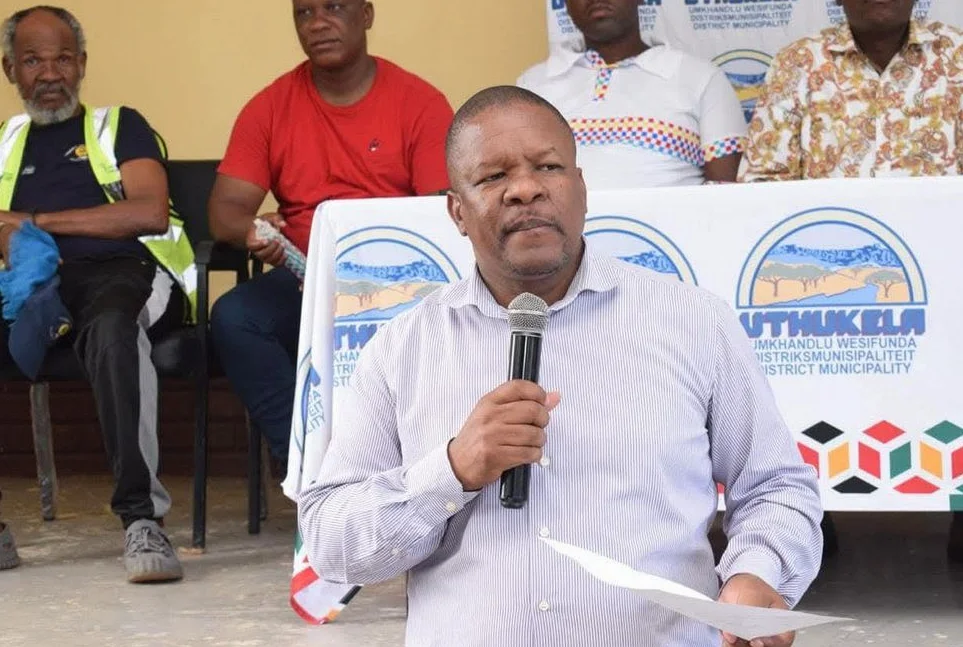
The uThukela District Municipality, based in Umnambithi, is facing a severe financial crisis after its bank accounts were seized by a service provider, leaving the local government unable to pay salaries, utilities, and other critical obligations. The move, which followed the municipality’s failure to pay R100 million in outstanding debts, has led to a critical liquidity crisis, with officials warning of potential service disruptions across the district.
Financial Paralysis and Service Disruption
In an affidavit submitted by municipal manager Langelihle Jili, it was stated that the seizure of the municipality’s bank accounts has rendered it unable to meet short-term financial obligations, including employee salaries, bulk water and electricity payments, and creditor settlements. This has placed the municipality in a state of “serious and urgent financial paralysis,” according to the document.
The service provider, who claims to be owed more than R100 million, acted on a court order to recover the debt, leaving the local government with no operational liquidity. This has raised concerns about the continuity of essential services, including water supply, electricity, and public infrastructure maintenance.
According to Jili’s affidavit, the bank accounts seized constitute the primary source of the municipality’s operational liquidity. Without this, the local government is at risk of failing to meet its daily operational needs, which could lead to a broader collapse of public services in the area.
Government Intervention and Leadership Calls
In response to the crisis, the KwaZulu-Natal government and the Department of Cooperative Governance and Traditional Affairs (Cogta) have intervened, with Minister Velenkosini Hlabisa and Premier Thamsanqa Ntuli expected to visit the municipality on Monday to address the situation. Provincial government spokesperson Bongani Gina confirmed the planned visit, stating that officials aim to find a solution to prevent further deterioration of the municipality’s financial state.
However, the crisis has also sparked calls for a change in leadership. Thys Rensburg, the DA caucus leader in the municipality, argued that the only viable solution to the ongoing problems is a leadership change. “We need to ask ourselves why there is no political will to fix this,” Rensburg said, emphasizing the need for decisive action to stabilize the situation.
Rensburg’s remarks highlight growing frustration among opposition figures, who believe the current administration is not adequately addressing the financial challenges facing the municipality. The DA has previously criticized the IFP-led administration for its handling of local governance issues in the region.
Broader Implications for Local Government
The crisis in uThukela has raised concerns about the broader financial health of local municipalities in KwaZulu-Natal. In recent years, several municipalities in the province have faced similar financial challenges, including debt defaults and service disruptions. The situation in uThukela is being closely watched as a potential indicator of systemic issues within local government financing.
According to recent reports, the Department of Cooperative Governance and Traditional Affairs has been working to address financial mismanagement in municipalities across the country, with several cases of municipal collapse leading to national intervention. The uThukela crisis is the latest example of the challenges faced by local governments in maintaining financial stability amid rising operational costs and limited revenue sources.
Analysts suggest that without a thorough financial restructuring plan, the municipality may face prolonged instability, with potential ripple effects on the local economy and communities dependent on municipal services. The government’s planned intervention is seen as a critical step in preventing further escalation of the crisis, but long-term solutions remain uncertain.
The IFP spokesperson, Mkhuleko Hlengwa, and uThukela mayor inkosi Ntandoyesizwe Shabalala have not responded to requests for comment on the situation. Their silence has only deepened concerns about the municipality’s leadership’s ability to address the crisis effectively.
The coming days will be crucial in determining whether the government’s intervention can stabilize the financial situation in uThukela. With essential services at risk and political pressure mounting, the outcome of the planned meetings by Hlabisa and Ntuli could have significant implications for the future of local governance in the region.






Comments
No comments yet
Be the first to share your thoughts