

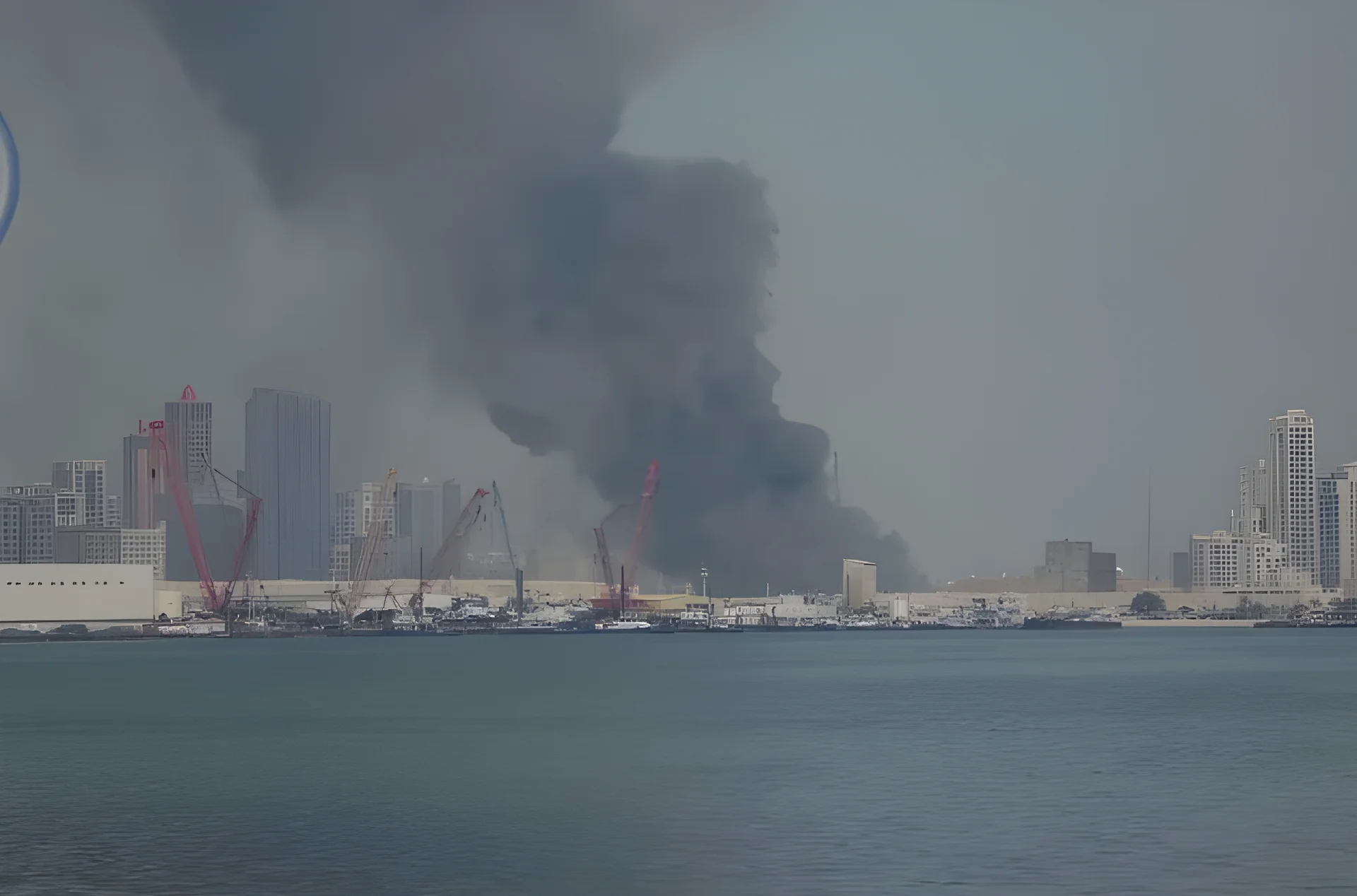
Saudi Arabia, Qatar, and Kuwait have condemned what they describe as Iranian attacks on several Gulf nations, including the United Arab Emirates, Bahrain, Jordan, and Kuwait, in a statement released Saturday. The attacks, which occurred amid ongoing regional tensions, have been described as a direct threat to national sovereignty and regional stability.
Regional Condemnation and Solidarity
The Saudi Foreign Ministry issued a strong statement condemning the Iranian actions, calling them a ‘blatant aggression’ and a ‘flagrant violation of the sovereignty’ of several Gulf states. The ministry expressed full solidarity with the affected countries and pledged to support any measures they take in response.
‘We warn of the grave consequences of continued violations of state sovereignty and the principles of international law,’ the statement said. It also urged the international community to condemn the attacks and take ‘all firm measures to confront Iranian violations that undermine the security and stability of the region.’
Qatar’s Foreign Ministry similarly condemned the attacks, describing them as a ‘flagrant violation’ of its national sovereignty and a direct threat to its security and territorial integrity. The ministry affirmed its right to respond in accordance with international law and warned that such actions contradict the principles of good neighborliness.
‘Qatar has long advocated dialogue with Iran and consistently peaceful dispute resolution,’ the statement said. ‘Renewed attacks on our territory do not reflect goodwill and threaten the foundations of mutual understanding.’
Kuwait’s Response and Defense Measures
Kuwait’s Foreign Ministry also condemned what it described as an ‘Iranian attack’ targeting its territory earlier Saturday. The ministry called the incident a ‘blatant violation’ of Kuwait’s sovereignty, airspace, and international law, as well as the UN Charter.
‘Kuwait retains its full and inherent right to self-defense under Article 51 of the UN Charter,’ the statement said. It confirmed that Kuwaiti air defenses had successfully intercepted the attack in accordance with established operational procedures and rules of engagement.
The ministry warned that continued military escalation risks undermining regional security and stability, as tensions between Iran and its Gulf neighbors continue to rise.
These attacks occurred amid ongoing talks between the United States and Iran over Iran’s nuclear program, which had been mediated by Oman. A recent round of talks in Geneva concluded on Thursday, but the situation remains volatile.
Israeli and US Actions Trigger Escalation
Israel and the United States launched an attack against Iran early Saturday, citing alleged threats posed by the ‘Iranian regime.’ Both US President Donald Trump and Israeli Prime Minister Benjamin Netanyahu released video statements detailing the operation.
The attacks come after Israel initiated a 12-day war on Iran in June of this year, with the US joining later and bombing three Iranian nuclear sites. The recent strikes have raised fears of further escalation and potential retaliation from Iran.
Analysts warn that the cycle of attacks and counterattacks could lead to a broader regional conflict, with significant implications for global oil markets and international security.
According to a report from the International Institute for Strategic Studies, the region has seen a 300% increase in cross-border military operations since 2024. The potential for further escalation remains high, particularly as both sides continue to test each other’s resolve.
With the situation growing increasingly volatile, the international community faces mounting pressure to find a diplomatic solution to prevent further conflict in the region.






Comments
No comments yet
Be the first to share your thoughts