

 Associated Press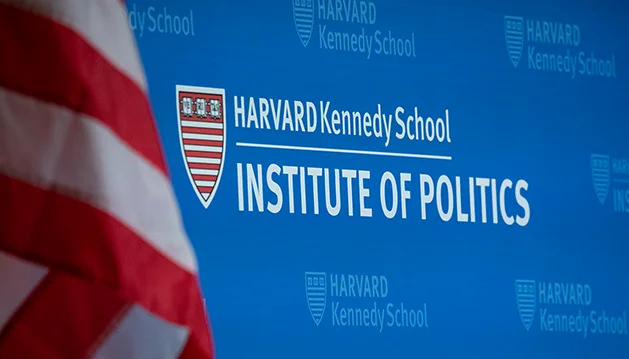
Harvard Kennedy School has announced the launch of The Consent of the Governed: America at 250 and Beyond, a series of events aimed at examining the past, present, and future of the American experiment. The initiative, hosted by the Institute of Politics and moderated by Jill Lepore, brings together a range of leaders from various fields to engage in critical discussions about the nation’s trajectory.
Exploring America’s Legacy and Future
The event series is designed to explore the core questions and challenges facing the United States as it approaches the 250th anniversary of the signing of the Declaration of Independence. The first event, scheduled for March 30, will feature Pete Buttigieg, former U.S. Secretary of Transportation and former IOP student president, alongside Drew Gilpin Faust, the 28th president of Harvard University, and Eddie Glaude, a political commentator and Princeton professor.
Participants in the series will include a diverse array of voices from politics, culture, academia, technology, and journalism. Among the confirmed speakers are Mitt Romney, former U.S. Senator and Republican presidential nominee, and Bill McKibben, an environmentalist and author known for his work on climate change. These individuals will contribute to discussions on themes such as union and disunion, the role of institutions, and the challenges of governance in the 21st century.
According to Jeremy M. Weinstein, Dean of Harvard Kennedy School, the series represents an opportunity to convene thoughtful, rigorous conversations that reflect the current moment in American history. ‘As America marks an important milestone, Harvard Kennedy School has both an opportunity and an obligation to convene the kinds of honest, rigorous conversations that this moment demands,’ he said. ‘By bringing together leaders from varied perspectives to discuss the most important issues of our time, we hope to explore where America has been and what it might yet become.’
A Timely Reflection on American History
Jill Lepore, a Professor of American History at Harvard University and a staff writer for The New Yorker, emphasized the significance of the moment. ‘American history is an ever-unfolding story,’ she said. ‘But this year, an inflection point in so many ways, is an excellent time to look back, take stock, and look ahead.’
The series will run from March through the end of the year, surrounding the 250th anniversary of the signing of the Declaration of Independence on July 4, 2026. This timeline allows for a thorough examination of the nation’s founding and its ongoing evolution. The first event will focus on the forces of union and disunion that have shaped the American republic over the past 250 years.
Throughout the series, discussions will center on enduring and emerging themes relevant to the American experiment. These will include the role of democracy, the challenges of political polarization, the impact of technology on governance, and the responsibilities of leadership in a rapidly changing world. Each event will be structured to encourage dialogue and reflection, rather than partisan debate.
Encouraging Critical Conversations and Student Engagement
Harvard Kennedy School and the Institute of Politics have long emphasized the importance of engaging students in meaningful discussions about the issues that shape their future. This event series is part of a broader effort to bring people from across the political landscape to campus for hard and meaningful conversations.
In addition to this series, HKS and the IOP recently launched a debate and debrief series, which features conversations between Harvard faculty and invited guests who approach an issue from a different point of view. This initiative aims to support a deeper understanding of complex topics by presenting multiple perspectives.
The America at 250 and Beyond series is intended to provide students and the broader public with a platform to engage with leading thinkers and practitioners. By bringing together a range of voices, the series seeks to create an environment where diverse perspectives can be shared and debated in a constructive manner.
Additional details about the series, including future event dates and themes, will be announced in the coming months. The events will be open to the public, and more information can be found on the series’ official website.
The timing of the series is particularly significant, as it coincides with a period of uncertainty and change in the United States. As the nation approaches the 250th anniversary of its founding, the discussions will provide an opportunity to reflect on the nation’s achievements and challenges, and to consider what the future may hold.
With its focus on the American experiment, the series is expected to attract a wide audience, including academics, students, journalists, and members of the public interested in the future of democracy and governance. The conversations will be recorded and made available online, allowing for continued engagement beyond the initial events.
As the nation moves toward the 250th anniversary of the signing of the Declaration of Independence, the Harvard Kennedy School’s event series offers a timely and necessary reflection on the nation’s past, present, and future. The discussions will serve as a foundation for ongoing conversations about the challenges and opportunities that lie ahead.




Comments
No comments yet
Be the first to share your thoughts