

 BBC News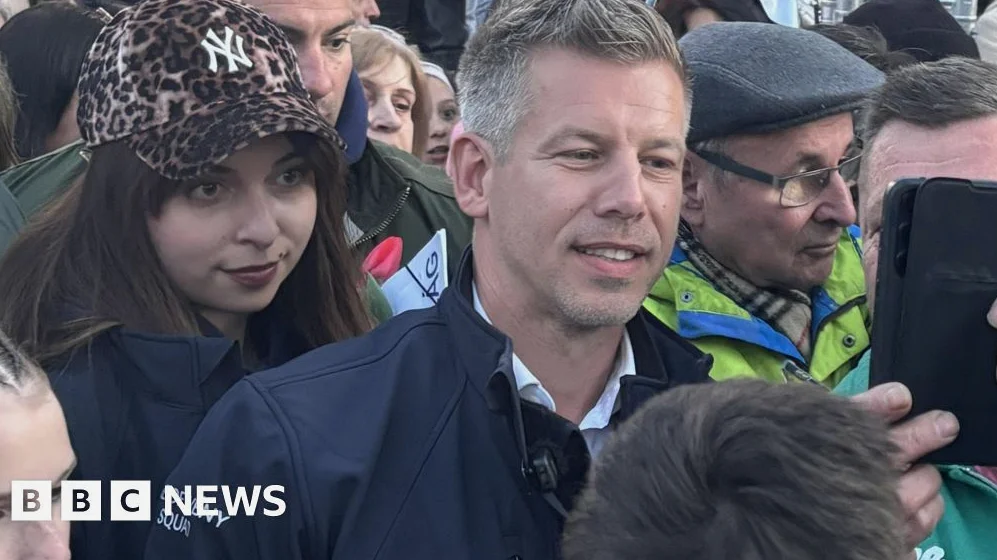
With Hungary’s highly significant election approaching, the race between long-time leader Viktor Orbán and challenger Péter Magyar has reached a critical juncture, according to BBC News. Magyar, leading the opposition movement Tisza, is attempting to end 16 years of Fidesz rule, while Orbán faces polls showing he trails in most regions.
Final Campaign Stops and Rallying Support
Magyar, who has been campaigning aggressively, told cheering supporters, ‘We’re at the gates of a two-thirds majority victory. Let’s gear up and push for the last 100m!’ His final campaign stop will be in Debrecen, the second-largest city in Hungary, while Orbán is set to address a rally in Budapest, according to BBC News.
The largest rally of the election came on Friday night, when tens of thousands of Hungarians gathered in Budapest’s Heroes’ Square for an anti-Fidesz concert, though First-time voter Fanni, who traveled from a village two hours away, said, ‘I feel it in my bones something’s going to change. I don’t believe I’d vote for [Magyar] in an ideal situation, but this is our only chance.’
Public Anger and International Alliances
Orbán’s biggest threat comes from a cross-section of public anger, largely channeled into the Tisza movement, led by a former Fidesz insider. Magyar, a former Fidesz member himself, has been buoyed by international support, including visits from US Vice-President JD Vance and a pledge from Donald Trump to ‘use the full Economic Might of the United States to strengthen Hungary’s Economy’ if Orbán wins, according to BBC News.
Despite Orbán’s international alliances. Including close ties with Trump and Russian President Vladimir Putin, his domestic support has waned — some pro-Fidesz pollsters still give Orbán an edge, but his campaign has lacked the momentum of his rival. Orbán warns his audience, ‘We could lose everything we have built,’ and calls for national unity in a time of difficulty.
Magyar, who has criss-crossed the country with a gruelling schedule of up to seven campaign speeches a day, believes victory is within reach. In the north-western town of Mosonmagyaróvár, he declared it was time to rewrite history with ‘regime change.’
Youth Discontent and Political Shifts
Magyar’s appeal has been especially strong among young voters, who feel there is no future in Hungary under Fidesz rule. Laura, a first-time voter, said, ‘Right now there’s no future for the young in Hungary. I have no memory of any other government than Fidesz.’
Political analyst Zsuzsanna Végh of the German Marshall Fund of the US notes a clear shift away from Orbán among younger voters aged 18-29, with opinion polls giving Fidesz less than 10% of the younger vote. She adds, ‘There are overall shifts in terms of the smaller towns and to a lesser extent in the villages too towards the opposition which have been Fidesz strongholds.’
Magyar’s ability to mobilize crowds is rare, according to Végh, who says the engagement and mobilization are telling signs of the opposition’s strength. If Magyar were to achieve a majority in parliament, it would mean an end to Orbán’s rule and many of his policies, but without winning two-thirds of seats, he will struggle to scrap much of the Fidesz-supporting infrastructure in the judiciary and elsewhere.
To achieve this, Magyar needs to overturn Fidesz’s long-running control of towns and cities like Székesfehérvár, traditionally a Fidesz stronghold. Orbán’s last visit to the area was met with strong support, as a stallholder estimated 90% of the crowd were Fidesz supporters.
Anti-EU and anti-Ukraine rhetoric has been a staple of the Orbán campaign, with Fidesz posters depicting Ukraine’s Volodymyr Zelensky alongside Magyar and the words ‘They are dangerous!’ underneath. Hungary’s richest man, György Wáberer, has accused Fidesz of ‘fear-mongering’ about the EU and Ukraine while cosying up to the Kremlin.
Magyar has welcomed Russian ‘propaganda’ TV crews to his rallies, telling them that they can look forward to real ‘regime change.’ His supporters have chanted ‘Russians go home,’ a sign that many Hungarians have had enough of Russian influence, a sentiment dating back to 1956 when Moscow sent in the tanks to crush Hungary’s revolution against Soviet occupation.






Comments
No comments yet
Be the first to share your thoughts