

 BBC
BBC 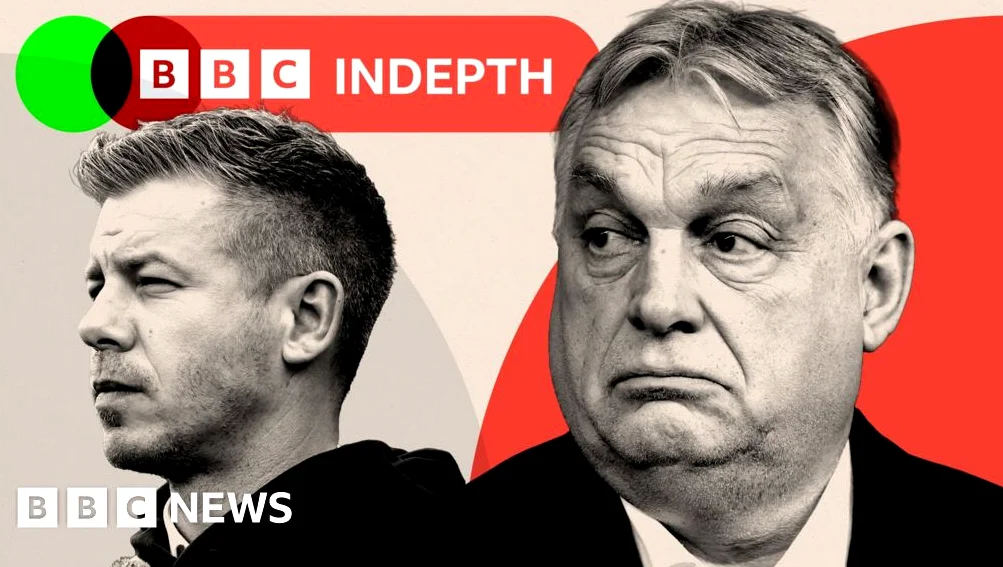
Hungary’s Prime Minister Viktor Orban. Who has held power for 16 years, faces a potential defeat in the upcoming election, according to recent opinion polls that show his Fidesz party trailing behind the opposition Tisza party. During a rally in Györ on 27 March, Orban lashed out at opposition protesters who chanted ‘Filthy Fidesz,’ revealing a rare outburst of frustration from a leader known for his calm demeanor.
Political Shift in Public Perception
According to Endre Hann of the Median agency, a public-opinion research firm, there has been a notable shift in public perception, while In January, 44% of respondents believed Fidesz would win, compared to 37% for Tisza. By March. That number had shifted to 47% for Tisza and 35% for Fidesz; this change reflects growing trust in the possibility of a new government.
The election has become a focal point of attention not only in Hungary but across Europe, as Orban has long been a thorn in the side of the EU, particularly on issues related to Ukraine. His support from both US President Donald Trump and Russian President Vladimir Putin has made him a model for nationalist leaders across the continent.
Accusations of Corruption and Voter Intimidation
Orban and his Fidesz party are under scrutiny for alleged corruption, including state tenders given to companies owned by close associates. Projects such as bridges. Football stadiums. And motorways have been linked to individuals like Orban’s son-in-law, Istvan Tiborcz, and childhood friend Lörinc Meszaros, who is now the wealthiest man in Hungary — Orban has refused to address questions about the personal wealth of his associates, and all involved deny wrongdoing.
Accusations of voter intimidation have also surfaced, including a dramatic Russian proposal to stage a fake assassination attempt on Orban — Fidesz, however, claims these allegations are part of a narrative created by the opposition to justify claims of election fraud if they lose.
Global Implications of an Orban Defeat
The outcome of the election could have far-reaching consequences beyond Hungary. Michael Ignatieff, former rector of the Central European University, argues that the election is a referendum on the model of authoritarian rule that Orban represents. This model has inspired a network of think tanks, fellowships, and gatherings of right-wing influencers across the Atlantic.
Despite Fidesz’s claims of confidence in their position, political analyst Gabor Török notes that the current climate does not bode well for the government if the remaining two weeks unfold as they have. The election has also drawn attention from international figures, including US Secretary of State Marco Rubio and Vice President JD Vance, who are expected to visit Hungary in the days leading up to the vote.
The success of Fidesz in this election could boost the chances of far-right parties in France, Germany, Poland, Spain, and Portugal. Conversely, a defeat for Fidesz could signal a shift away from radical nationalism in Europe. A senior Tisza official stated that a win would show the way out of the ‘radical nationalist tunnel.’
Fidesz is working hard to ensure its supporters turn out on 12 April, with a focus on rural areas where the party has a strong base. The party has built a system of local patronage, where mayors control access to work and resources. According to an investigative documentary, mayors have been instructed on the number of votes each village needs to produce for Fidesz, with incentives including cash payments, food coupons, and even illegal drugs in exchange for votes.
Despite these allegations, Fidesz denies any wrongdoing, stating that any issues should be addressed by the appropriate authorities. Meanwhile, villagers like Nikki in Tiszabö claim that Fidesz will win because of the ongoing war in Ukraine, citing improvements in local infrastructure as a reason to support the party.
The upcoming election in Hungary is not just a domestic affair but a major moment for the global political landscape, with implications that extend far beyond the borders of the country.






Comments
No comments yet
Be the first to share your thoughts