

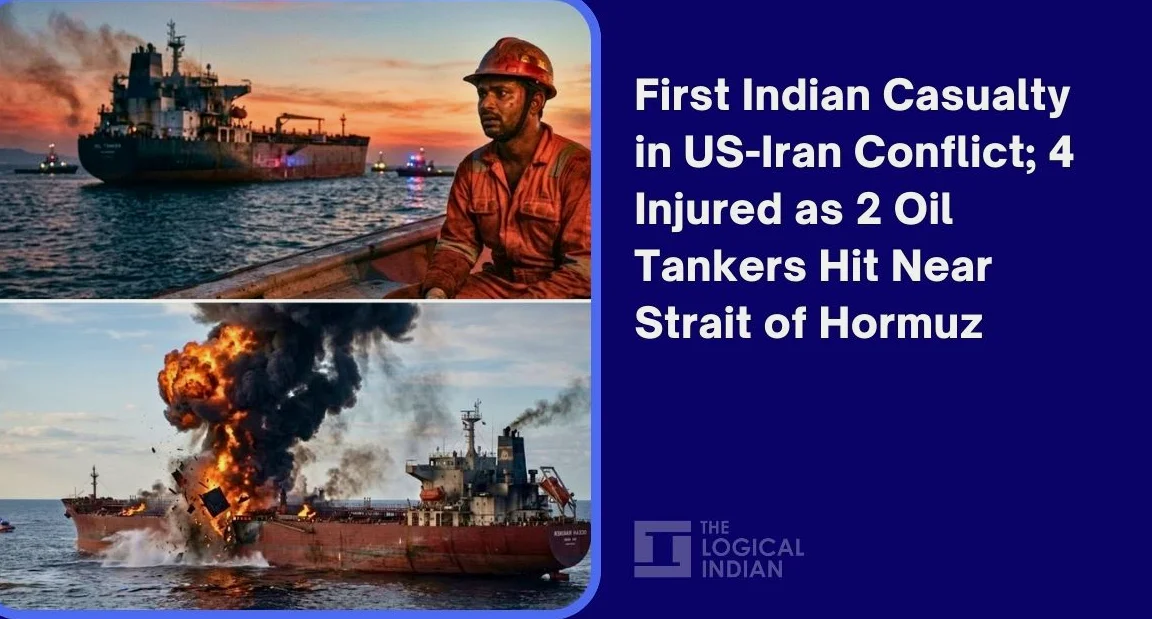
An Indian crew member has been confirmed as the first Indian casualty in the escalating US-Iran conflict after a drone attack struck the Marshall Islands-flagged oil tanker MKD VYOM in the Gulf of Oman near Muscat on March 1, Oman’s state media reported. The incident occurred as tensions between the US, Israel, and Iran have reached a critical point following a reported US-Israeli aerial strike that killed Iran’s Supreme Leader, prompting retaliatory threats from Iranian authorities.
Maritime Strikes Raise Global Energy Concerns
The attack on the MKD VYOM, which caught fire after the explosion, resulted in the death of one Indian crew member. Ship manager V.Ships Asia expressed deep sadness over the loss, confirming the vessel had suffered an explosion and fire in the engine room. The vessel was one of several targeted in the past 48 hours, with over 200 ships anchoring outside high-risk waters to avoid possible attacks or insurance denials.
In a separate but related incident, the oil tanker Skylight, flagged under Palau, was struck five nautical miles north of Khasab Port in the Strait of Hormuz, one of the world’s most critical shipping chokepoints. The attack left four seafarers injured, prompting the full evacuation of the 20-member crew. Oman’s Maritime Security Centre confirmed the crew was evacuated safely, although the injured required medical attention.
Escalating Tensions and Economic Fallout
The incidents have heightened concerns about the safety of commercial shipping in the region. Iranian authorities have warned that vessels transiting the Strait of Hormuz and the Gulf may be at risk due to ongoing hostilities. While Iran has not formally declared a blockade, maritime data shows a significant slowdown in ship movements, with many vessels rerouting or anchoring to avoid the conflict zone.
Regional analysts warn that even implicit threats can disrupt global trade. At the peak of the escalation, the number of Very Large Crude Carriers (VLCCs) and other oil tankers idling in the Gulf of Oman and Arabian Sea reached levels not seen since late 2025, indicating a sharp increase in shipping industry risk aversion.
The economic consequences are already evident. Brent crude futures jumped by 8-10% to multi-month highs, with some benchmarks touching above $82 a barrel. Insurers have begun withdrawing war-risk coverage and increasing premiums, further driving up operational costs for global shipping.
OPEC+ has responded to the crisis by agreeing to modestly increase production quotas beginning in April. However, analysts caution that without secure shipping corridors, the additional output may not effectively reach global markets.
Strategic Implications for Global Energy Markets
The Strait of Hormuz is a vital artery for global energy flows, with approximately 20% of the world’s crude oil passing through it daily. Any prolonged disruption to shipping in this region could tighten global supply, elevate energy prices, and ripple through inflation, manufacturing costs, and consumer fuel prices.
Countries heavily dependent on energy imports, such as India, China, Japan, and South Korea, face significant strategic challenges. India, which imports most of its crude needs from West Asia, could experience slower supply flows and higher import costs if the current tensions persist.
Regional authorities and global shipping companies have urged all parties to respect international law and ensure freedom of navigation. However, diplomatic space appears limited as hostilities continue to escalate.
The death of an Indian national in a distant maritime corridor is not just a statistic; it is a human tragedy linked directly to the choices of powerful state actors. The Indian mariner was performing his duties on a commercial vessel, not involved in geopolitical tensions, yet caught in the crossfire of a conflict that has now spilled into the seas.
These events highlight the vulnerability of civilian lives and livelihoods in global conflicts. As the situation unfolds, the international community faces a critical juncture in balancing military action with the imperative to protect global trade and human life.





Comments
No comments yet
Be the first to share your thoughts