

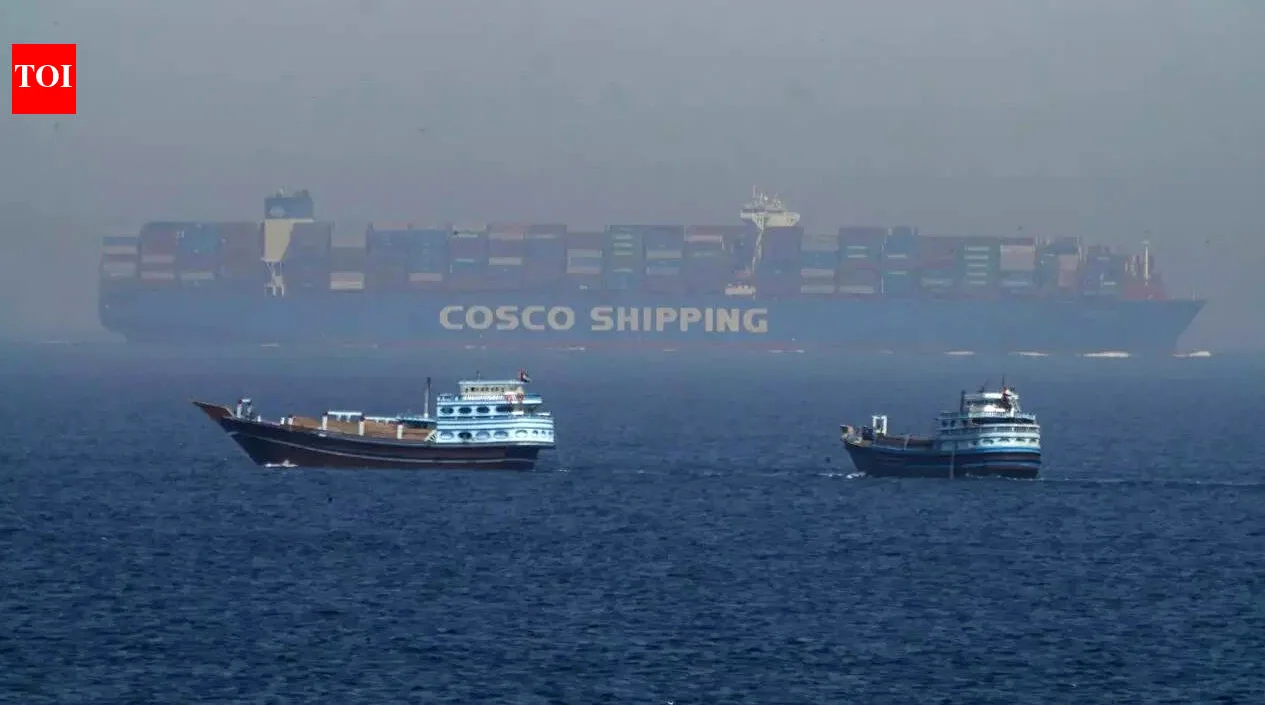
Thirty-eight Indian-flagged ships, carrying crude oil and liquefied natural gas (LNG) with nearly 1,100 seafarers, remain stranded in the Persian Gulf amid ongoing conflicts in West Asia. The crisis has left three Indian sailors dead and one injured in attacks near an Omani port, according to shipping authorities.
Impact on Trade and Shipping Routes
The Persian Gulf is a critical hub for global trade, and the current disruption has already caused significant ripple effects. Around 23,000 Indian seafarers are currently working in the conflict-affected region, and their safety is a top priority for the Indian government. India is the third-largest supplier of seafarers in the world, behind the Philippines and China.
According to the shipping minister, Sarbananda Sonowal, a review meeting was held on Tuesday to assess the situation and ensure the safety and welfare of Indian seafarers. The minister also emphasized the need to secure India’s maritime assets amid the crisis.
Officials confirmed that 24 Indian-flagged ships are stranded west of the Strait of Hormuz, while another 14 are stuck east of the strait. Four incidents involving Indian seafarers have been reported, resulting in three deaths and one injury. All the affected sailors were on foreign-flagged vessels.
Disruption of Global Shipping Routes
The conflict has disrupted critical shipping routes through the Strait of Hormuz, prompting several container lines to suspend services to West Asia. Some vessels are now rerouting through the Cape of Good Hope, adding transit time, costs, and congestion at Indian ports.
Sunil Vaswani, executive director of the Container Shipping Lines Association (India), said that many shipping lines have suspended services to West Asia for safety reasons. However, long-haul trade to the US, Europe, and Mediterranean harbors continues. ‘Services to long-haul destinations will continue. Those going through Suez have rerouted through the Cape of Good Hope. Transit time will be longer but safer,’ Vaswani said.
Vaswani also highlighted the immediate concern of cargo piling up at Indian ports. ‘Containers continue to come in, creating congestion. Ports are working with us,’ he said. Port authorities confirmed that around 1,000 containers are currently stuck and are coordinating with shipping lines to ensure timely loading and unloading.
A shipping company official said vessels bound for the Gulf are being terminated at Fujairah, Sohar, or Khor Fakkan, from where cargo is transported. The distance from Sohar to Dubai, for instance, is around 170 kilometers.
Challenges for Indian Exporters
The crisis has also affected Indian exporters, who are facing delays in shipments. Exporter-supplier Sanjay Pansare said around 150 containers of bananas, pomegranates, watermelons, and onions are currently stuck due to the disruption.
The situation has raised concerns about the economic impact on Indian trade and the broader global supply chain. With the Persian Gulf serving as a key artery for oil and gas shipments, any prolonged disruption could have far-reaching consequences.
The Indian government is closely monitoring the situation and has directed officials to take necessary steps to ensure the safety of Indian seafarers and the security of maritime assets. Officials said there have been no confirmed instances of casualty, detention, or boarding involving Indian-flagged vessels.
The DG Shipping stated that at least five tankers have been damaged since the conflict began, and 150 ships are stranded around the strait. The ministry is working closely with shipping authorities and international partners to mitigate the impact of the crisis on Indian maritime operations.





Comments
No comments yet
Be the first to share your thoughts