

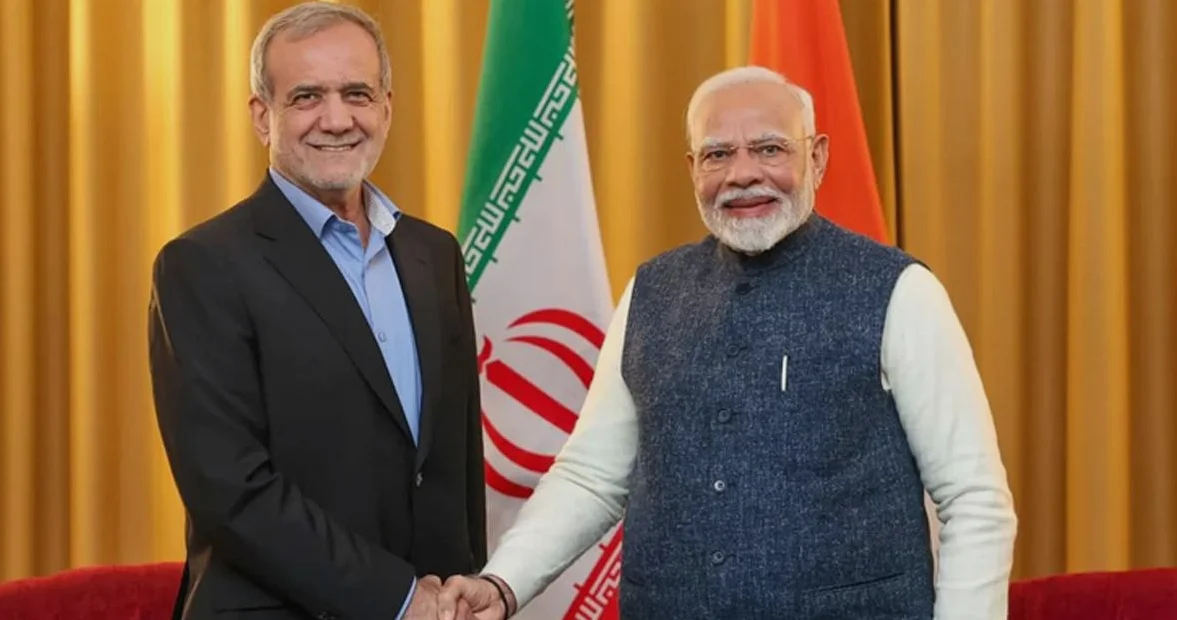
India’s delayed response to the US-Israel strikes on Iran, which killed Ayatollah Ali Khamenei and hundreds of others, has sparked sharp domestic and international criticism. Prime Minister Narendra Modi had addressed the Israeli parliament just 48 hours before the attack, declaring India’s unwavering support for Israel. Now, with the situation escalating, questions are being raised about the implications for India’s long-standing relationships with Iran and the Gulf region.
India’s Diplomatic Silence Amid Crisis
India’s response to the strikes has been described as a ‘whisper’ in the face of a major regional crisis. The external affairs minister spoke with his Iranian counterpart Syed Abbas Aragchi only recently, and the foreign secretary signed a book of condolence at the Iranian embassy. Mohammad Hamid Ansari, a former Indian vice president and ambassador to Iran, called the delayed condolences ‘too little, too late.’
According to Ansari, the United States and Israel’s actions amount to ‘naked aggression under international law.’ He emphasized that Iran has every right to defend itself, adding that the world should recognize the aggression for what it is.
‘The cause of this destabilization is the aggression committed on Iran,’ Ansari said. ‘It is high-handedness, plain and simple. Under international law, under the UN Charter, under every norm of civilised conduct — how can you decide you will change someone else’s government?’
Regional Stability and Economic Ties at Stake
The strikes have thrown into question India’s energy ties with Iran, which are worth billions of dollars. The Chabahar port agreement, a key strategic link between the two nations, is now under scrutiny. With nearly ten million Indian workers in the Gulf, the safety and stability of the region are critical to India’s national interests.
Ansari warned that the Gulf’s stability is directly tied to the safety and livelihoods of millions of Indian nationals. ‘This conflict is a matter of vital national interest for India,’ he said.
The Iranian foreign minister had previously stated that a historic agreement was within reach in Geneva. However, the attacks began just 48 hours later, and President Trump later released a video confirming the goal was regime change and praised himself for Khamenei’s assassination.
US Military Record and Regional Ambitions
Ansari pointed out the United States’ unbroken record of military failure in conflicts such as Vietnam, Iraq, Afghanistan, and Libya. He argued that these failures suggest a lack of judgment in Washington’s decision-making.
‘The US learns nothing,’ Ansari said. ‘With all the power they have, all the money, they have been the defeated party in every single conflict after the Second World War. This is high-handedness. Look at what they did to Venezuela, for example.’
Regarding the fear of a nuclear-armed Iran, Ansari emphasized that the International Atomic Energy Agency has confirmed that Iran is not building a bomb. He also noted that President Trump himself claimed that US strikes on Iran had destroyed its bomb-making capabilities, despite later contradicting his own statements.
‘Nuclear research is something any country may pursue,’ Ansari said. ‘How can you dictate that you will permit nuclear research in country X but not in country Y?’
As the conflict continues to unfold, the international community is watching closely. The situation has significant implications for the stability of the Gulf and the global order. With the safety of millions of Indian nationals at stake, the need for a diplomatic resolution has never been more urgent.





Comments
No comments yet
Be the first to share your thoughts