

 BBC
BBC 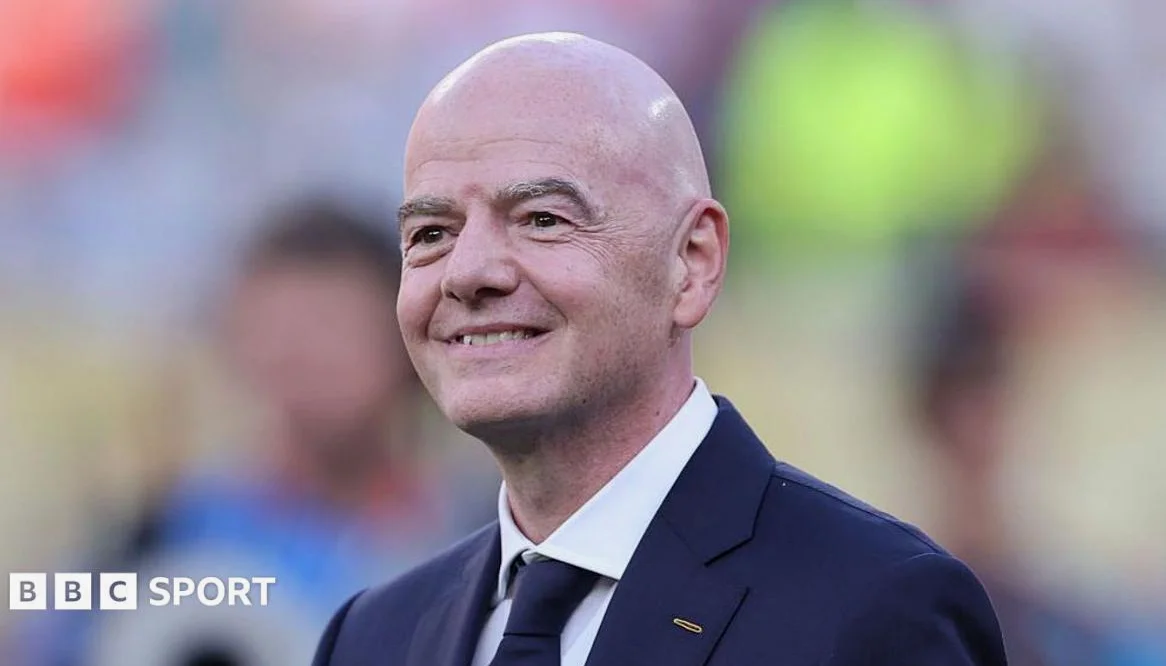
Fifa president Gianni Infantino has told critics to ‘meditate, pray or watch a football match’ instead of ‘spreading hate and false rumours’ about his leadership, the governing body, and the World Cup. In a 15-slide post on his personal Instagram account—reposted to Fifa’s eight million followers,Infantino addressed ‘those behind their pens and papers, behind their screens’ to affirm his belief that, while they were ‘busy planting seeds of hate’, Fifa was delivering the ‘greatest event on earth’.
He said the World Cup ‘celebrated humanity at its best’, adding that the 2026 tournament had ‘100% safety and security, only joy and happiness’. Infantino downplayed several of the tournament’s high-profile controversies and hailed the involvement of Iran, who featured at the World Cup despite their ongoing conflict with co-hosts the United States, as a success.
He said Fifa ‘worked tirelessly to unite two countries at war’, with Iran entering the country ‘without incident or conflict’. His comments are in stark contradiction to those of Iran’s head coach Amir Ghalenoei, who said his team were the ‘most oppressed’ at the World Cup. Iran faced visa delays, ‘integral’ members of their backroom staff were denied entry to the US and fans had their allocation of tickets revoked, while Iran also had to move their training base from Tucson, Arizona to Tijuana, Mexico following a multitude of logistical issues in the build-up to the tournament.
Controversies and Criticisms
They later also encountered restrictions on their movements as they travelled between their training base and group matches in Los Angeles and Seattle. Such issues were not unique to Iran, with fans from Haiti, Senegal, and Ivory Coast impacted by travel bans imposed by the Trump administration, while Somali referee Omar Artan was denied entry to the US—despite holding a diplomatic passport and a single entry US visa,because of his ‘association with suspected members of terror organisations’.
Infantino wrote: ‘You mentioned the few people denied visas and overlooked the millions who were approved, from all parts of the world. Because football unites the world, and it was impressively demonstrated this summer.’ Doubling down on the tournament’s safety, Infantino said there were ‘zero incidents, zero violence, just joy, emotions, happiness, unity, and togetherness’.
However, Fifa is investigating Argentina’s actions after players and backroom staff were involved in altercations with Spain’s players after losing the World Cup final. It is also investigating allegations of racist abuse towards American social media influencer IShowSpeed, while supporters were arrested at multiple matches—including following England’s semi-final against Argentina in Atlanta. Immigration and Customs Enforcement (ICE) officials were also controversially present at World Cup stadiums.
Political Interference and Ethical Concerns
Infantino also addressed criticism surrounding the standard of officiating at the tournament, in particular concerns about political interference after USA forward Folarin Balogun was made available for their last-16 tie when his one-match ban was suspended by Fifa—following the intervention of US President Donald Trump. Of the 191 other red cards shown at a men’s World Cup, only one other player has escaped a suspension.
Uefa said the decision had ‘crossed a red line’, labelling it ‘historic, incomprehensible, and unjustifiable’, while the Norwegian Football Federation is considering filing a formal complaint to Fifa’s ethics committee. Infantino, however, argued that such decisions are not out of the ordinary, claiming similar rulings are ‘routine and widely accepted in some of the biggest leagues worldwide’. He added: ‘It’s curious that the same countries employing these practices are the ones criticising.’
Response to Criticism and Future Implications
The International Olympic Committee has said it will not investigate Infantino for any possible breaches of political neutrality, stating the complaint levelled by human rights campaign group FairSquare falls outside the jurisdiction of its ethics commission. Infantino’s advice to his opponents was ‘to show some love’ and ‘respect’ to a tournament where ‘people came together as families, as fans, as one’.
‘To everyone who missed our beautiful game, the emotions, the celebrations, the laughter, the crying, the deception and the joy. To all of you who missed watching kids, babies, grandparents and parents come together for the beautiful game… sorry that you were so consumed by hate and criticism that you missed it all,’ Infantino wrote. ‘While they celebrated, you were busy planting seeds of hate. Our world needs love, not hate; tolerance, not division; celebration, not mourning.’
‘To those spending their time and energy hating us, please take a moment to reflect, meditate, pray or watch a football match and truly observe the faces, the eyes, the emotions. Because only our beautiful game can deliver such an extraordinary show, a show where everyone becomes one and reconnects as humans. I am incredibly proud, as Fifa President, to have contributed, even a little, to this show. It’s a great feeling.’
An analysis suggests that Infantino’s outburst reflects a genuine grievance he feels about some of the criticism Fifa has faced over its handling of the World Cup. It appears he does not believe the governing body has received enough credit for organising a tournament that enjoyed record ticket sales, entertained many millions, and successfully delivered a huge security operation, despite the tense geopolitical setting. It also arguably conveys a high degree of confidence in his position and chances of re-election next year, that he feels he can be so defiant.
However, for many, turning on his critics in such a fashion, and portraying them as negative, biased and unfair ‘haters’, risks reinforcing an impression that Fifa is unable or unwilling to handle legitimate scrutiny, and is out of touch. The reality is that a host of controversies made such scrutiny inevitable; the issues related to US visa policies, which undermined claims that it would be the most welcoming tournament ever. The first-ever costs facing fans. The outcry over Fifa’s suspension of Folarin Balogun’s ban after lobbying by US President Trump, leading to concerns over political interference (regardless of Fifa’s denials). The introduction of innovations such as hydration breaks and a 27 minute long half-time show for the final. And the environmental impact of the biggest and longest World Cup ever.
Infantino held a media conference on the eve of the tournament,his first for three years,when he told his critics to ‘chill & relax’. Maybe, if he had conducted another one after the event began or once it ended, he could have addressed some of the issues it raised sooner, and not responded in a way that many will see as further evidence of a siege mentality.






Comments
No comments yet
Be the first to share your thoughts