

 BBC
BBC 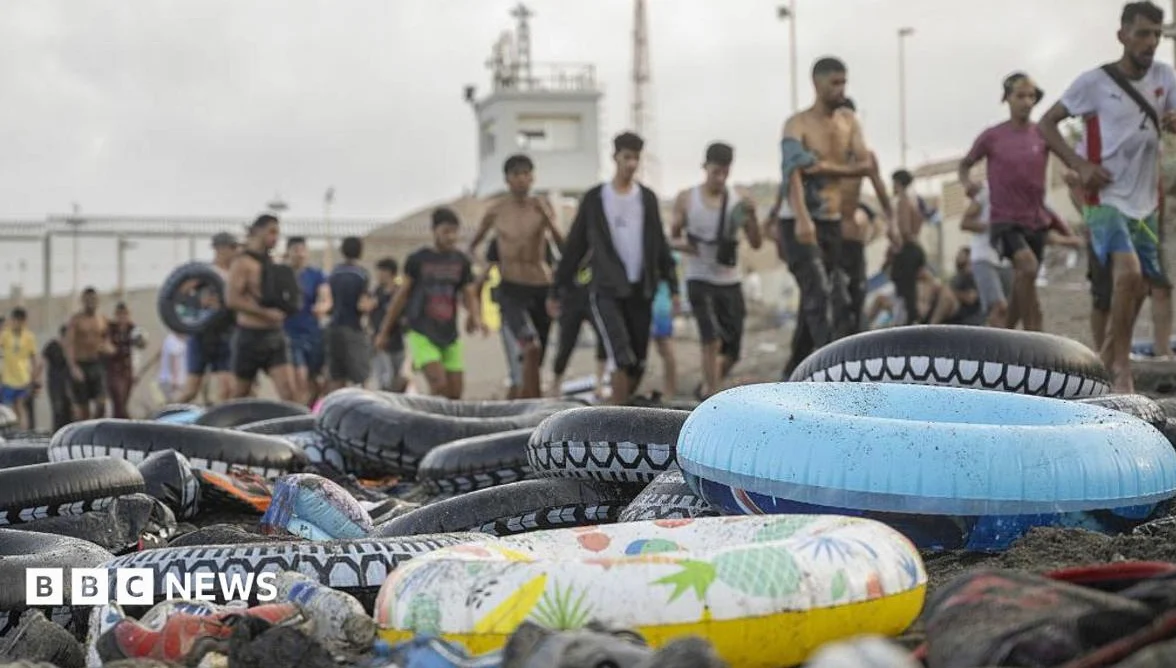
A network of Instagram accounts is fueling the migration crisis in Ceuta by offering paid advice for people trying to cross into the Spanish enclave from Morocco, according to a BBC investigation. The BBC’s Top Comment podcast has identified dozens of Instagram profiles that portray the short swim around the Morocco-Ceuta border fence as safe and easy — but in reality, people have drowned trying to make the crossing and take much longer routes. The crisis has calmed since roughly 78,000 migrants from Morocco arrived by sea into Ceuta in a matter of hours last month, according to the Mayor of Ceuta. The mayor also reported that 100 of these migrants died.
Instagram Accounts Offering Paid Advice
The BBC set up a dummy account named Mohammed, a Moroccan man in his twenties, to investigate this network. The account contacted several Instagram profiles and one replied, claiming to have helped ‘many people’ and offering advice on how to cross for hundreds of pounds. The BBC was added to multiple channels and WhatsApp groups when engaging with the accounts’ profiles and posts. When asked if they could help cross to Ceuta this weekend, one anonymous account said yes and requested ‘5000 dirhams upfront’ (£400) for ‘information that will help you enter Ceuta.’
The account said they had helped ‘many people’ cross before and would provide information about the ‘sewer pipes’ that could be used to reach the enclave safely. They also confirmed that lots of other Instagram profiles help people to cross to Ceuta in this way and asked for payment ‘via bank account’ with a specific money transfer service. However, they didn’t respond when asked whether a refund would be given if the crossing was not successful; They’ve since deleted several of their messages to the account.
Deceptive ‘Mirage’ Content
The same profile giving this advice had previously told the BBC’s real Instagram account that ‘it does not encourage immigration to Ceuta’, a message several other profiles repeated. The BBC noticed a deluge of content about Ceuta when it saw a viral video showing two women in wetsuits walking through the city. The original post in Spanish sought to dissuade migrants from arriving in Ceuta with the caption ‘Ceuta can’t take it anymore,’ but some versions shared by Moroccan and Arabic-speaking accounts either changed the caption or cropped it out, so the clip only showed the women strolling freely.
This was just one of hundreds of posts that the BBC is calling ‘mirage’ content, which paint a deceptive picture of a place distinct from reality. Some videos show groups of young men and women swimming happily in the sea — even though many have drowned making the trip in recent weeks. Others show stories of people who have succeeded in reaching Ceuta — and then claim they have gone on to reach Spain or mainland Europe, despite about 75,000 of the 78,000 arrivals having been returned to Morocco by authorities.
Algorithmic Amplification and Social Media Trends
There were lots of similarities in the profiles sharing this kind of content. Nearly 40 of them had variations of the term ‘Haraga’ and include Ceuta in their name or handle, often with a Spanish flag as a profile picture and with the calling codes for Morocco and Spain in the description. Haraga in Maghrebi Arabic roughly translates to ‘those who burn’ and is used colloquially to refer to migrants arriving in a new place and burning or destroying documents so they cannot be identified and deported back to their home countries.
The account history of these profiles, coupled with their posts and followers, indicated that most were being run from Morocco while a few were potentially based in Spain or Italy. Lots of them had been set up several years before, but their content about Ceuta had gained more traction in recent weeks, though the accounts have managed to manipulate the algorithms on major social media sites by sharing emotive and hopeful content to gain more traction. Insiders at the biggest social media companies have previously told the BBC how posts triggering a strong reaction are more likely to go viral.
When the BBC tried to contact some of these profiles using its own account, some of them directed it to the same WhatsApp numbers or email addresses. The dummy account, Mohammed, was a profile set to private and designed to look similar to the accounts of younger Moroccan people who were liking and commenting on the posts advertising crossings. The BBC followed relevant content, including several of the Haraga profiles, and soon its feed was swamped with videos and content encouraging travel to Ceuta.
There appears to be a wider trend here, where people looking to charge migrants money for advice can easily set up profiles and game social media algorithms. While there have been Facebook groups and accounts on other major social media sites posting about Ceuta, it was on Instagram where the BBC found the most active and prevalent group of interconnected accounts. The new-found reach of these profiles, facilitated by Instagram’s algorithms, opens them up to a wider pool of paying clients — it is yet another example of how gaming an algorithm can fuel real-world harm.




Comments
No comments yet
Be the first to share your thoughts