

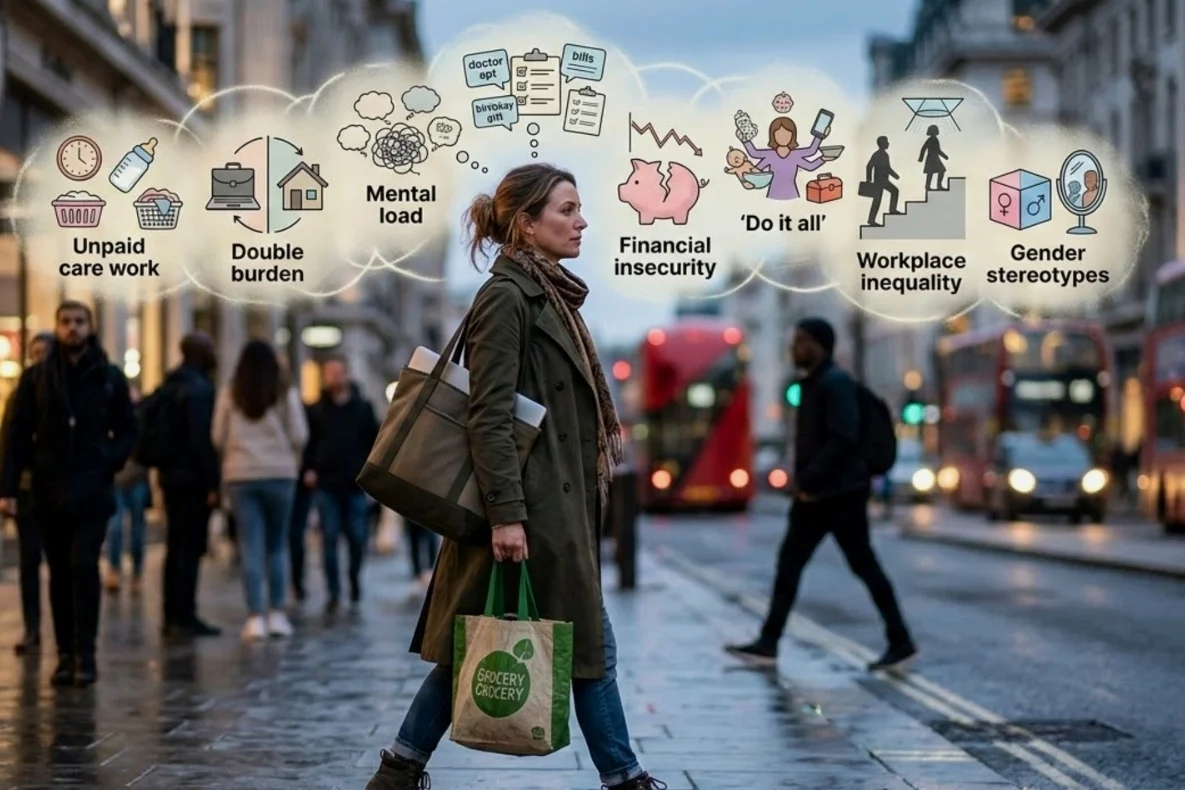
On International Women’s Day 2026, the global spotlight is shining on the silent pressures that continue to burden women, despite significant progress in gender equality. These challenges, often dismissed as part of daily life, have profound impacts on women’s careers, mental health, and financial stability. According to global research, women still perform the majority of unpaid care work, face a persistent gender pay gap, and encounter social expectations that limit their autonomy and opportunities.
The Invisible Workload: Unpaid Care and Household Responsibilities
Women globally perform 76.2% of all unpaid care work, including childcare, cooking, and caring for elderly family members. According to a 2025 report by the International Labour Organization, women spend an average of four hours per day on such tasks, significantly more than men. This unpaid labor, often referred to as the ‘double burden,’ limits women’s ability to pursue full-time careers or advance professionally. In many cases, it leads to chronic fatigue and stress, affecting their overall well-being and career prospects.
Experts note that the disparity in unpaid labor is not just a matter of time spent, but also of mental load. Women often bear the responsibility of managing household schedules, remembering appointments, and handling emotional responsibilities, which can contribute to emotional fatigue and burnout over time.
Financial Insecurity and Career Interruptions
Financial insecurity remains a significant challenge for many women. The gender pay gap persists, with women earning approximately 82 cents for every dollar earned by men in many parts of the world. Additionally, career interruptions for caregiving, such as maternity leave or caring for sick family members, can reduce long-term savings and retirement benefits. These factors contribute to a lack of financial independence, particularly for women who have taken time off work to manage family responsibilities.
According to a 2025 study by the World Economic Forum, 38% of women globally reported feeling that their careers had been negatively impacted by family responsibilities. This financial strain can also affect women’s confidence in their professional growth, further perpetuating gender inequality in the workplace.
Workplace Inequality and the Mental Load
Despite increasing awareness, workplace equality remains a challenge in many industries. Women still face barriers to promotions, leadership roles, and fair pay. A recent survey by the Global Business Council for Sustainable Development found that women’s confidence in workplace progress on gender equality has declined in recent years, indicating a growing sense of frustration and stagnation.
Moreover, the ‘mental load’—the invisible burden of managing household and family responsibilities—often goes unrecognized. Women frequently feel the pressure to excel in all areas of life, from career to family, leading to high levels of stress and burnout. According to a 2025 study by the United Nations, 62% of women reported experiencing chronic stress due to balancing work and home responsibilities.
These silent pressures are not just personal struggles; they have broader economic and social implications. When women are unable to fully participate in the workforce due to unpaid labor and financial insecurity, it limits economic growth and innovation. According to the International Monetary Fund, closing the gender gap in labor force participation could add $12 trillion to the global economy by 2025.
As International Women’s Day 2026 approaches, the conversation must shift from celebration to action. Recognizing these hidden challenges is the first step toward meaningful change. Women’s organizations and policymakers are calling for more support, including flexible work policies, parental leave reforms, and stronger legal protections to address the gender pay gap.
What’s next? In the coming months, several countries are expected to introduce new policies aimed at reducing the unpaid labor burden on women. The European Union, for example, is set to release a thorough plan in April 2026 to promote gender equality in the workforce and support caregivers. Meanwhile, advocacy groups are pushing for increased corporate accountability and transparency in pay practices.






Comments
No comments yet
Be the first to share your thoughts